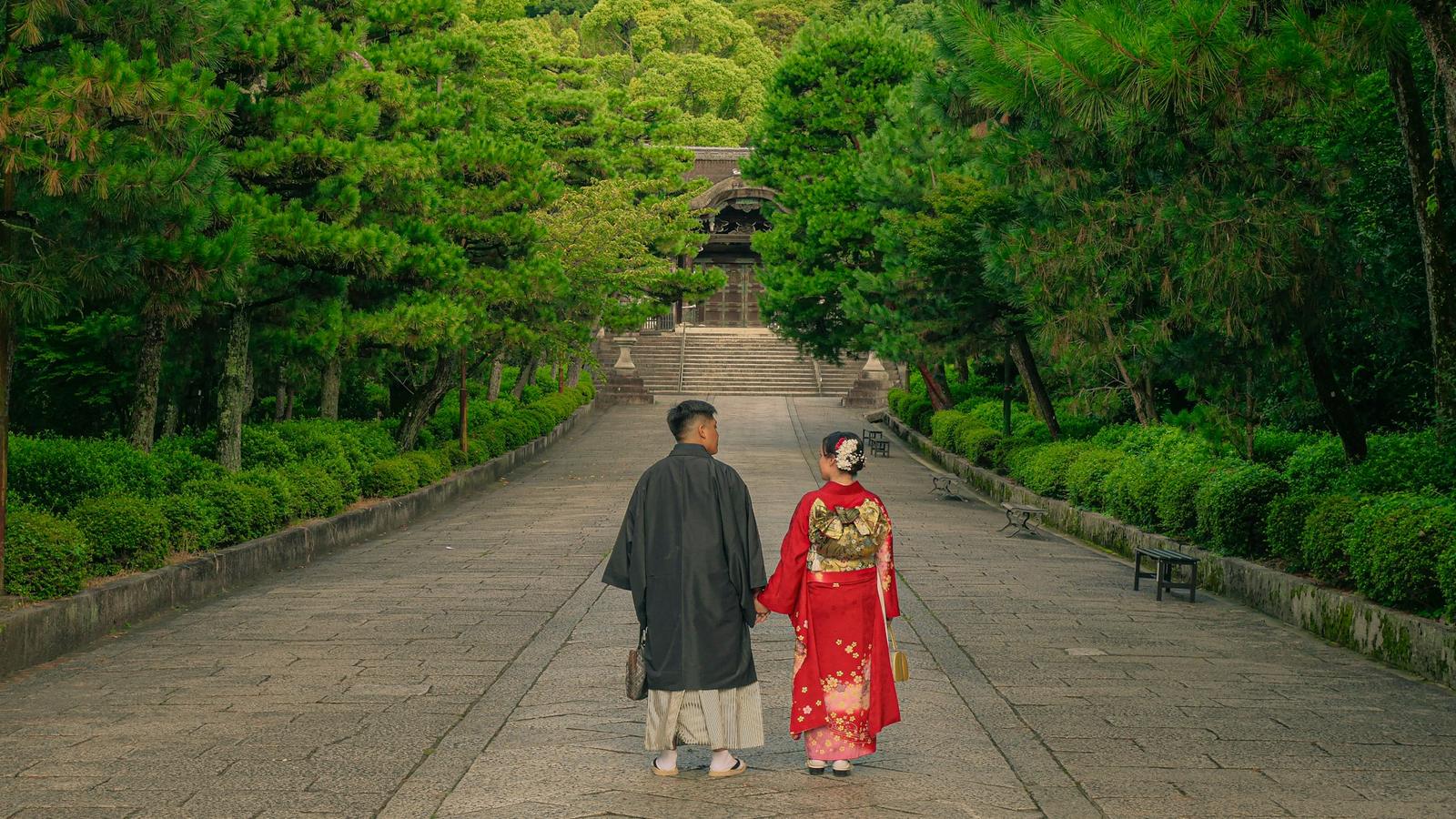
A Japan honeymoon works well with fewer bases than a normal trip, two ryokan nights in a room with its own open-air bath, and a season chosen for the weather as much as the scenery. Late May, October and the first half of December are often easier than cherry blossom. A specialist earns their place on the parts that are hard to arrange from abroad: the right room in a ryokan that has very few of them, two seats side by side at a counter that seats eight, and a day that can change shape if you would rather stay in.
What follows is how we would think about it, in the order the decisions are made.
CHOOSING THE SEASON
Cherry blossom, from late March into early April, and the autumn foliage weeks in November are the two seasons people picture. Both are beautiful and both are the busiest weeks of the year, with the rooms couples ask for booked twelve months or more ahead. If your wedding date puts you there, plan early and accept that the famous places will be crowded; how far in advance to plan covers the timing.
The blossom also refuses to keep a fixed date. The Japan Meteorological Agency recorded Tokyo's first flowering on March 14 in 2021 and 2023, March 29 in 2024 and March 19 in 2026, so a wedding date in early April can meet full bloom one year and green leaves the next.
Around those peaks, the year is uneven. June brings the rainy season to most of Honshu. July and August are hot and humid. Late summer and early autumn carry the chance of typhoons. None of that rules a month out, but for a trip where you want to walk slowly and sit outside in the evening, late May, October and early December are the easy months. Winter is quieter still, and a snowy onsen town in January makes a quiet, beautiful setting for a honeymoon. The full picture is in Japan's seasons, month by month.
The agency's 1991–2020 normals put the rainy season around Tokyo from about June 7 to July 19, and around Kyoto from about June 6 to July 19. The edges move: in 2025 it began on about May 22 around Tokyo and May 17 around Kyoto, and in 2026 on about June 2 in both. Typhoons approach Japan most often in August and September, about 3.3 times in each month on average, and make landfall about once in September.
Ginzan Onsen in Yamagata shows how popular those snowy towns have become. In Jalan Research Center's 2026 hot spring ranking, a survey of 12,595 people reported by Nippon.com, it came second among the onsen towns people have not yet visited and most want to. In the winter of 2024–25 the town let day visitors in between 17:00 and 20:00 only with a ticket (¥1,150 including the shuttle bus) and closed the way in after 20:00 to anyone without a permit, according to Travel Watch and Travel Voice, while guests with an inn reservation could still drive up to their inn. Staying the night is how you see the town once the day visitors have gone. The rules are set each winter, so we check them for your dates.
THE SHAPE: FEWER MOVES, MORE EVENINGS
Most honeymoons in Japan run ten to fourteen days, and the common mistake is to plan one like a first visit with a partner along. Three or four bases is plenty. Every move costs about half a day at each end, and on a honeymoon those half-days are the point.
A shape that works well: Tokyo for four nights, a ryokan for two, Kyoto for four, and a last stop that is quieter than Kyoto. Kanazawa, the islands of the Seto Inland Sea, or a second ryokan by the sea all do that job. The reasoning behind a structure like this, day by day, is in a 14-day luxury Japan itinerary. The ten- and fourteen-day honeymoon versions, with the rooms to ask for and their published rates, are written out in the luxury Japan honeymoon itinerary.
Leave afternoons empty on purpose. In Tokyo and Kyoto the easiest hours to be out are early morning and evening, and the middle of the day is when the famous places are full. An afternoon with nothing booked is often the one worth having.
THE RYOKAN NIGHTS
This is where a honeymoon in Japan differs most from one anywhere else. A ryokan night is dinner, bath, sleep and breakfast in one building, at the building's pace.
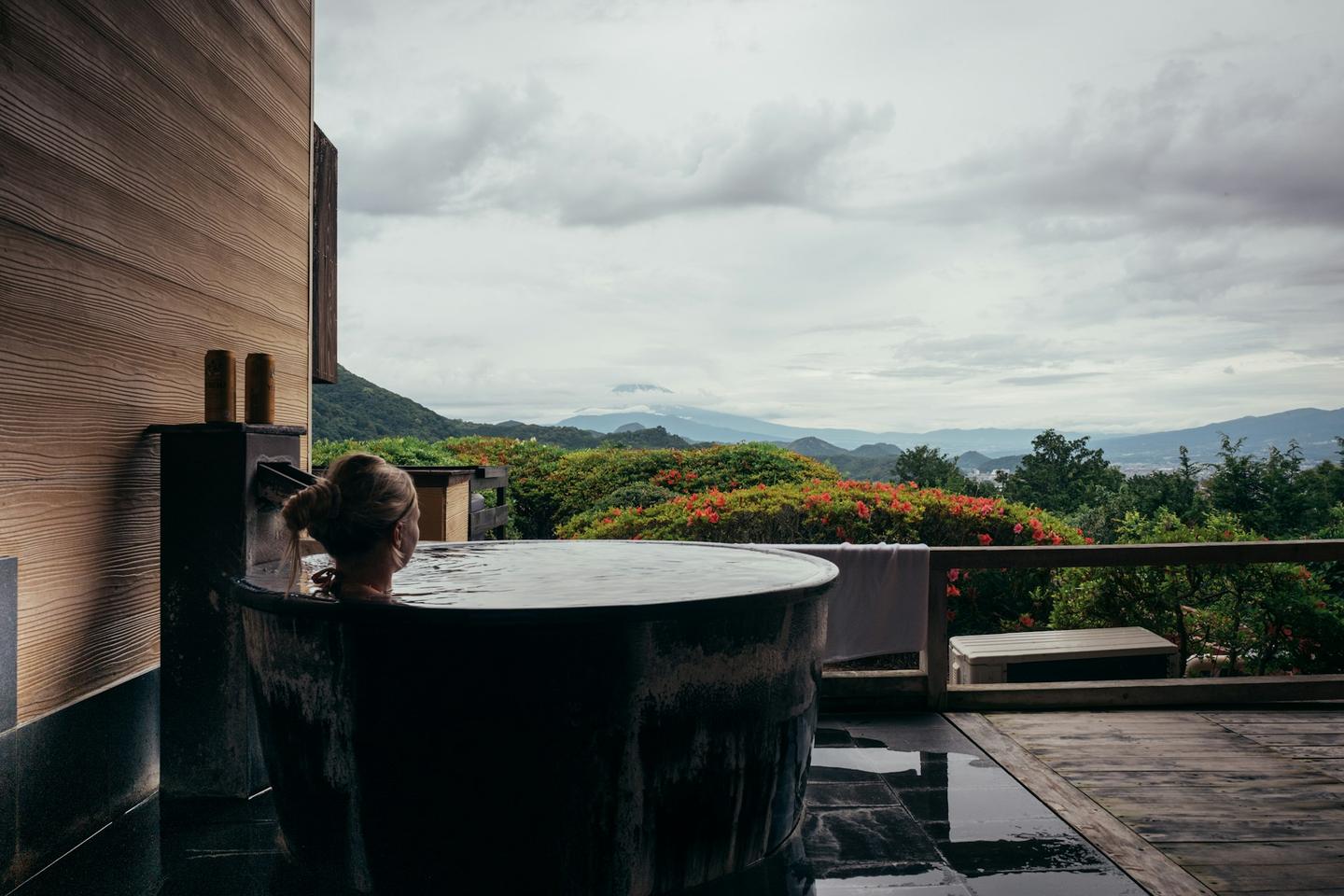
Private baths. The shared baths at most onsen ryokan are separated by sex, so couples bathe apart. There are two ways around that: a room with its own open-air bath, called a rotenburo, or a private bath reserved by the hour, often called kashikiri. Rooms with their own bath are the first to go in peak weeks. If either of you has tattoos, a private bath also avoids the restrictions that many shared baths still apply. In a 2015 Japan Tourism Agency survey of hotels and ryokan, reported by the trade paper Travel Voice, about 56% of the 581 that answered refused bathers with tattoos, about 13% let them in if the tattoo was covered, for example with a sticker, and about 31% did not refuse. We found no newer national figure, and each inn sets its own rule.
Some ryokan build the private bath into every room. Beniya Mukayu at Yamashiro Onsen in Ishikawa, a Relais & Châteaux member, has 16 rooms and each has a hinoki open-air hot spring bath looking onto its mountain garden. Hakone Ginyu in Miyanoshita gives every room an open-air bath on its terrace, above the Hayakawa gorge.
For a shortlist, the MICHELIN Guide's Keys are one reference. Its 2026 selection for Japan, reported by Travel Voice on September 30, 2026, gives Keys to 145 hotels and ryokan, 19 of them new, and seven hold three Keys. Two of those seven are ryokan: Gora Kadan in Hakone and Asaba in Shizuoka.
Where dinner is served. Some ryokan serve kaiseki in your room, others in a private dining room, others in a shared hall. For a honeymoon, the room the meal is served in matters as much as the menu.
Two nights, in the middle. The first afternoon is arrival and bath; the second day is when the pace actually changes. Placed between Tokyo and Kyoto, the two nights give the trip a slower middle. Placed at the very end, it is spent by people who are already packing. How to choose between ryokan tiers is covered in how to choose a ryokan, and the bathing itself in the onsen guide.
DINNERS FOR TWO
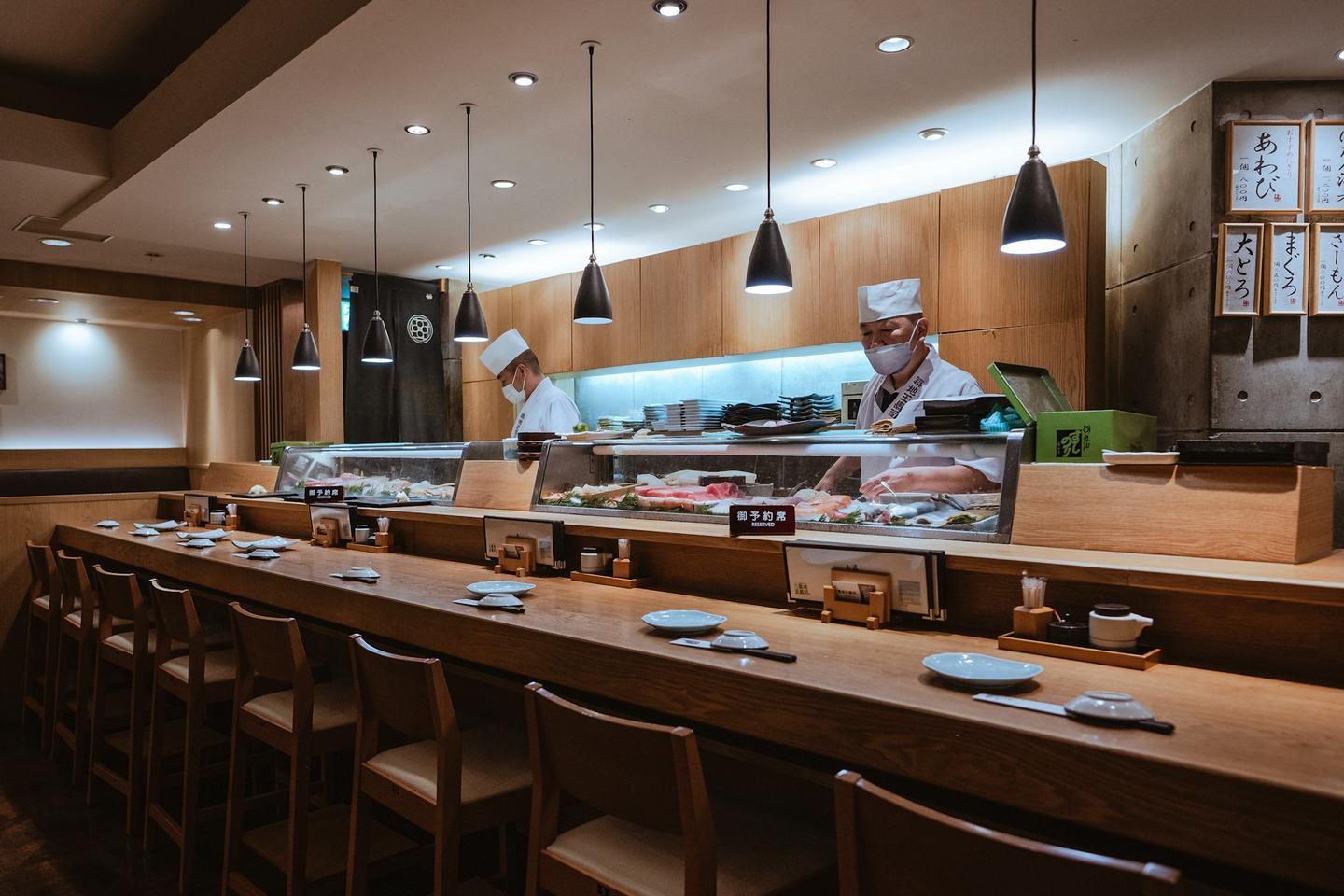
Many of the counters people plan a Japan trip around seat eight or ten people side by side, facing the chef. That suits a couple well. Two or three significant dinners across the trip are enough, with simpler evenings in between, so that each long dinner is still something to look forward to.
If one of you does not eat raw fish, shellfish or anything else, the kitchen needs to know in Japanese, well before the day, because many counters serve a single menu prepared that morning. How those reservations work is in how Tokyo reservations actually work.
Lonely Planet's guide to Tokyo dining etiquette, updated in May 2025, notes that a handful of restaurants accept bookings from foreign travelers only through a hotel concierge, that others ask for a local phone number, and that a no-show can be charged as much as the whole meal. If your plans change, the restaurant should hear it, ideally the day before.
WHAT A SPECIALIST ARRANGES THAT IS HARD FROM ABROAD
The specific room. In a ryokan, two rooms in the same category can differ in view, bath and distance from the corridor. Asking for a particular room is done by phone, in Japanese.
Many traditional inns still take that kind of request by telephone. Hiiragiya in Kyoto, in business for more than 200 years, answers reservations by phone from 8:00 to 21:00 Japan time alongside its online booking.
Letting each property know. We tell hotels and ryokan that you are on your honeymoon when we arrange your stay, in your names. Many will mark the occasion in their own way. None of that should be promised in advance, and we do not promise it.
One private moment. A tea ceremony in a private room, a quiet hour in a temple garden, a boat on a quiet stretch of water. These depend on someone's calendar, and no booking system lists them; private experiences that cannot be booked online explains how they come about.
A plan that can bend. If it rains on the day you planned to walk, or you would simply rather stay in, someone in Japan can move the guide, keep the dinner and rebuild the day while you sleep in.
STAYGO makes every arrangement in your names. Hotels, dining, guides and drivers are settled with each provider in the simplest way available, usually at the hotel or on the day, and our planning fee is presented separately from the costs of your journey. The Signature planning fee is USD 3,500 for the two of you, for a trip of 7–21 days; longer trips, or a honeymoon combined with another country, are quoted as Bespoke. A 25% deposit starts the work and the balance is due 60 days before you travel. For journeys departing within 60 days, the full fee is due when you confirm. If you are still deciding whether to use a specialist at all, is a Japan travel planner worth it sets out the trade honestly.
SOURCES AND HOW WE CHECKED
We read every page below on October 28, 2026. We did not contact the inns or the agency. Rainy season and bloom dates move every year, and room types change, so we check them again for your dates when we arrange the trip.
- Japan Meteorological Agency, cherry flowering dates 2021–2026 (Japanese): Tokyo's first flowering by year
- Nippon.com, Japan's Cherry Blossom Forecast 2026: how warm weather brought the 2026 season forward
- Japan Meteorological Agency, rainy season in Kanto-Koshin (Japanese): normal start and end, 2025 and 2026 dates
- Japan Meteorological Agency, rainy season in Kinki (Japanese): normal start and end, 2025 and 2026 dates
- Japan Meteorological Agency, typhoon normals (Japanese): typhoons approaching and making landfall by month, 1991–2020
- Beniya Mukayu, official site and rooms: Yamashiro Onsen, Relais & Châteaux, 16 rooms each with a hinoki open-air bath
- Hakone Ginyu, official site (Japanese): an open-air bath on every room's terrace, Miyanoshita
- Hiiragiya, official site: reservations by phone and online, phone hours, more than 200 years in business
- Nippon.com, popular hot spring ranking 2026 (Japanese): the Jalan Research Center survey of 12,595 people in September 2025, Ginzan Onsen second among the towns people want to visit
- Travel Watch, Ginzan Onsen winter car and entry restrictions (Japanese): ticketed entry from 17:00 to 20:00, the ¥1,150 ticket, permit-only access after 20:00
- Travel Voice, Ginzan Onsen winter restrictions announced (Japanese): inn guests exempt from the road and entry restrictions
- Travel Voice, Japan Tourism Agency survey on tattoos and bathing (Japanese): 581 hotels and ryokan answering, about 56% refusing, 13% allowing if covered, 31% not refusing
- Travel Voice, MICHELIN Key 2026 hotels in Japan: 145 with Keys, 19 new, seven with three Keys including Gora Kadan and Asaba
- Lonely Planet, Tokyo dining etiquette: bookings only through a hotel concierge, local phone numbers, no-show charges
QUESTIONS COUPLES ASK
How many days do we need for a Japan honeymoon?
Ten to fourteen days allows three or four bases with room between them. Seven days works with two bases and two ryokan nights. Beyond fourteen, adding a region usually works better than adding cities.
Can couples bathe together at an onsen in Japan?
Not in the shared baths, which are separated by sex. Book a room with its own open-air bath, or a private bath reserved by the hour at the ryokan.
When should we start planning a Japan honeymoon?
For cherry blossom or the November foliage with a particular ryokan in mind, twelve months or more ahead. For late May, October or early December, three to five months is comfortable.
Does STAYGO charge more for a honeymoon?
No. The Signature fee is USD 3,500 for your group, for a trip of 7–21 days, whether the group is two people or six.
TELL US ABOUT THE TWO OF YOU
Send us your dates, the pace you like, and anything one of you does not eat. We will come back with a shape for the trip and the ryokan nights we would build it around, before any work begins.
Begin planningWe reply within 24 hours, in writing
Some of the restaurants and bars we arrange seat guests only by introduction or membership. We ask on your behalf; the table and the evening are the house's decision. We do not publish their names.