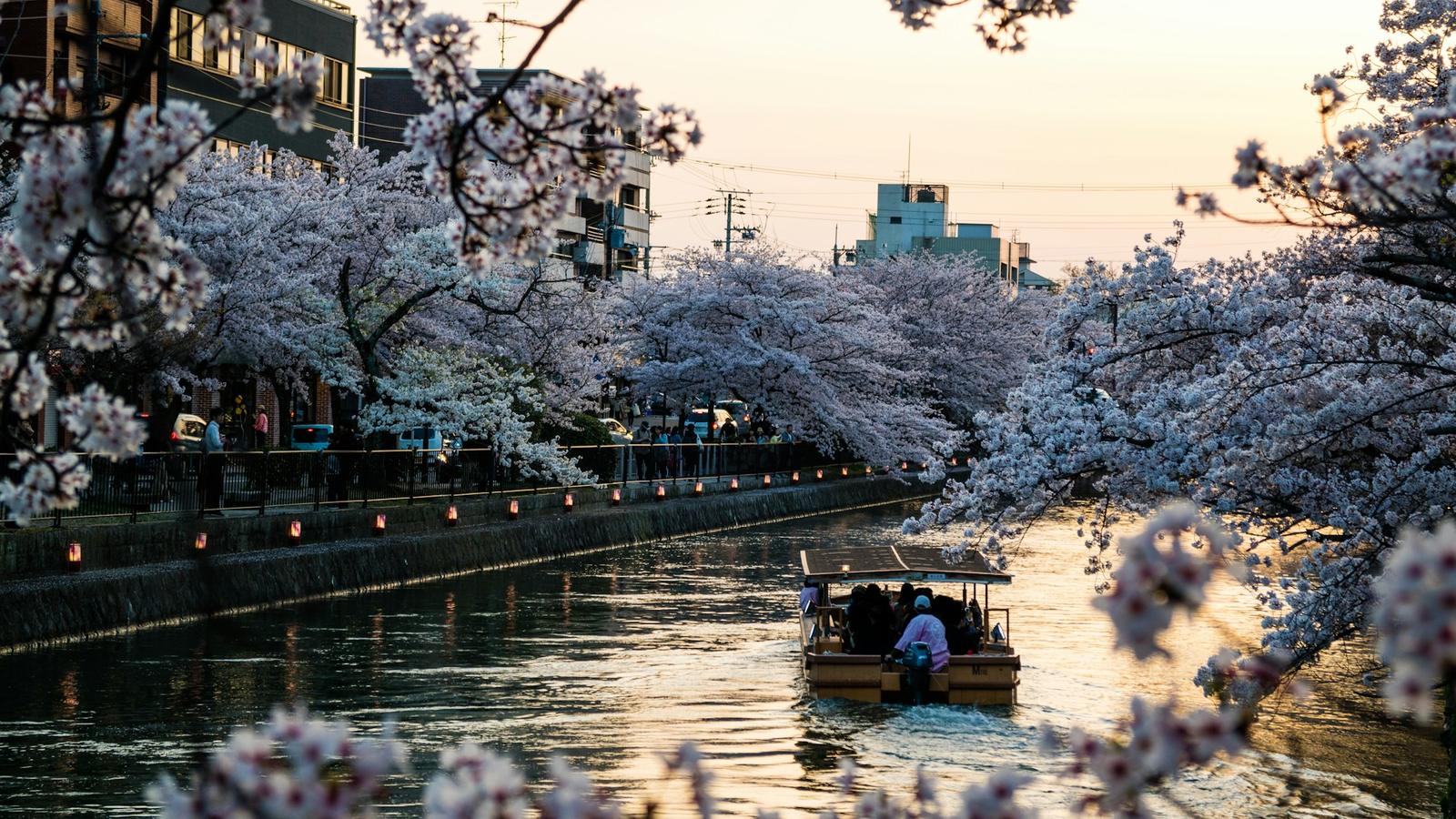
Japan's two most celebrated seasons are not interchangeable. Cherry blossom and autumn foliage both attract millions of visitors, both are genuinely beautiful, and both come with their own logistical realities that should factor into your decision before you book a single flight.
What follows is a comparison. The better season depends entirely on who you are and what you want from a Japan trip.
Key points
- Cherry blossom peaks for five to ten days in any given location, usually between late March and early April, and the timing shifts by several days each year depending on winter temperatures.
- Autumn colour usually moves southward over several weeks and reaches Kyoto and Osaka in late November, so if one place is past peak, another is often entering it.
- In spring the constraint is timing: the most sought-after ryokan near blossom spots sell out months before bloom dates are confirmed. In autumn it is mostly crowds: the quieter ways to see Kyoto's temples, such as early-morning viewings by advance registration, need planning ahead.
- For first-time visitors torn between the two, autumn is the more reliable experience.
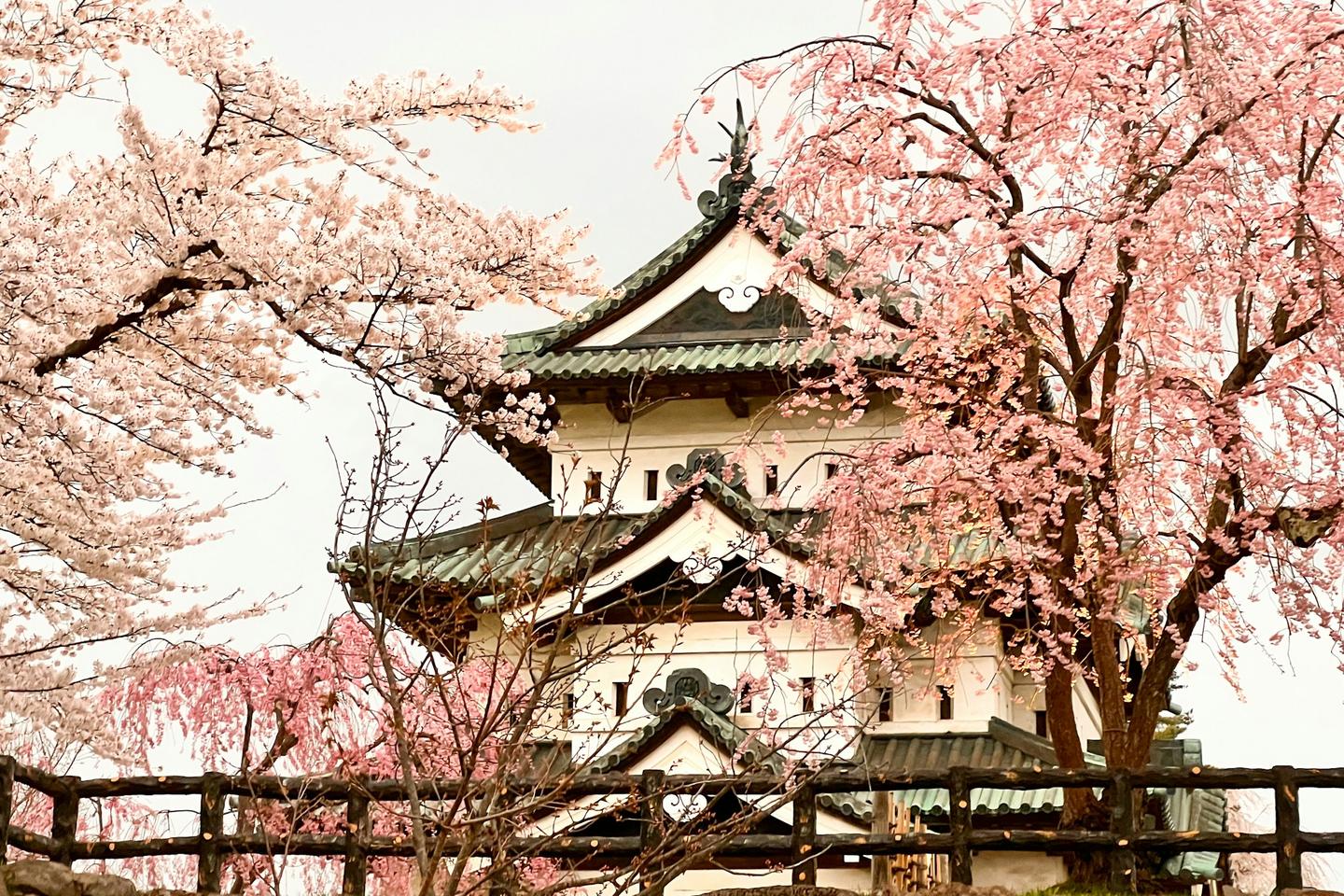
Sakura season is one of the most iconic visual experiences in Japan, and one of the most logistically demanding trips to execute well. The blooms last five to ten days at full peak in any given location. Miss the window by a week and you'll see bare branches or fallen petals. The timing shifts by several days each year depending on winter temperatures, which means exact dates cannot be confirmed until six to eight weeks before bloom.
2026 showed how much the dates move. The Japan Meteorological Agency, which watches a sample tree in each city, recorded Tokyo's first blossoms on March 19, five days before the normal date, and full bloom on March 28. Kyoto opened on March 23 and reached full bloom on March 30, five days ahead of its normal. Further north the season came even earlier: Sendai was in full bloom on April 4, nine days early, and Sapporo on April 24, twelve days early. Private forecasters follow the front through the season; Japan Meteorological Corporation issued 14 forecasts for 2026, the last on April 23.
The dates have been moving for a long time. Kyoto's cherry blossom records, compiled by the scientist Yasuyuki Aono from diaries and chronicles kept by emperors, aristocrats, governors and monks, go back to 812. In 2021 full bloom came on March 26, a date not seen in those records since 812, CBS News reported. After Aono died in 2025 the environmental biophysicist Genki Katata took over the records, and Smithsonian magazine noted that the 2026 peak again came at the end of March.
Spring weather in Japan is variable. Temperatures in late March can drop below 10°C in the evenings, and rain is common. The famous hanami picnic scenes look different on a cold, grey afternoon. Some of the most photographed cherry blossom spots, Maruyama Park in Kyoto, Chidorigafuchi in Tokyo, are surrounded by thousands of people on peak days.
The averages bear this out. In Kyoto, March nights average 4.3°C and April nights 9.2°C, and the city gets about 106 mm of rain in March and 117 mm in April, according to the agency's 1991 to 2020 normals.
For accommodation, restaurants, and cultural experiences, this is the most competitive booking period of the Japanese calendar. Ryokans near popular blossom spots often apply premium pricing and enforce multi-night minimums. Omakase counters and kaiseki restaurants fill months ahead. This is the season that most rewards advance planning, and most punishes late decisions.
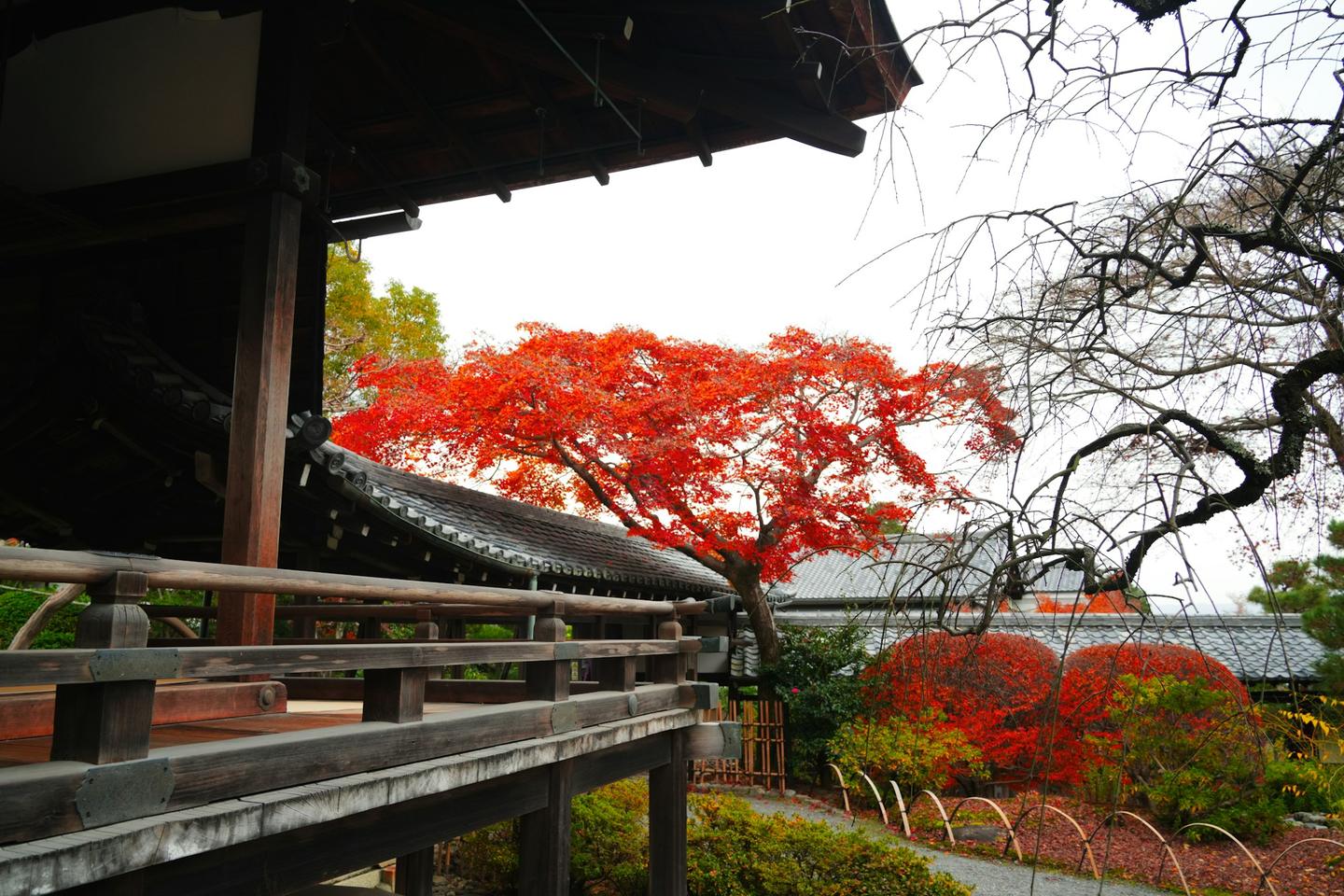
Autumn foliage, koyo, is a slower, more forgiving season. In a typical year the colour change begins in Hokkaido in mid-October and moves southward through Honshu over about six weeks, reaching Kyoto and Osaka in late November. This gives you real flexibility: if one location is past peak, another is often entering it. The season is less brittle than cherry blossom and more tolerant of last-minute adjustments.
The published dates show the spread. The agency's sample maple in Tokyo turned on November 23 in 2025, and the one in Kyoto on December 10, five days later than normal. Forecasters give the viewing windows. On October 28, 2026, the Japan Weather Association expected Arashiyama in Kyoto to be at its best from November 13, and Weathernews gave the Kinki region, which includes Kyoto and Osaka, a window from mid-October to early December.
2026 was forecast to be late. In its forecast of September 2, reported by Nippon.com, Japan Meteorological Corporation expected red and yellow leaves to peak somewhat later than in a typical year because of the heat, with red leaves in Tokyo at their peak around November 29.
November is usually the more cooperative month. Kyoto averages 73.9 mm of rain in November against 143.2 mm in October, and Tokyo 96.3 mm against 234.8 mm, so early October can be wet. In late autumn the days are often clear and crisp, the kind of conditions that make photographs look exceptional and long days of walking comfortable. In Kyoto's temple gardens, the low November sun often lights the maples from the side in the late afternoon.
Crowds are significant. Kyoto during peak koyo is genuinely packed. But the extended season distributes visitor density more evenly than cherry blossom's narrow window. Ryokan availability is better than spring. Restaurant access is competitive but not as extreme. For luxury travelers who need flexibility and dislike rigid timing, autumn is often the more comfortable season to plan around.
THE COMPARISON
FOR LUXURY TRAVELERS SPECIFICALLY
The calculus shifts slightly when you're traveling at the upper end of the market. Both seasons involve premium pricing and competitive access, but the nature of the challenge differs.
Kyoto's accommodation tax rose on March 1, 2026, and it applies in both seasons. A stay priced at ¥100,000 or more per person per night now carries ¥10,000 per person, and one at ¥50,000 to ¥99,999 carries ¥4,000, Time Out reported.
In spring, the constraint is primarily timing. The most sought-after ryokans near blossom spots, Hakone, Kyoto, the Japanese Alps, sell out months before bloom dates are even confirmed. The practical answer is to plan around the typical bloom window and request rooms as early as each property allows, before the dates become certain, accepting that the peak may fall a few days either side. A traveler who waits for bloom confirmation before booking will find the strongest options already gone.
In autumn, the constraint is crowds more than timing. The great evening openings are open to everyone: Kiyomizu-dera's autumn evening visit in 2026 ran from November 21 to November 30, from 17:30 to 21:00, with no reservation needed, and Eikan-do's night viewing in 2026 ran from November 20 to December 6, with entry from 17:30 to 20:30 for ¥1,000. Both temples publish the dates each autumn. What needs planning ahead is the quieter version: a tea ceremony in a garden under red maples, an early-morning or after-hours viewing where a temple offers one by advance registration, or a guide who knows which path is empty at which hour. Each depends on what the temple opens that season and on availability for your dates.
Some temples now open privately at the edges of the day. In 2026 Tofuku-ji held private early-morning viewings of its Tsutenkyo bridge from November 19 to December 6 and private night viewings from November 18 to December 6, both by advance registration only.
Cherry blossom asks for early planning and some tolerance for uncertain dates. Autumn asks for a sense of where and when to go. Both are worth seeing, ideally on separate trips.
THE HONEST VERDICT
Choose cherry blossom if: the visual spectacle of full bloom is your primary goal, you're comfortable booking everything months in advance with uncertain dates, and you want the most iconic Japan experience, crowds included.
Choose autumn if: you prefer more settled weather, dislike rigid timing, want more flexibility in your itinerary, and are interested in Japan's cultural depth, temple gardens, tea ceremony, and traditional arts, as much as the colour itself.
For first-time visitors torn between the two: autumn is the more reliable experience. You are more likely to have settled weather, more able to adjust your plans, and more likely to find space at the ryokan and restaurants you have in mind.
SUMMER AND WINTER
The agency's normals put the rainy season around Tokyo from about June 7 to July 19 and around Kyoto from about June 6 to July 19. In 2026 it began on about June 2 in both regions and ended on about July 19 around Tokyo and July 9 around Kyoto.
The numbers behind the heat: the 1991–2020 normal for the daily high in August is 31.3°C in Tokyo and 33.7°C in Kyoto. Typhoons also approach Japan most often in August and September, about 3.3 times in each month on average.
Recent summers have run well above those normals. Nippon.com, drawing on the agency's figures, reported that summer 2025 was Japan's hottest since records began in 1898, 2.36°C above normal, and that Isesaki in Gunma Prefecture reached 41.8°C on August 5, the highest temperature ever recorded in the country. Plan the outdoor hours for early morning and evening.
In the Japan Tourism Agency's survey for 2025, January and February were the two quietest months for nights spent in hotels and ryokan, at about 48.6 and 48.0 million, against 67.2 million in August.
SOURCES AND HOW WE CHECKED
We first wrote this comparison on May 29, 2026 and read every page below on October 28, 2026. We did not contact the temples or the forecasters. Bloom and foliage dates change every year, and temples set their evening openings each season, so we check the forecasts and announcements again for your dates.
- Japan Meteorological Agency, cherry blossom flowering 2026 (Japanese): 2026 and normal flowering dates by city
- Japan Meteorological Agency, cherry blossom full bloom 2026 (Japanese): 2026 and normal full-bloom dates by city
- Japan Meteorological Agency, maple colouring (Japanese): 2025 dates for Tokyo and Kyoto, difference from normal
- Japan Meteorological Agency, Kyoto climate normals (Japanese): rain and temperatures for March, April, October and November
- Japan Meteorological Agency, Tokyo climate normals (Japanese): rain for October and November
- Japan Meteorological Corporation, cherry blossom forecast (Japanese): the 14th and last forecast of 2026, April 23
- Japan Weather Association (tenki.jp), autumn leaves forecast (Japanese): third forecast of October 28, 2026, Arashiyama from November 13
- Weathernews, autumn leaves (Japanese): viewing windows by region
- Kiyomizu-dera, evening special visit, autumn 2026: dates, hours, no reservations
- Kiyomizu-dera, evening special visit, spring 2026: dates, hours, no reservations
- Eikan-do, autumn 2026 (Japanese): treasure exhibition and night viewing dates, hours and fee
- CBS News, Cherry blossom season in Japan had its earliest peak in 1,200 years (April 5, 2021): full bloom on March 26, 2021, records back to 812, Yasuyuki Aono
- Smithsonian, In Japan, a new steward for 1,200 years of cherry blossom data has been found (April 23, 2026): the diaries and chronicles behind the record, Genki Katata, the 2026 peak at the end of March
- Nippon.com, Japan’s Autumn Foliage Forecast 2026 (September 4, 2026): Japan Meteorological Corporation’s September 2 forecast: a later peak than usual, Tokyo red leaves around November 29
- Time Out, Kyoto’s highest hotel tax hike takes effect (March 2, 2026): Kyoto’s accommodation tax bands from March 1, 2026
- Japan Meteorological Agency, rainy season in Kanto-Koshin and in Kinki (Japanese): normal start and end, 2026 dates
- Nippon.com, Japan Endures Hottest Summer on Record in 2025: the 2025 summer record, 2.36°C above normal, and 41.8°C in Isesaki
- Japan Meteorological Agency, typhoon normals (Japanese): approaches by month
- Japan Tourism Agency, accommodation survey, 2025 final results (PDF, Japanese): guest nights by month
- Tofuku-ji, official site (Japanese): private early-morning and night viewings in 2026, advance registration
QUESTIONS, ANSWERED
When is the best time to see cherry blossoms in Japan?
Peak cherry blossom in Tokyo and Kyoto typically falls late March to early April, but exact dates shift by several days each year depending on winter temperatures. In 2026 the Japan Meteorological Agency recorded full bloom on March 28 in Tokyo and March 30 in Kyoto, three and five days earlier than normal. The bloom lasts only 5-10 days at full peak in any location.
Is cherry blossom or autumn foliage season more crowded in Japan?
Cherry blossom concentrates crowd density more intensely because the peak window is only 5-10 days per location. Autumn foliage (koyo) spans 4-6 weeks across Japan from north to south, distributing visitors more evenly and offering more flexibility for planning.
How far in advance should I book for cherry blossom season in Japan?
Well-known ryokan near popular blossom spots often fill many months before peak, so it helps to request rooms as early as each property allows. Restaurants open their books on their own schedules, so the date to watch differs by place. Travelers who wait for bloom dates to be confirmed before booking usually find the strongest options already gone.
Which Japan season is better for luxury travelers: cherry blossom or autumn foliage?
Both require significant advance planning. Cherry blossom offers the most iconic visual experience but has extreme booking difficulty and unpredictable weather. Autumn foliage offers more flexible timing, usually drier weather in November, and more availability at ryokan and restaurants, without the compressed booking window.
What is the best month to visit Japan for good weather?
November is usually Japan's most settled month for sightseeing: Kyoto averages 73.9 mm of rain in November and Tokyo 96.3 mm, against 143.2 mm and 234.8 mm in October. May is also excellent, with spring greenery after cherry blossom season ends. Avoid July and August (hot and humid), June (rainy season), and plan carefully around late March to early April if targeting cherry blossom.
TIMING YOUR TRIP IS PART OF PLANNING IT
STAYGO arranges what each season asks for, ryokans, temple visits, restaurant tables, with the lead time each one actually requires.
Start your tripWe reply within 24 hours, in writing
Some of the restaurants and bars we arrange seat guests only by introduction or membership. We ask on your behalf; the table and the evening are the house's decision. We do not publish their names.