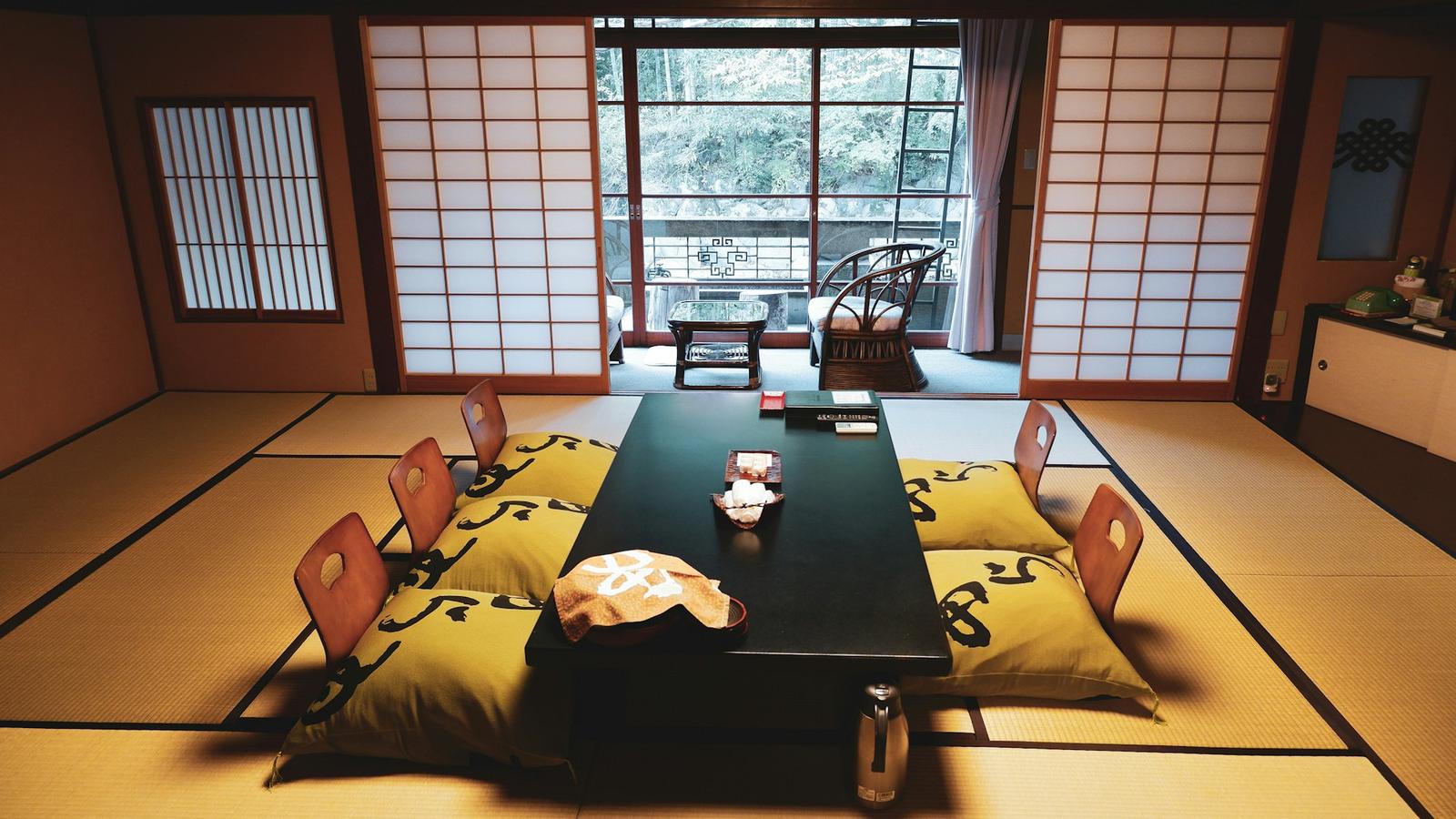
The word ryokan covers a very wide range. At one end: Tawaraya in Kyoto, where a single night costs more than most hotel suites in Tokyo. At the other: simple inns near train stations that use the same word for a much plainer stay. Most travelers know they want a ryokan experience. Very few know how to distinguish between the tiers before booking, and that distinction determines almost everything about the quality of the stay.
This guide breaks down the ryokan spectrum honestly. What each tier delivers, what the critical differentiators are, and how STAYGO thinks about matching clients to the right property for their specific travel profile.
Key points
- The single most important factor in choosing a ryokan is a private rotenburo: an outdoor hot spring bath attached to your room or used only by your room's guests.
- The top room category at a good property is often a very different stay from the standard room at the same property.
- Many traditional ryokan still prohibit guests with visible tattoos from using shared baths. A room with its own private bath means the shared bath is never needed.
- One night at the right property, at the right point in the trip, is worth more than three nights at properties chosen without much thought.
WHAT A RYOKAN ACTUALLY IS
A ryokan is a traditional Japanese inn built around a specific structure of hospitality. Guests arrive in the late afternoon, are met by staff at the entrance, and are escorted to a tatami-floored room where yukata (cotton robes) and socks have been laid out. Tea and wagashi sweets are served. Before dinner, guests bathe, either in the communal onsen bath or in their private one if the property offers it. Dinner is kaiseki: a multi-course seasonal meal, either served in the room by a dedicated attendant or in a dining room. Breakfast the following morning follows the same ceremony. Checkout is typically before 11am.
The word itself promises less than it seems. Japan's 2018 revision of the Inns and Hotels Act removed the legal distinction between ryokan and hotels, as Nippon.com has reported, and the MICHELIN Guide notes that the ryokan has no official legal definition. Tatami, futon, kaiseki and a hot spring bath are the convention, and the law requires none of them.
Amenities in the Western hotel sense play little part. There is no fitness centre, no lobby bar, often no minibar. The point is the bath, the meal, the quiet, and the attention of the staff, which at the top properties is close, constant and quiet. The concept is omotenashi: hospitality that anticipates before it is asked.
The onsen, the hot spring bath, is central. Japan sits on one of the most geothermally active regions on earth, and the mineral content and temperature of the water varies significantly by location. Hakone water, heavily sulphurous, has a different quality from the soft alkaline water of Kinosaki Onsen or the iron-rich water of Beppu in Kyushu. Part of choosing a ryokan is choosing whose water you want to soak in.
Of everything in a ryokan stay, two things make the clearest difference: the quality of the kaiseki, and whether the bath is yours alone.
TIER 1: THE TOP OF THE RANGE
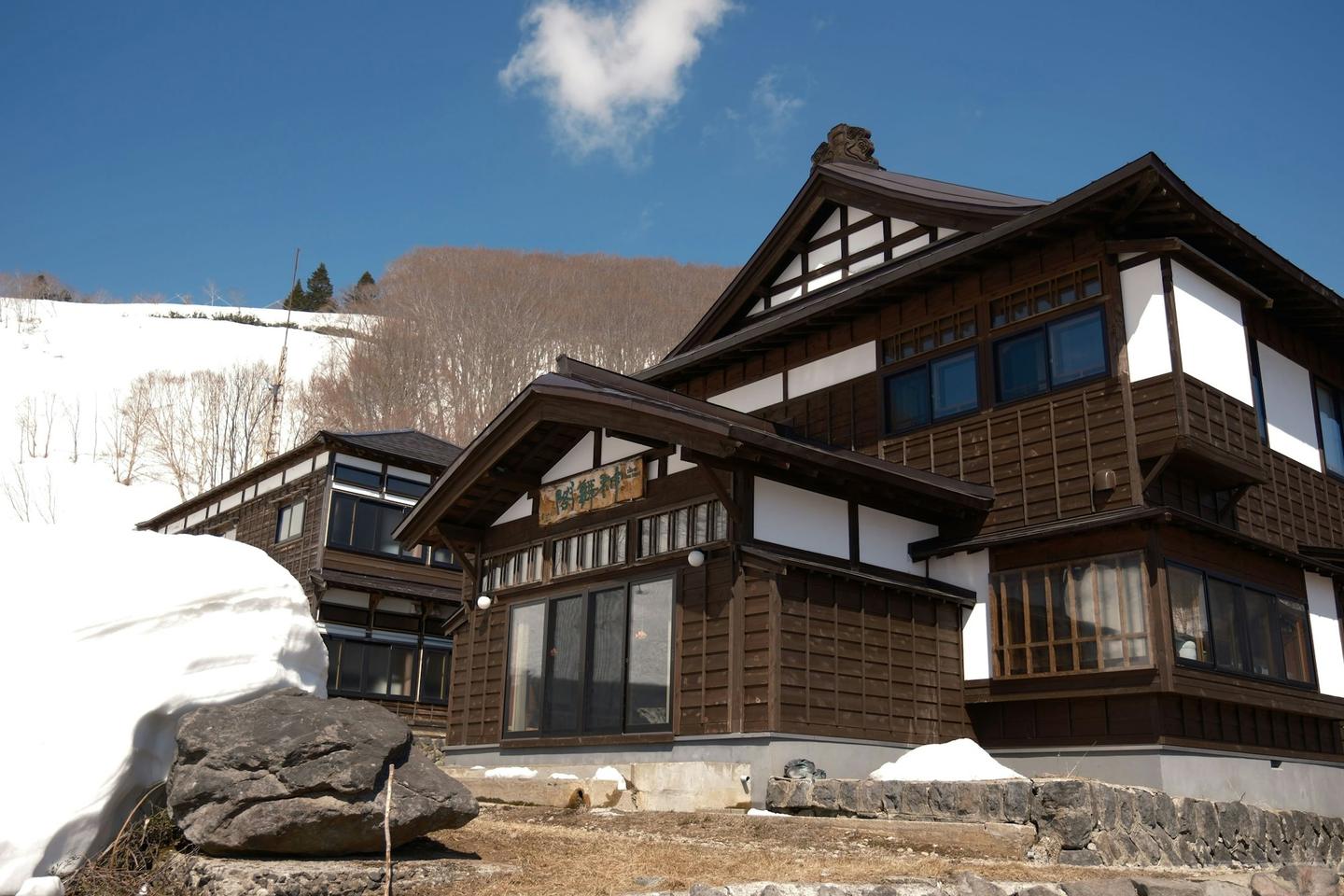
Tier 1 properties are those where the building, the cuisine, the water, the staff ratio, and the history combine to put them in a category of their own. There are not many of them, and they are booked months ahead. Prices run from ¥100,000 to ¥300,000 or more per person per night, including dinner and breakfast. In Kyoto a stay at this level also carries the city's highest accommodation tax: since March 1, 2026, a stay priced at ¥100,000 or more per person per night is taxed ¥10,000 per person, Time Out reported.
Tawaraya is usually the first name people mention. It stands in central Kyoto, and Condé Nast Traveler lists it with 18 rooms. The building is low, wooden, and plain: what you are paying for is the detail of the room, the temperature of the water in the iron kettle, the arrangement of the seasonal flowers. Bookings are made months in advance and require persistence.
If Tawaraya represents classical ryokan tradition, Beniya Mukayu represents its modern evolution. It stands in Yamashiro Onsen, in Kaga City, Ishikawa Prefecture, south-west of Kanazawa: low buildings on a wooded hillside, and 16 rooms, every one with its own open-air bath of hinoki cypress filled with hot spring water and facing the garden. There is also a shared bathhouse with indoor and outdoor baths and a sauna. The kitchen works in the Kaga tradition, the refined cooking of the Kanazawa region, and it does so consistently well. It suits travelers who want the ryokan form in a quiet, contemporary setting.
Built on the former villa of the Kan'in Imperial Family in Hakone, Gora Kadan is set among carefully kept gardens. The inn dates its own history to 1948, and the MICHELIN Guide lists 41 rooms, in tatami and semi-Western styles. The property holds to traditional ryokan form: private hot spring baths for each suite, rooms that look onto the gardens or into forested hillside, and a kitchen that takes Hakone's mineral-rich spring water as the starting point for its kaiseki. Hakone's mountain scenery and volcanic landscape are immediately at hand. It is worth more than one stay, since each season produces a different one.
Asaba occupies a site in Shuzenji on the Izu Peninsula that has been a place of retreat for more than 500 years. The family traces the inn to 1484, when an ancestor came to help found Shuzenji's Soto Zen temple, and Relais & Châteaux counts ten generations. The buildings are low and traditional, arranged around a bamboo grove and a noh stage, the Gekkeiden, that juts out over a still pond; it was moved here from Tokyo in the late Meiji era, and performances are held through the seasons. The outdoor baths draw on the Shuzenji hot springs. Asaba does not market itself aggressively and is less known abroad than its quality warrants, which keeps it quieter than Tawaraya or Beniya Mukayu at the same level of stay.
The MICHELIN Guide's hotel selection gives an outside reference. In its 2026 list for Japan, published on September 18, 2026, seven hotels in the country hold Three Keys, its highest distinction, and Gora Kadan and Asaba are two of them. Beniya Mukayu holds One Key. Tawaraya does not appear on the list.
TIER 2: EXCELLENT, AND FAR MORE OF THEM
Tier 2 is a wide band covering properties that deliver a genuinely high-quality ryokan experience without the history, the very small room count, or the culinary distinction of the top tier. Many excellent properties in Hakone, the outskirts of Kyoto, Nara, Kinosaki Onsen, and Arima Onsen fall here. Typical pricing runs from ¥40,000 to ¥100,000 per person per night including meals.
What Tier 2 offers: solid to very good kaiseki (the gap between good and exceptional kaiseki is significant: Tier 2 properties tend to produce well-executed seasonal menus without the creative distinctiveness of the top tier), some private bath options alongside communal baths, good locations with reasonable access to the surrounding landscape or city, and a staff ratio that delivers attentive service without the almost overwhelming personal attention of Tier 1.
Tier 2 is appropriate for first-time ryokan guests, for nights that are part of a longer itinerary rather than the centerpiece of a trip, and for travelers who genuinely prefer the social aspect of communal bathing. For many nights on a journey, it is the right choice.
STANDARD: A SIMPLER KIND OF STAY
The standard tier, properties priced from ¥15,000 to ¥40,000 per person per night, exists primarily for domestic travel and group tourism. Meals are usually a set menu, the baths are shared and can be busy in peak season, and the rooms are simple, with fewer staff to each guest. Many of these inns are welcoming and good value for what they set out to do.
For the ryokan nights we plan into a journey, we suggest Tier 1 and Tier 2 properties, because the kaiseki, the bath and the attention of the staff are what those nights are built around, and that is where the two upper tiers differ most from the standard one.
WHAT TO LOOK FOR WHEN CHOOSING
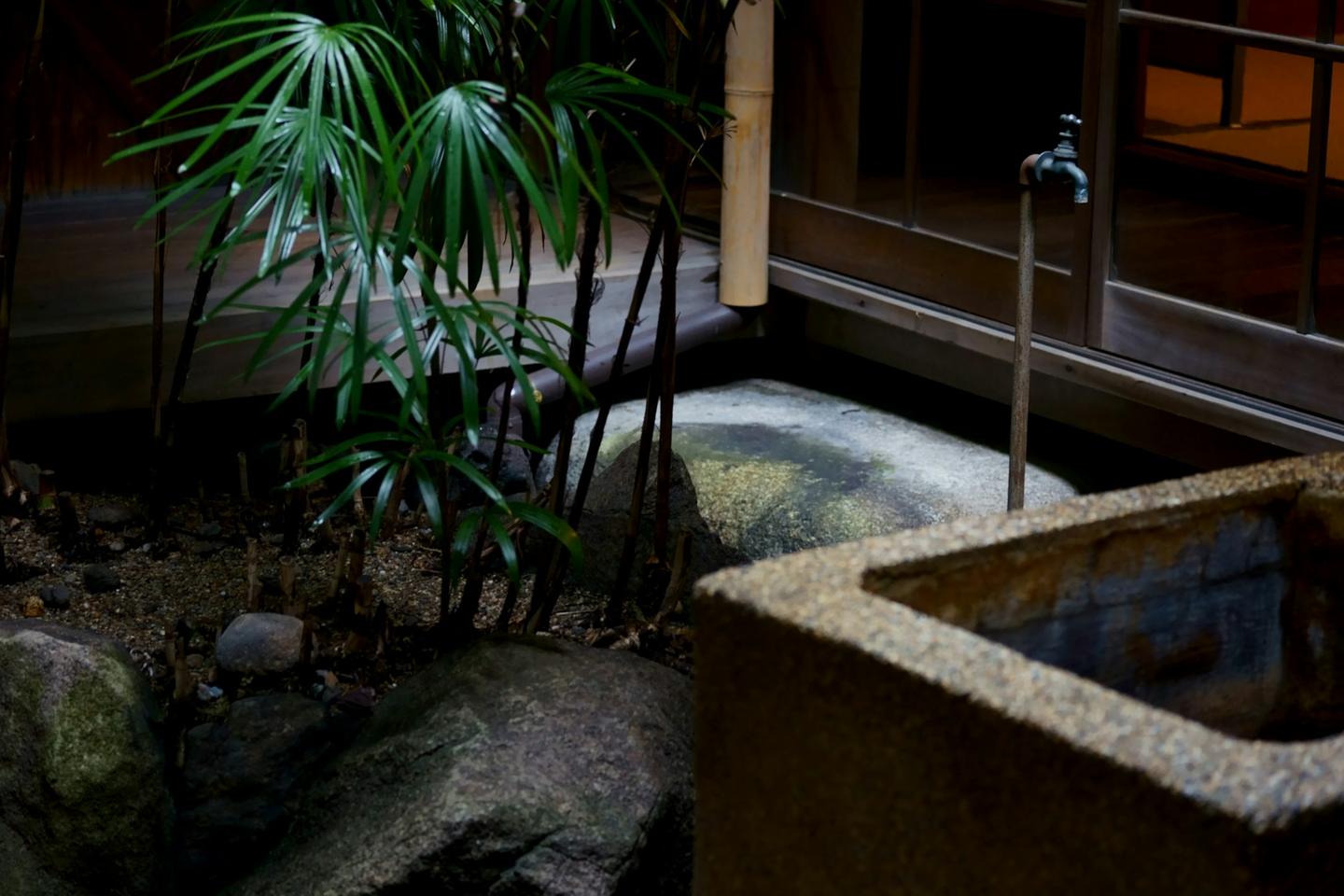
Private rotenburo, a private outdoor hot spring bath attached to your room or accessible only by your room's guests, is the most important single factor in choosing a ryokan. It means you can bathe at midnight in a snowfall, for as long as you like, with nobody else there. Properties with private rotenburo for every room (Beniya Mukayu, for example) are categorically different from those where it is reserved for suites or where only communal baths exist.
Room type matters significantly. Most ryokan offer a range from standard tatami rooms to full suites with multiple rooms, private gardens, and dedicated attendants. The top room at a good property is often a very different stay from its standard room. It costs more, and of everything in a ryokan stay it is often the difference most worth paying for.
Water quality is a genuine differentiator that most booking platforms ignore entirely. Japan's thermal waters vary enormously, from sulphurous springs to alkaline ones, from salty, iron-bearing water to carbonated water. Some waters are better for the skin; some carry stronger medicinal traditions. The water a property sits on is part of what makes it that property, and asking which kind you will be soaking in is a fair question to put before you book.
Arima, north of Kobe, shows how much one town can vary. Its tourism association describes the brown gold spring, kinsen, as water carrying iron and salt, and the clear silver spring, ginsen, in two forms, carbonated and radon. It counts seven of the main spring types set by the Ministry of the Environment in the town, everything except sulphur and acidic springs.
Guest-to-staff ratio is rarely stated directly but is deducible from room count and price tier. As a rough guide, smaller properties at the higher price points tend to feel more personal, and larger ones can lean towards the way a hotel runs.
Room count is only a guide. Among the inns on this page, Beniya Mukayu has 16 rooms, Tawaraya 18 and Gora Kadan 41, and all three keep the attention of a small house.
| Tier | Price (per person/night incl. meals) | Key feature |
|---|---|---|
| Tier 1 | ¥100,000 – ¥300,000+ | Private rotenburo, distinguished kaiseki, history |
| Tier 2 | ¥40,000 – ¥100,000 | Good kaiseki, some private baths, solid location |
| Standard | ¥15,000 – ¥40,000 | Communal baths, set menus, group-oriented |
TATTOO POLICIES
Many traditional ryokan still prohibit guests with visible tattoos from using shared bath facilities. This policy has deep historical roots in Japan, where tattoos have long been associated with organized crime. While enforcement is inconsistent and cultural attitudes are slowly shifting, particularly in urban properties and among younger staff, the policy remains formally in place at many established properties.
The one national survey we found dates from 2015. The Japan Tourism Agency asked 3,768 hotels and ryokan about guests with tattoos, and of the 581 that replied, 56 percent said they refused them entry to their baths, 31 percent said they did not, and 13 percent admitted them with the tattoos covered, Japan Today reported.
The practical solution for tattooed guests is straightforward: choose a room with its own private bath, so that the shared bath is never needed. At Beniya Mukayu, for example, every room has a private open-air bath. STAYGO confirms tattoo policies as part of the property selection process for any client who indicates this is relevant.
HOW STAYGO CHOOSES A RYOKAN
The selection process at STAYGO begins with the client. A traveler who wants to soak outdoors at 3am without another soul present needs a different property from one who wants the traditional shared-bath house, where the morning procession to the communal bath is part of the point. Neither preference is wrong. The ryokan has to match the person.
Once a property is selected, STAYGO asks for the room that matches how the client will use the space, which is often one of the upper categories. A garden suite at Gora Kadan and a standard room at Gora Kadan are two different stays. We also send dietary requirements to the kitchen well before arrival. Kaiseki is built around the season and the chef's plan, but many top properties can adjust for serious restrictions when they are told in time.
Finally, STAYGO advises on how many ryokan nights an itinerary should hold. One night at the right property, at the right point in the trip, is worth more than three nights at properties chosen without much thought. On many Japan itineraries the ryokan night is the one that stays with you, so it is worth deciding where it falls.
BEFORE YOU BOOK AND BEFORE YOU BATHE
Read the inn's own terms before you commit. Beniya Mukayu, for example, charges 20 percent from 21 days before arrival, 30 percent from 14 days, 50 percent from 7 days, 70 percent from 5 days and the full rate from 3 days before or for a no-show. It takes children from elementary school age and asks families to contact it about the child rate for ages 7 to 12. Terms of this kind differ from inn to inn, and we put them in front of you before anything is confirmed.
The Ministry of the Environment publishes a short guide in English to using onsen safely. It advises against bathing right before or after a meal or after drinking alcohol, asks bathers to drink water before and after, and says people with high blood pressure or heart conditions should avoid water of 42°C or more. It also suggests pouring water over the body, starting from the hands and feet, before getting in, and simply patting dry afterwards rather than rinsing the spring water off.
SOURCES AND HOW WE CHECKED
We first wrote this guide on June 18, 2026 and read every page below on October 28, 2026. We did not contact the inns. Room counts, terms and prices change, and we confirm them for your dates when we arrange the stay. The price bands for each tier and the advice on choosing come from our own work; we could not confirm Tawaraya's founding year or its guest list on a primary source and have left them out.
- Condé Nast Traveler, Tawaraya: number of rooms
- Beniya Mukayu (Japanese): location in Yamashiro Onsen, Kaga City
- Beniya Mukayu, rooms (Japanese): 16 rooms, an open-air hot spring bath in every room, the shared bathhouse
- Beniya Mukayu, reservations (Japanese): cancellation charges, children
- Gora Kadan (Japanese): the Kan'in-no-miya villa, history from 1948
- MICHELIN Guide, Gora Kadan: 41 rooms, room styles
- Asaba (Japanese): 1484, the Gekkeiden noh stage moved from Tokyo, seasonal performances
- MICHELIN Guide, Asaba: history of more than 500 years
- Relais & Châteaux, Asaba: ten generations, the noh stage on the pond, the Shuzenji hot springs
- Arima Onsen Tourism Association, spring types (Japanese): kinsen and ginsen, seven of the main spring types
- Ministry of the Environment, guide to safe onsen use (PDF): meals, alcohol, water, 42°C, rinsing
- MICHELIN Guide, All the Key Hotels in Japan 2026 (September 18, 2026): Three Keys for Gora Kadan and Asaba, One Key for Beniya Mukayu, the number of Key hotels, the note that the ryokan has no legal definition
- Japan Today, 56% of hotels in Japan bar visitors with tattoos from bathing facilities (October 22, 2015): the Japan Tourism Agency survey: facilities asked, replies, 56, 31 and 13 percent
- Nippon.com, Japan’s Traditional Inns Innovate to Thrive in a Declining Market (October 4, 2019): the 2018 revision of the Inns and Hotels Act and the ryokan’s legal definition
- Time Out, Kyoto’s highest hotel tax hike takes effect (March 2, 2026): Kyoto’s accommodation tax bands from March 1, 2026
QUESTIONS, ANSWERED
What is a ryokan and how is it different from a hotel?
A ryokan is a traditional Japanese inn where guests sleep on futon on tatami floors, wear yukata (cotton robes) provided by the inn, and receive a multi-course kaiseki dinner and breakfast, either in their room or in a dining room, as part of the rate. The defining feature is the onsen (hot spring bath), which may be shared or private depending on the property. The experience is structured around hospitality and seasonal cuisine rather than amenity provision.
What is the most important thing to look for in a ryokan?
Private rotenburo: a private outdoor hot spring bath attached to or accessible only from your room. This is the single factor that most clearly separates Tier 1 from Tier 2 properties, and that most directly affects the quality of the stay. A private rotenburo means you can use the bath at any hour, in any weather, without other guests present. It is also the simplest answer for guests who would rather not share a bath.
Can guests with tattoos stay at a ryokan?
Many traditional ryokan prohibit guests with visible tattoos from using shared baths, a policy rooted in historical associations in Japan. A room with its own private bath, as every room at Beniya Mukayu has, means the shared bath is never needed. When tattoos are relevant, we check each property's policy before we suggest it.
How far in advance should I book a Tier 1 ryokan?
For cherry blossom and autumn foliage, the most sought-after rooms at inns such as Tawaraya, Beniya Mukayu and Gora Kadan are often taken many months ahead, and each inn opens its calendar on its own schedule. Outside those seasons, a few months is often enough for most room categories. The top rooms, often a suite with a private rotenburo and garden, are worth requesting as early as the inn allows, since there are only a few of them.
WHICH RYOKAN, AND WHICH ROOM
We suggest Tier 1 and Tier 2 ryokan to suit how you travel, request the room that fits your stay as early as the inn allows, and pass on dietary needs and check tattoo policies before you arrive.
Start planningWe reply within 24 hours, in writing
Some of the restaurants and bars we arrange seat guests only by introduction or membership. We ask on your behalf; the table and the evening are the house's decision. We do not publish their names.