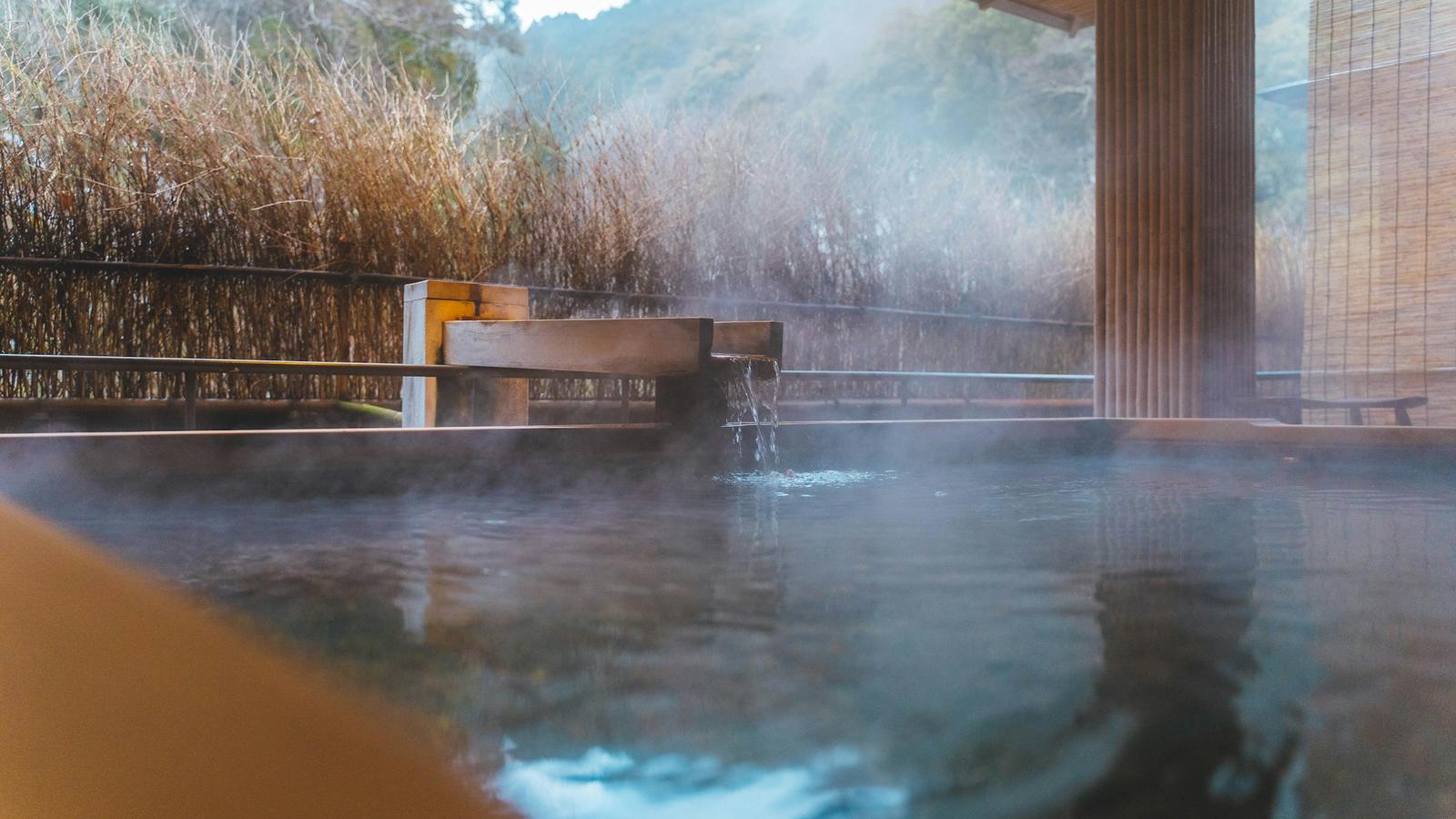
Japan has 27,899 hot spring sources and 2,839 hot spring areas with places to stay, on the Ministry of the Environment's count for the end of March 2025. Those numbers tell you how ordinary onsen is in Japan: it is part of how the country rests, recovers, and connects with its landscape. If you are spending more than a few days in Japan, it is worth knowing how onsen works and which spring towns suit the way you travel.
This guide is for travelers who want more than a single obligatory hotel dip. It covers the different formats, the etiquette that determines whether you are welcome, the destinations worth building a trip around, and how STAYGO handles the logistics.
Key points
- Japanese law defines onsen as water that is 25°C or warmer at source, or that contains enough of any one of 19 listed substances. Japan has nearly 28,000 hot spring sources (Ministry of the Environment, year to March 2025).
- Wash thoroughly before entering, keep the small towel out of the water, and bathe without swimwear.
- Many shared baths still refuse visible tattoos. A room with its own bath, or a private bath reserved by the hour (kashikiri), avoids the question.
- Hakone is the most accessible onsen destination from Tokyo and the most competitive to book; book three to four months ahead for peak season.
WHAT ONSEN ACTUALLY IS
Onsen is thermal spring water, water heated naturally by geothermal activity and defined in Japanese law by its temperature (25°C or more at source) or by its mineral content. Not all hot water qualifies. The law lists 19 substances, any one of which in sufficient quantity makes water an onsen, and the springs range from simple alkaline springs to sulfuric, iron, and radium-bearing waters, each associated with different therapeutic properties and dramatically different aesthetics.
Japan sits on the Pacific Ring of Fire, and volcanic activity has created thermal sources from Hokkaido in the north to Kyushu in the south; Oita Prefecture, home to Beppu, alone has 5,094. The culture around these springs, the bathing rituals, the architecture of the ryokan, the habit of travelling specifically to soak, goes back more than a thousand years. The Arima Onsen Tourism Association's history page notes that the Nihon Shoki records Emperor Jomei staying 86 days at the hot spring of Arima in 631. For many Japanese travellers, the spring town is the reason for the trip.
People in Japan go to an onsen to rest and recover. Keep that in mind and the rules below make sense.
THREE WAYS TO BATHE
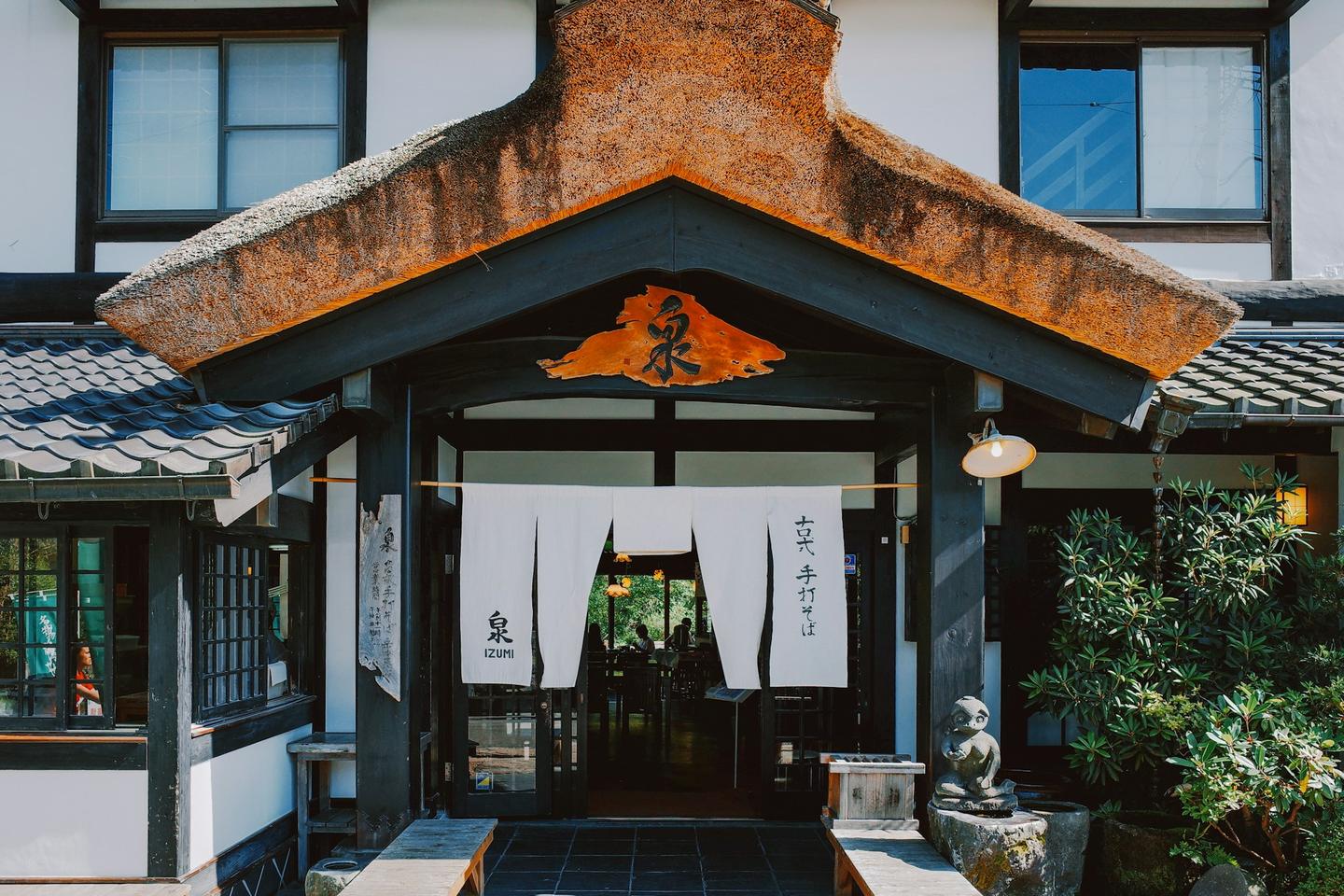
Japanese onsen divide into three broad formats. Each has its appropriate travelers and situations.
FIVE DESTINATIONS WORTH PLANNING AROUND
The onsen destination most easily reached from Tokyo, and for that reason the most competitive for rooms. The Odakyu Romancecar takes about 80 minutes from Shinjuku to Hakone-Yumoto. Hakone sits in volcanic terrain above Sagami Bay, with views of Mount Fuji from well-positioned properties, and the water changes from one village to the next: at Hakone Ginyu in Miyanoshita it is a sodium chloride spring. Two ryokan we look at first are Gora Kadan, on the site of a former villa of the Kan'in-no-miya imperial household, with 41 rooms, suites and villas, and Hakone Ginyu, where every room has its own open-air onsen bath on a terrace facing the Hayakawa valley. Book 3–4 months ahead for peak season.
One of Japan's most concentrated onsen towns, Kusatsu is built around the yubatake (湯畑, "hot spring field"), an open-air wooden structure in the town centre through which the spring water flows. The water is strongly acidic, pH 2.05 according to the site of the town's three public baths, and Kusatsu says it has the largest flow of any naturally flowing hot spring in Japan. Local lore says it cures every illness except lovesickness. Less polished than Hakone, but traditional in atmosphere. At Netsu-no-yu beside the yubatake, the traditional yumomi and dance show runs several times a day (adults ¥700), and between 11:30 and 12:50 visitors can try yumomi themselves for ¥300. By rail, the limited express from Ueno takes about 2 hours 20 minutes to Naganohara-Kusatsuguchi, then about 25 minutes by JR bus.
One of Japan's three oldest hot springs, according to the Arima Onsen Tourism Association, Arima sits above Kobe in the Rokko mountains, about 30 minutes from Sannomiya by subway and the Kobe Electric Railway. Its two waters are distinctive. The kinsen (gold spring) is an iron-bearing, strongly salty sodium chloride water that comes out clear and turns brown soon after it reaches the air; the ginsen (silver spring) covers the clear carbonated and radium springs. The association counts seven of the nine main components of therapeutic springs in Arima's water. In town, the public baths Kin no Yu (8:00–22:00, adults ¥800, ¥650 on weekdays) and Gin no Yu (9:00–21:00, adults ¥700, ¥550 on weekdays) let you try each; both close on two Tuesdays a month. The town is historic, walkable, and close enough to Osaka and Kyoto to combine with a city itinerary.
Beppu has 2,831 hot spring sources and a flow of 101,856 litres a minute, on the city's count for the end of March 2025, and seven of the ten spring types used on Japanese bath notices. The jigoku meguri ("hell tour") circuits seven dramatically coloured spring pools, cobalt blue, blood red, boiling grey, that are for viewing only; the cobalt-blue Umi Jigoku is 98°C. One combined ticket covers all seven (adults ¥2,400, valid on the day of purchase and the next day; open 8:00–17:00 every day), and four of the hells were designated a national Place of Scenic Beauty in 2009. The bathing facilities range from communal sand baths (sunamushi) to high-end ryokan with private pools. Beppu sits well within a Kyushu itinerary.
Hokkaido's most famous onsen destination draws much of its thermal water from Jigokudani ("Hell Valley"), formed by volcanic activity about 10,000 years ago: a raw landscape of steaming vents, grey mineral pools, and sulphurous terrain directly above the town. The local tourism association counts ten spring types across Noboribetsu and nearby Karurusu Onsen. Several hotels open their baths to day visitors; Dai-ichi Takimotokan, for example, charges adults ¥2,500 (open 9:00–21:00, entry until 18:00). By JR limited express it is about 1 hour 10 minutes from Sapporo to Noboribetsu Station, then about 8 km by road to the spa town. Winter is the season to go, when outdoor baths sit under heavy snowfall.
WHAT FOREIGN GUESTS GET WRONG
TATTOOS
Many public and semi-public onsen in Japan still turn away visible tattoos, a policy rooted in the historical association between tattoos and organised crime. Some places are changing their rules. Hoshino Resorts says it does not restrict the use of its facilities because of tattoos, though staff may still refuse the public bath if other guests seem uncomfortable, and at facilities open to day visitors it admits tattoos that eight 8 × 10 cm cover stickers can fully cover. Kusatsu's three public baths (Otaki-no-yu, Gozanoyu and Sainokawara) say they do not turn away guests with tattoos. Elsewhere the practical solution for tattooed guests is simple: a room with its own bath, or a private bath reserved by the hour (kashikiri). If tattoos are relevant for you, we check each property's current policy before the stay is arranged.
SHOWER BEFORE ENTERING
Washing thoroughly before entering the communal bath is non-negotiable. Most facilities have seated shower stations with soap and shampoo just before the bath area. Some open-air baths have none: Kusatsu's Sainokawara has no washing area, so there you rinse with kakeyu, pouring warm water over yourself starting from the hands and feet, which the Japan Onsen Association recommends before any soak. The communal water is shared; entering without washing first is considered a serious breach of etiquette. At high-end properties, this is also where guests acclimatise to the temperature before entering.
THE TOWEL RULE
The small tenugui hand towel provided is for personal modesty and wiping. It does not enter the water. It can be balanced on your head, folded on the side of the pool, or left at the shower station. The large bath towel is for drying in the changing room only. Bringing a large towel into the bathing area is immediately conspicuous.
NO SWIMWEAR
Traditional onsen are bathed in without swimwear. Some mixed baths (konyoku) allow a cover: at Kusatsu's Sainokawara, the men's open-air bath becomes mixed on Fridays from 17:30 to 20:00 (last entry 19:30, some dates excluded); women can rent a bathing wrap (yuamigi) for ¥400 or wear a swimsuit, and men are lent a wrap free of charge. Standard onsen allow neither. This surprises Western guests most consistently. In a private bath at a ryokan the custom is the same; the difference is that only your party is there.
HOW LONG TO STAY IN
The Japan Onsen Association suggests three to ten minutes per soak at first, building up to 15 to 20 minutes once you are used to it, and one or two baths a day for the first few days. Drink a glass of water before and after, and avoid bathing straight after a meal or after alcohol. People with high blood pressure or heart conditions should avoid water of 42°C or more. After the bath, pat yourself dry and leave the spring water on your skin, unless your skin is sensitive and the water is strongly acidic or sulfurous, as at Kusatsu; then rinse it off.
HOW ONSEN BOOKINGS WORK
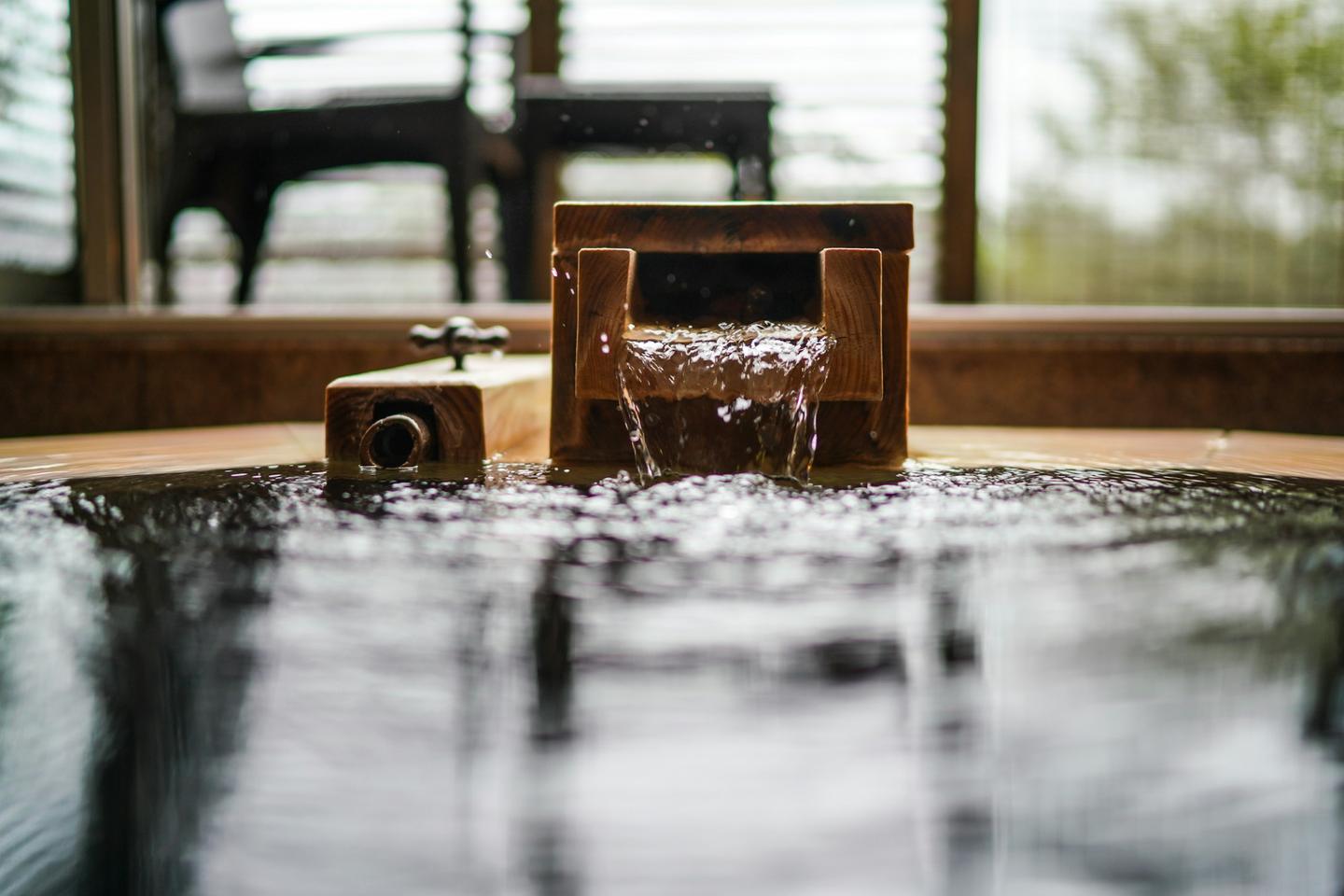
For most luxury ryokans, onsen access is integrated into the accommodation itself. A premium room often includes a private in-room or adjacent bath (heya-buro) as standard. In some cases, guests also have access to the communal large baths at specified times. Many ryokan swap the men's and women's large baths during the day so that guests can try both; at Hakone Ginyu the two baths change over at 22:00, and each has an open-air bath and a sauna.
Kashikiri, private bath reservation, is a separate service at properties where the large communal baths are the primary facility. Reservation windows are typically one hour, bookable at reception or online. Availability is limited and high-demand properties fill their kashikiri slots quickly.
When onsen matters to a trip, we choose the ryokan for its spring and setting, request private bath times where the inn offers them, check tattoo policies when they are relevant, and coordinate transport from the nearest city. Rooms with their own bath are limited at most inns, so it is worth planning the onsen nights as early as the rest of your accommodation.
SOURCES AND HOW WE CHECKED
We first wrote this page from desk research on October 5, 2026, and read every page below again on October 28, 2026. We did not contact the ryokan, the bath operators, the tourism associations, the city or the ministry. Opening hours, prices, show times and tattoo rules change, so we check them again close to your dates when we arrange the trip.
- Hot Springs Act (e-Gov) (Japanese): the schedule defining onsen by a temperature of 25°C or more at source, or by any one of 19 listed substances
- Ministry of the Environment, hot spring use in fiscal 2024 (PDF, Japanese): 27,899 sources and 2,839 hot spring areas with lodging at the end of March 2025, and 5,094 sources in Oita Prefecture
- Japan Onsen Association, what is onsen and cautions when bathing (Japanese): the legal definition explained; kakeyu before the bath, soak times, water before and after, 42°C, not rinsing afterwards, towels out of the water
- japan-guide.com, How to take a hot spring bath: the two towels, bathing without swimsuits, keeping the small towel out of the water
- Hoshino Resorts, FAQ on hotel information: the tattoo policy, the possible refusal at the public bath and the eight 8 × 10 cm cover stickers for day visitors
- Odakyu Electric Railway, Romancecar: about 80 minutes from Shinjuku to Hakone-Yumoto
- Gora Kadan, official site (Japanese): the origins of the inn in a former villa of the Kan'in-no-miya household
- Relais & Châteaux, Gôra Kadan: 41 rooms, suites and villas, and the former imperial retreat
- Hakone Ginyu, official site and onsen (Japanese): open-air baths in every room facing the Hayakawa valley, the sodium chloride spring, the 22:00 changeover of the large baths
- Kusatsu three public baths, official site, Sainokawara FAQ and mixed bathing day (Japanese): pH 2.05, the lovesickness saying, the tattoo policy of the three baths, no washing area at Sainokawara, rail access times, the Friday mixed bathing hours and bathing wraps
- Kusatsu Onsen, spring quality declaration (Japanese): the largest flow of any naturally flowing hot spring in Japan
- Kusatsu Onsen Tourism Association, Netsu-no-yu (Japanese): show times, the ¥700 adult ticket and hands-on yumomi from 11:30 to 12:50 for ¥300
- Arima Onsen Tourism Association, spring quality, history and access from Hyogo (Japanese): one of Japan's three oldest hot springs, seven of the nine main components, Emperor Jomei's 86-day stay in 631, about 30 minutes from Sannomiya
- Arima, Kin no Yu and Gin no Yu (Japanese): hours, prices and closing days of the two public baths, the composition of the kinsen and ginsen
- Beppu City, hot spring data (Japanese): 2,831 sources, a flow of 101,856 litres a minute and seven of the ten spring types
- Beppu Jigoku Association, opening hours and fees and national Place of Scenic Beauty (Japanese): the ¥2,400 combined ticket, its two-day validity, 8:00 to 17:00 every day, the 2009 designation and the 98°C Umi Jigoku
- Noboribetsu International Tourism and Convention Association, ten springs, day bathing and access (Japanese): Jigokudani formed about 10,000 years ago, ten spring types with Karurusu, Dai-ichi Takimotokan's day-bathing price and hours, about 1 hour 10 minutes by JR limited express from Sapporo
QUESTIONS, ANSWERED
What is onsen and how is it classified in Japan?
Onsen is thermal spring water as defined in Japanese law: water that is 25°C or warmer at source, or that contains enough of any one of 19 listed substances. Not all hot water qualifies. The classification is legally defined and carries significant cultural meaning.
Can visitors with tattoos use onsen in Japan?
Many public onsen still prohibit visible tattoos due to historical association with organised crime. The practical solution is a room with its own bath, or kashikiri, a private bath at a ryokan reserved for your party, where tattoos are usually not an issue, though each inn sets its own rules. If tattoos are relevant for you, we check each property's policy before the stay is arranged.
What is the etiquette for using a Japanese onsen?
Always shower thoroughly at the provided bathing station before entering the communal pool. The small hand towel is for modesty only and must not enter the water. Traditional onsen do not permit swimwear. Keep voices low. Onsen are places of rest and quiet recovery.
What is kashikiri and how do you book a private onsen bath?
Kashikiri is a reserved private bath, typically booked in one-hour increments. Most premium ryokans offer it either as a room feature or as an add-on reservation. Availability is limited at popular properties and fills quickly. Where an inn accepts advance requests, we ask for a kashikiri time when we arrange the stay.
Which onsen destination is best for first-time visitors to Japan?
Hakone is the most accessible from Tokyo (90 minutes), offers potential Mount Fuji views, and has a wide choice of ryokan, including Gora Kadan and Hakone Ginyu. For a more traditional atmosphere, Kusatsu in Gunma or Arima near Kobe are good alternatives, each with its own distinct spring water.
PLANNING AN ONSEN STAY
We choose the ryokan with you for its spring and setting, request private bath times where the inn offers them, and coordinate the journey there.
Start planningWe reply within 24 hours, in writing
Some of the restaurants and bars we arrange seat guests only by introduction or membership. We ask on your behalf; the table and the evening are the house's decision. We do not publish their names.