There are two reservation systems in Tokyo. The first is visible: apps, booking platforms, hotel concierge desks, and the occasional English-language phone call. The second operates entirely below the surface. It is driven by relationships, repeat visits, and introductions. Many of Tokyo's most sought-after restaurants fill most of their seats through the second.
Understanding why this is the case, and what it means for how you plan a trip, changes what you can realistically plan for.
Key points
- Many of Tokyo's most sought-after restaurants fill most of their seats through relationships, repeat visits and introductions. Apps and booking platforms see few of their seats.
- Seats go roughly in this order: regulars, guests arriving through introductions, hotel concierge relationships, and then the general public. Familiarity and trust decide the order; the bill is the same for everyone.
- A hotel concierge is reliable for certain restaurants, and much less so for the most sought-after counters.
- Many kaiseki restaurants that are functionally impossible at dinner offer a lunch course, priced below dinner, with far less competition for seats. Lunch first and dinner on the next trip is a normal pattern.
WHY THE MOST SOUGHT-AFTER TABLES DON'T APPEAR ONLINE
A kaiseki counter with eight seats opens its reservation book once a month for dates six weeks out. Within the first hour, most of those dates are filled by returning guests who have dined there before. The remainder go to guests introduced by someone the restaurant already knows. By the time a booking platform or travel site gains any access, if it does at all, there is often nothing left to give.
The arithmetic explains most of it. A restaurant serving eight guests per evening, open five nights a week, has 40 covers to give. With most seats going to returning guests, small scale and high demand leave very little of that for strangers, even well-intentioned ones.
People who follow these restaurants closely say the same. Writing in Diamond Online in February 2026, the gourmet Takefumi Hamada noted that many of Tokyo's top restaurants are entirely introduction-only, and that some need a booking more than a year ahead.
The most decorated restaurants in Tokyo show how little reaches the open market. Kagurazaka Ishikawa, one of Tokyo's three-star restaurants, has a counter of seven seats and four private rooms. Kohaku, also in Kagurazaka, holds two stars, and Kanda, now in the Toranomon Hills Residential Tower, holds three. All three put some seats on OMAKASE, the booking service the MICHELIN Guide links to, but only in rounds. Ishikawa and Kohaku open roughly one round every two months and often show the next one as to be announced, and Kanda's page describes its periods as irregular. Kanda's page also asks that the person who made the reservation be the one who dines, and says it does not accept reservations made on someone else's behalf. Akasaka Kikunoi, the Tokyo branch of Kyoto's Kikunoi and holder of two stars, takes reservations by phone and email, and Kikunoi's English page offers online booking through MY CONCIERGE and TableAll.
The rules of those rounds are strict. On OMAKASE, Ishikawa and Kohaku allow one booking per account every two months, a fee of ¥390 per seat is charged when the booking is made, and Ishikawa's cancellation charge starts at 5 percent as soon as you book. Kanda charges 30 percent three days before, 50 percent two days before and 100 percent on the day. On TableAll, which also lists Tokyo counters, only about 20 percent of bookings are instant, from seats it buys in advance; the rest are requests it takes to the restaurant.
The guide itself shows how small this group is. The MICHELIN Guide Tokyo 2026, announced in September 2025, lists 526 restaurants, of which 12 hold three stars, 26 two and 122 one; on October 28, 2026, its online list of Tokyo three-star restaurants showed eleven. Kanda has held three stars without a break since the first Tokyo guide in 2008, and the guide gave Hideki Ishikawa its Mentor Chef Award in the 2023 edition for training young chefs and opening the way for them to lead kitchens in his group.
WHO GETS THE SEATS FIRST
The hierarchy is roughly as follows. Regulars, meaning guests who have dined at the restaurant more than once and who the staff recognize, are contacted first or given early access when the booking window opens. Below them are guests arriving through introductions: someone the restaurant trusts has vouched for the new guest, which carries its own form of accountability. Below that are hotel concierge relationships at properties the restaurant respects. Below that, in the narrow remaining space, is the general public.
Regulars hold their place in a simple way: they book the next visit before they leave. In 2019 the Tokyo yakiniku restaurant Hiromiya told Gendai Business that because guests who had eaten there booked their next visit on the way out, it was full two years ahead, and that it took new guests only by phone at 14:00 on the first of each month.
Most of these restaurants cost the same regardless of who you are, so the filter is familiarity and trust. A restaurant that serves 2,500 dinners per year has built its reputation on the quality and consistency of those evenings. An unknown guest carries unknown risk.
THE THREE WAYS IN
The hotel concierge route works, but with caveats. A concierge at Aman Tokyo, The Peninsula, or Park Hyatt can call restaurants that have a standing arrangement to accept a small number of hotel-referred guests. This works reliably for a subset of restaurants. For Ishikawa or Kanda, which release their open seats in rounds on OMAKASE, hotel referrals are not a reliable path in.
A local specialist who has dined at a restaurant repeatedly, writes to it in Japanese and is known to the kitchen is in a different position. The request comes from someone the restaurant already knows, though the restaurant still decides, date by date, whether it has a seat to offer. Some restaurants do not take requests made for another person at all, as Kanda's page on OMAKASE makes clear.
LUNCH AS THE ENTRY POINT
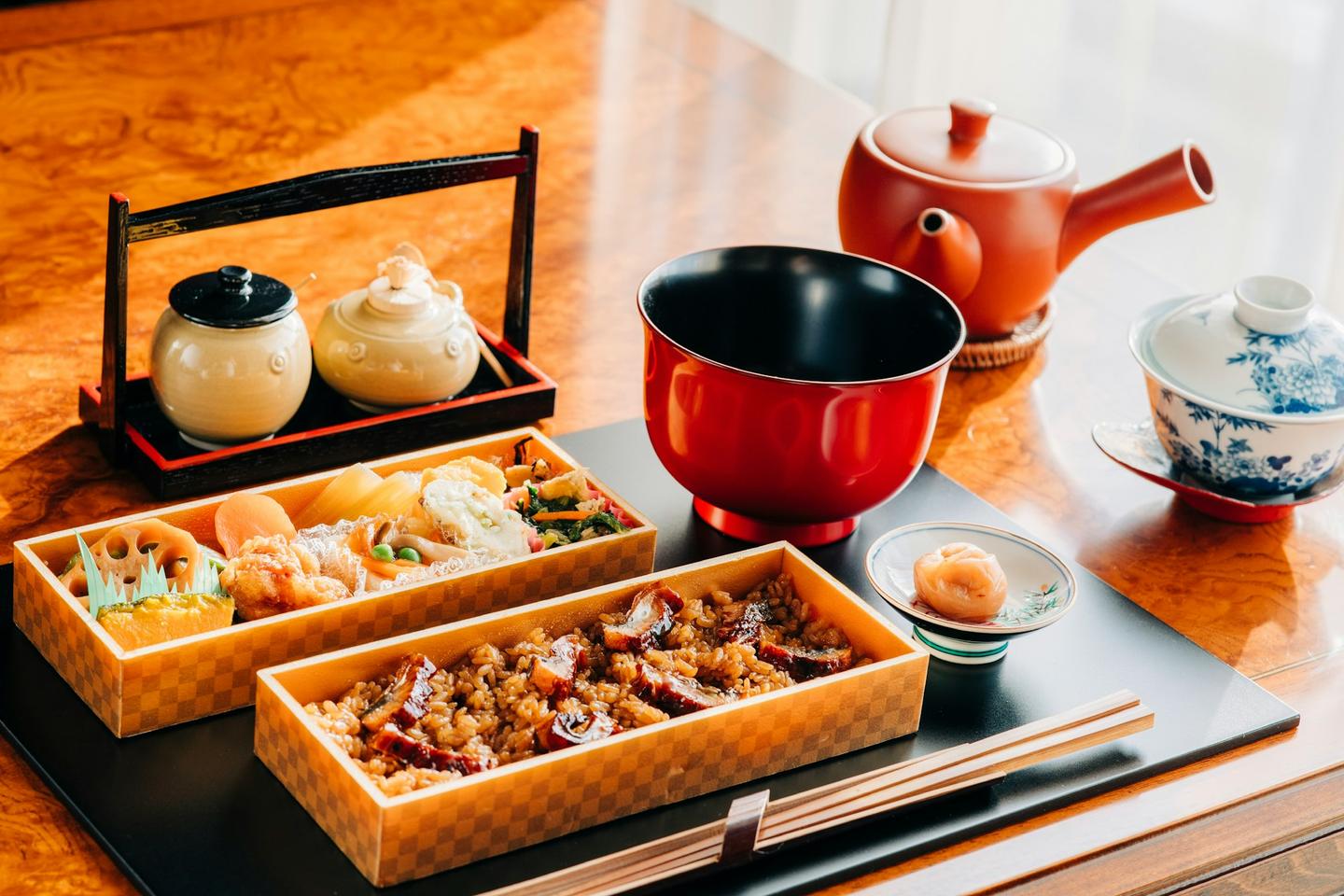
In Tokyo, lunch is often the way in. Many kaiseki restaurants that are functionally impossible at dinner offer a lunch course, priced below dinner, with substantially less competition for seats. The kitchen is the same and the ingredients are often identical. The meal is shorter, and the cooking is the same.
The published prices bear this out. At Akasaka Kikunoi, lunch kaiseki costs ¥14,300, ¥17,600 or ¥22,000 with a 10 percent service charge, while dinner runs from ¥22,000 to ¥77,000 with 15 percent, or 20 percent in a private room. Lunch is served at the first-floor seats only. Kohaku seats guests from 12:00 as well as from 17:00, Ishikawa opens for lunch on Saturdays only, and Kanda offers lunch as occasional events, such as a matsutake lunch kaiseki held from October 6 to 8, 2026.
For a first-time guest trying to access a restaurant they've never visited before, lunch is often the most rational path. It establishes the guest in the restaurant's records. On a return visit, or on a future trip, that history makes the next dinner far more realistic.
Many of Tokyo's most devoted regulars began this way. The sequence, lunch first and dinner on the next trip, is a normal pattern for guests who take Japanese dining seriously.
WHAT STAYGO DOES
When we ask a restaurant for a table, we write in Japanese and the request comes with context: who the guest is, what they have enjoyed before, any dietary requirements, and what kind of evening they are hoping for. We follow each restaurant's own rules on rounds, fees and cancellations as they stand for your dates.
Some of the restaurants we approach take new guests mainly through introductions. We can ask on your behalf, and whether a seat is offered depends on availability that day and on the restaurant's own judgment. Where a restaurant asks guests to reserve in their own name, as Kanda does, we tell you early and plan around the round you can enter.
Not every restaurant is open for every date. When the first choice is full, we suggest another counter and explain why it suits the evening you have in mind, and lunch is often part of that answer.
SOURCES AND HOW WE CHECKED
We first wrote this guide on June 13, 2026 and read every page below on October 28, 2026, and the OMAKASE and Kikunoi pages again on November 3, 2026. We did not contact the restaurants or the booking services. Stars, prices, booking rounds and cancellation terms change, so we check them again for your dates when we arrange the meal. The view of how regulars and introductions shape access comes from our own work.
- MICHELIN Guide, Tokyo three-star restaurants: the eleven three-star restaurants, Kagurazaka Ishikawa and Kanda among them
- MICHELIN Guide, Tokyo two-star restaurants: Kohaku and Akasaka Kikunoi at two stars
- MICHELIN Guide, Kagurazaka Ishikawa: opening hours, Saturday lunch, booking link to OMAKASE
- MICHELIN Guide, Kanda: address in the Toranomon Hills Residential Tower, booking link to OMAKASE
- OMAKASE, Kagurazaka Ishikawa: seats, price, reservation round, once every two months, ¥390 fee, cancellation
- OMAKASE, Kohaku: hours, reservation period, once every two months
- OMAKASE, Kanda: seats, irregular periods, reservations in the diner's own name, service charge, cancellation, the October 2026 matsutake lunch
- Akasaka Kikunoi (Japanese): lunch and dinner prices, service charges, seats, reservations by phone and email
- Kikunoi, English page: online booking for Akasaka Kikunoi through MY CONCIERGE and TableAll
- TableAll, FAQ: instant bookings and requests, booking windows
- MICHELIN Guide, All New MICHELIN-Starred Restaurants in Tokyo 2026: 526 restaurants, 12 three-star, 26 two-star and 122 one-star
- MICHELIN Guide, Hiroyuki Kanda of Three MICHELIN Stars Kanda (June 2024): three stars without a break since the Tokyo guide of 2008
- MICHELIN Guide, MICHELIN Guide Tokyo 2023 (November 2022): the Mentor Chef Award to Hideki Ishikawa
- Diamond Online, Takefumi Hamada on restaurants that cannot be booked (February 19, 2026) (Japanese): introduction-only top restaurants, bookings more than a year ahead
- Gendai Business, on the hardest restaurants to book (July 22, 2019) (Japanese): Yakiniku Hiromiya: next visits booked on the way out, full two years ahead, new guests by phone on the 1st
QUESTIONS, ANSWERED
Why can't I find Tokyo's most sought-after restaurants on booking sites?
Tokyo's top kaiseki and sushi counters are small, and the seats they put online are few. Kagurazaka Ishikawa, with three MICHELIN stars, has seven counter seats and four private rooms, and releases seats on OMAKASE only in rounds, with one booking per account every two months. Regulars and guests introduced by known contacts take much of the rest, so there is often little left on any platform.
How far in advance do top Tokyo restaurants take reservations?
Each restaurant sets its own window. TableAll says the restaurants it lists open bookings one to three months ahead, and on OMAKASE some three-star counters open in rounds and list the next one as to be announced. Regulars and returning guests may be offered dates before a window opens to everyone else.
Can a hotel concierge get reservations at Tokyo's most sought-after restaurants?
Concierges at leading Tokyo hotels such as Aman, The Peninsula and Park Hyatt maintain ongoing relationships with certain restaurants and can access seats that aren't available to the general public. However, concierge access varies significantly by property and by restaurant. The most sought-after counters (Ishikawa, Kohaku, Kanda) are not reliably accessible through hotel channels alone.
Is lunch easier to book than dinner at Tokyo's top restaurants?
Yes, in most cases. Many kaiseki and omakase counters offer a lunch service at a lower price that is far less contested than dinner. At Akasaka Kikunoi, for example, lunch kaiseki costs ¥14,300 to ¥22,000 and dinner ¥22,000 to ¥77,000, before the service charge. Some top counters open for lunch only on certain days, as Kagurazaka Ishikawa does on Saturdays.
How does STAYGO approach tables at Tokyo restaurants?
We write to the restaurant in Japanese with the context it needs: who the guest is, any dietary requirements, and the kind of evening they have in mind. For restaurants that take new guests mainly through introductions, we can ask on your behalf, and whether a seat is offered depends on availability that day and on the restaurant's own judgment. Where a restaurant asks guests to reserve in their own name, we tell you early and plan around it.
THE RIGHT TABLE IS PART OF THE TRIP
We arrange dining in Tokyo and across Japan, including counters that seldom appear online. What is possible depends on the seats each restaurant has for your dates.
Begin planningWe reply within 24 hours, in writing
Some of the restaurants and bars we arrange seat guests only by introduction or membership. We ask on your behalf; the table and the evening are the house's decision. We do not publish their names.