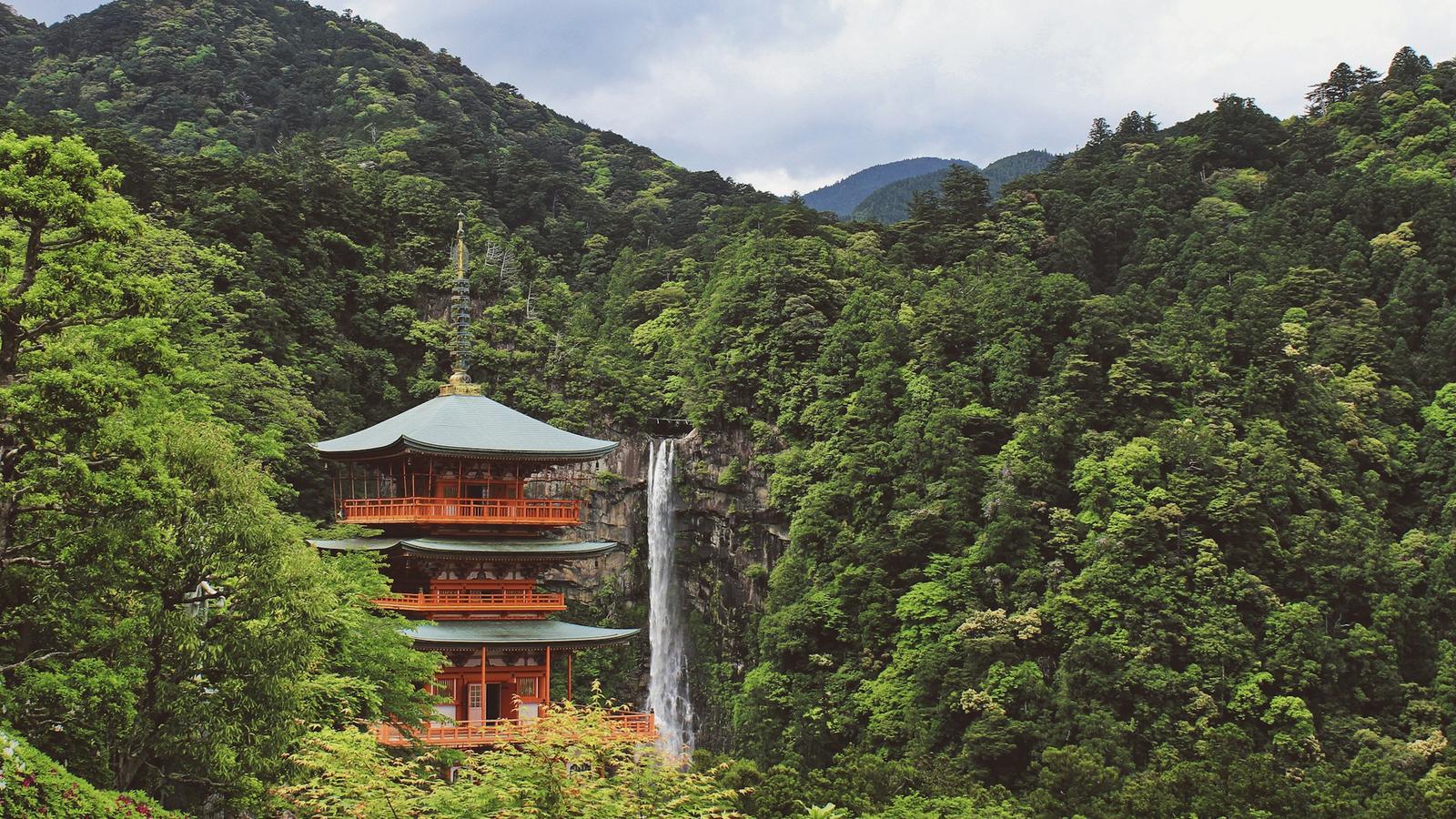
Tokyo and Kyoto are excellent, and the case for them does not need making again. The ryokan, the cooking and the cultural depth are all real reasons to go. But for travellers on their second or third visit, the question changes.
The five regions below offer something different. The best inns stand comparison with those on the main circuit, the cooking draws on regional traditions you will not find in Tokyo, and the landscapes are shared with far fewer people. What they ask for is planning, particularly on transport, language and timing.
Key points
- Five destinations for a second or third visit: Nikko, the Okinawan outer islands, the Noto Peninsula, the Sanin Coast and the Seto Inland Sea.
- Two to three nights is the ideal length for a first visit to Nikko as an extension of a Tokyo stay, with mountain ryokan in the Kinu Onsen valley.
- Recovery in Noto after the January 2024 earthquake is ongoing and uneven by area. STAYGO works only with verified, reopened properties there and provides current access information.
- The practical challenge in these regions is doing them well: regional transport needs planning, and English-language service at regional ryokan and local restaurants is often minimal or absent.
WHY THESE DESTINATIONS ARE EMERGING NOW
Two things are drawing travellers beyond the main circuit. First, the crowds: Tokyo and Kyoto are hard to enjoy well at peak times, and more travellers know it. Second, the regions themselves have changed: new places to stay, such as The Ritz-Carlton, Nikko, which opened on Lake Chuzenji in 2020, new museums, such as the Naoshima New Museum of Art in 2025, and more English-language service in areas that were once hard to visit.
The destinations below are well known within Japan and increasingly written about abroad, yet still far quieter than Kyoto, which makes them easy to enjoy at an unhurried pace.
FIVE DESTINATIONS
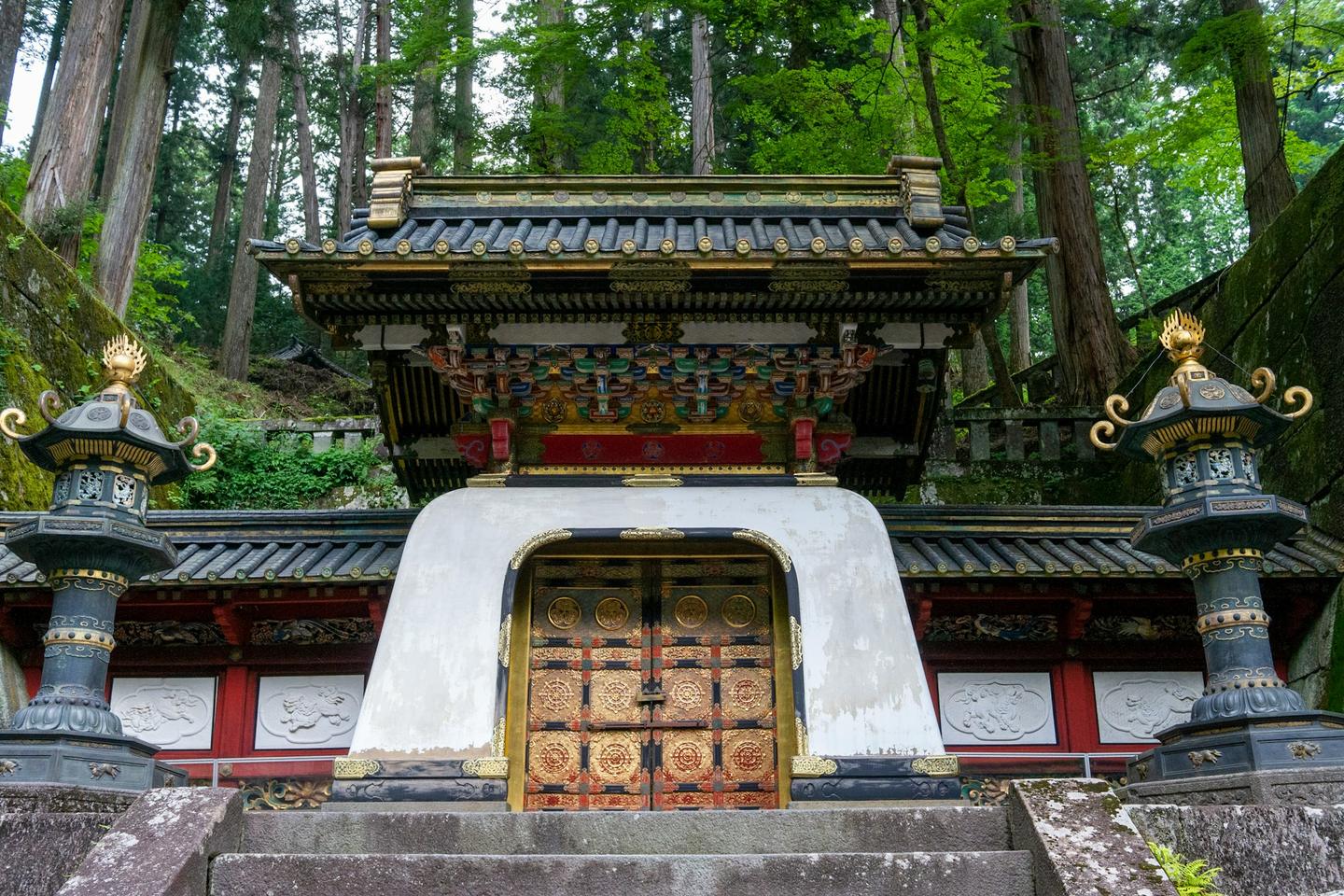
Nikko's UNESCO World Heritage shrine complex, anchored by Toshogu Shrine, where Tokugawa Ieyasu was enshrined in 1617 and whose present buildings date from the rebuilding of 1636 under the third shogun, Iemitsu, is famous for its ornate decoration. Gold leaf, elaborate carvings and painted lacquer across dozens of structures look quite unlike the more restrained temples of Kyoto. The surrounding Nikko National Park offers Chuzenji Lake, Kegon Waterfall, and cedar-lined avenues that predate the Meiji era, where about 12,500 trees still stand.
For accommodation, the Kinu Onsen valley to the north offers mountain ryokans with private rotenburo, in the same spirit as Hakone's and often with more choice of dates. Two to three nights suits a first Nikko visit combined with a Tokyo stay.
Getting there is part of the stay. Tobu's SPACIA X limited express, in service since July 15, 2023, runs from Asakusa to Tobu-Nikko in about 1 hour 50 minutes, with six round trips a day, four to Tobu-Nikko and two to Kinugawa Onsen, according to the route service Ekitan. A standard seat costs ¥3,340 one way, and the Cockpit Suite at the front, a private room for up to seven, adds ¥18,000; seats go on sale one month before the travel date. Higher up, The Ritz-Carlton, Nikko stands on Lake Chuzenji in Oku-Nikko, with 94 rooms and an onsen fed from Nikko Yumoto, whose water turns milky white in the air. Toshogu opens from 9am to 5pm between April and October and from 9am to 4pm between November and March, and entry costs ¥1,600.
What we can arrange: ryokan selection, private transport from Tokyo, an English-speaking guide for Toshogu and Rinnoji, and local kaiseki dinners.The Yaeyama Islands, Ishigaki, Iriomote, Taketomi, Yonaguni, are Japan's southernmost inhabited islands and among its richest in wildlife. Iriomote is mostly subtropical jungle inside Iriomote-Ishigaki National Park, home to the Iriomote cat and part of a UNESCO World Natural Heritage site, with coral reef systems that draw experienced divers. Taketomi is a preserved Ryukyu village with traditional red-tile houses and water buffalo transport. Ishigaki anchors the island chain with its airport and the widest choice of hotels.
The Kerama Islands, reached by ferry or charter from Naha, are known for exceptionally clear water; Kerama Blue is the national park's own name for its colour, and you can see why once you are out on the water. For travelers who know the Maldives or Polynesia, the outer islands add something different: a living Ryukyu culture alongside the reef.
Iriomote now has entry rules. Since March 1, 2025, five areas of the island, including the Hinai River route to Pinaisara Falls, the Nishida River to Sangara Falls and the upper Urauchi River with Mayagusuku Falls, need prior approval from the mayor of Taketomi Town. Each area has a daily cap, and entry needs a guide approved by the town or, for three of the areas, a town-run briefing; applications open up to six months ahead. Taketomi Town also passed a visit tax ordinance on June 13, 2025, and says collection should start during fiscal 2026, with the date still to be set. On Taketomi Island, red-tile roofs, coral-stone walls and shisa on the rooftops remain, and water buffalo carts still carry visitors through the village.
What we can arrange: island routing, boutique property selection, private boat charters, dives with a local operator for certified divers, and Ryukyu cultural experiences.Noto was, before January 2024, one of the less-visited corners of Japan, a rugged Sea of Japan coastline with exceptional seafood, traditional lacquerware (Wajima-nuri), the Senmaida terraced rice paddies, and the long-established ryokan of Wakura Onsen. The region's visitor base was almost entirely domestic and Japanese-speaking.
Post-earthquake recovery is ongoing and uneven by area. The broader region, including Kanazawa, which was largely unaffected, remains open and well worth the visit. STAYGO works only with verified, reopened properties in Noto proper and provides current access information as standard. For travelers who want to see a part of Japan that few international visitors reach, and to support the recovery by staying, Noto is worth the extra planning.
One practical sign of where things stand: the Wajima Morning Market now trades as a permanent market inside the Wajima Wipura Plaza shopping centre, from 9am to 1pm, closed on Wednesdays and on some other days, according to its own site. Ishikawa Prefecture's tourism site lists events that support Noto producers and, from September 1 to March 31, a prize draw of Noto produce for guests who stay at participating Noto inns and answer a survey.
Where things stood in 2026: in January the Ministry of Finance's Hokuriku bureau reported that 9 of the 20 inns in the Wakura Onsen tourism association had reopened, with about 30% of their pre-earthquake rooms, and that guest numbers at Wakura were still below 40% of the level before the earthquake. In Wajima, the city's tourism association knew of only a dozen or so places to stay that could take visitors. By September 2026, Wakura Onsen's tourism association, its ryokan cooperative and JR West reported that 11 of the 19 member inns had resumed overnight stays. Shirasagi no Yu Noto Kaishu in Wakura reopened on July 16, 2026, with 98 rooms. We check which inns are open for your dates before we suggest Noto.
What we can arrange: verified property selection with current status, Wajima lacquerware artisan visits, private coastal transport, and Kanazawa combination itineraries.The Sanin region, facing the Sea of Japan across Tottori and Shimane prefectures, is one of Japan's quieter coastlines. It has three main draws: Izumo Taisha, one of Japan's oldest and most venerated shrines, far less crowded than comparable sites in Kyoto; the Adachi Museum of Art in Shimane, whose gardens, about 50,000 tsubo (roughly 165,000 square metres), the museum says have been ranked first in Japan for 23 consecutive years, and which the Michelin Green Guide Japan lists with three stars; and a regional cuisine tradition centered on Matsuba crab, Daisen beef and local sake.
The Tottori Sand Dunes, Uradome Coast, and the rural mountain towns of interior Shimane add landscape variety that the coastal circuit rarely provides. Reached by Shinkansen to Okayama, then by limited express through the mountains, the journey itself is scenic. A private car from Osaka or Hiroshima saves several changes of train and adds flexibility.
Izumo Taisha's present main hall dates from 1744 and follows the design of the 1667 hall, which stood about 24 metres high, according to the shrine. The deity was moved to a temporary hall in April 2008 while the roof was re-covered in cypress bark, and returned to the main hall on May 10, 2013. At the Adachi Museum, two windows frame the garden as what the museum calls a living picture and a living hanging scroll, and the 15-metre Kikaku waterfall on the hillside is modelled on Yokoyama Taikan's painting of Nachi Falls, which the museum owns. It opens from 9am to 5:30pm between April and September and from 9am to 5pm between October and March, and adult entry costs ¥2,500.
What we can arrange: private car routing, a visit to the Adachi Museum timed for the morning, a guide at Izumo Taisha, Matsuba crab dinners in season, and traditional inn selection in Tamatsukuri Onsen.The Seto Inland Sea is where contemporary art, island landscape and maritime culture meet. Naoshima Island, purpose-built around Tadao Ando architecture and the Benesse Art Site, is internationally known in design and architecture circles but remains surprisingly quiet for most of the year. Teshima and Inujima add further site-specific art installations. Together they make a cultural journey of their own.
Beyond the art islands, the Setouchi encompasses the historic port town of Tomonoura, the Shimanami Kaidō cycling route across the islands between Onomichi and Imabari, and Onomichi, a hillside fishing town that has undergone quiet creative reinvention. Boutique accommodation on the islands ranges from converted traditional homes to purpose-designed artist residences. Every three years, with the next edition in 2028, the Setouchi Triennale brings additional programming. Accessible from Hiroshima in under 2 hours and from Osaka in 3.
Naoshima has a new museum. The Naoshima New Museum of Art, Tadao Ando's tenth building for Benesse Art Site Naoshima, opened in spring 2025 on a hilltop near the Honmura district; it is closed on Mondays and entry costs ¥1,500 online. Since October 1, 2024, tickets for all the art facilities on Naoshima, Teshima and Inujima have been sold online, and Chichu Art Museum sells entry by date and time slot, at ¥2,500 on weekdays and ¥2,700 at weekends and on holidays, more at the door. Slots can sell out, so we plan the island days around them as soon as the dates are fixed. The 2025 Setouchi Triennale has ended; the festival spans 17 islands and coastal areas and draws about a million visitors, and the 2028 edition has been announced.
What we can arrange: island-hopping routing by ferry and private boat, a request for a room at Benesse House, subject to availability, private architecture tours, and Hiroshima combination itineraries.WHICH REGION FITS A SECOND TRIP
This guide is about where to go. If you are still deciding what a second trip should be, slower, deeper or simply different, start with Japan for the first time and the second time. Then match the region to the stay you want.
- Nikko, for two or three nights from Tokyo, a mountain lake and the most richly decorated shrines in Japan.
- The Okinawan outer islands, for reef, jungle and Ryukyu culture, reached by air.
- The Noto Peninsula, for seafood and lacquer, with fewer inns open than before 2024.
- The Sanin Coast, for gardens, shrines and the Japan Sea, at a slower pace.
- The Seto Inland Sea, for art, architecture and islands, with timed museum entry.
PLANNING A TRIP BEYOND THE MAIN CIRCUIT
Secondary Japan destinations are on the map and increasingly written about. The practical challenge is doing them well. Regional transport needs planning that standard itinerary tools do not provide, and English-language service at regional ryokan and local restaurants is often limited. Most of the work lies between knowing a destination exists and enjoying it well.
We plan these regions with the same care for the inn, the transfers and the timing as a Tokyo and Kyoto journey. They suit a second or third trip, or a first trip for travellers who would rather trade a famous name for a quieter day. Each can be joined to the main circuit, as Nikko is to Tokyo or Setouchi to Hiroshima.
A realistic first plan: two to three nights in Nikko, or four to five days in Setouchi.
SOURCES AND HOW WE CHECKED
We first wrote this page from desk research in June 2026 and read every page below again on October 28, 2026: the shrines', museums', hotels' and rail company's own pages, the town and park pages that set the rules on Iriomote, a route service and a booking site. We did not contact any of them. Hours, fares, prices and local rules change, so we check them again close to your dates when we arrange the trip.
- Nikko Toshogu, about the shrine (Japanese): Ieyasu enshrined in 1617, the 1636 rebuilding under Iemitsu, about 12,500 cedars on the avenues
- Nikko Toshogu, visiting hours and fees (Japanese): opening hours by season and the ¥1,600 entry
- Tobu Railway, SPACIA X debut: the July 15, 2023 debut and the Asakusa to Nikko and Kinugawa route
- Ekitan, SPACIA X timetable, fares and tickets: travel time, six round trips, seat prices, Cockpit Suite, sale one month ahead
- The Ritz-Carlton, Nikko: location on Lake Chuzenji in Oku-Nikko, onsen water from Nikko Yumoto
- Ikyu, The Ritz-Carlton, Nikko: 94 rooms, the milky white spring water
- Taketomi Town, approval to enter restricted areas on Iriomote (Japanese): the five areas, approval from March 1, 2025, daily caps, guides and briefings, six months ahead
- Taketomi Town, visit tax (Japanese): the ordinance of June 13, 2025 and the planned start in fiscal 2026
- Taketomi Town, Iriomote Island (Japanese): subtropical jungle, the national park, the Iriomote cat
- Taketomi Town, Taketomi Island (Japanese): red-tile roofs, coral-stone walls, shisa, water buffalo carts
- Ministry of the Environment, Iriomote-Ishigaki National Park (Japanese): Iriomote as part of the World Natural Heritage site
- Ministry of the Environment, Keramashoto National Park (Japanese): the park's own phrase Kerama Blue
- Wajima Morning Market (Japanese): the permanent market in Wajima Wipura Plaza, hours, closing day
- Ishikawa Prefecture Tourism League, Noto stay campaign (Japanese): the September 1 to March 31 prize draw for stays in Noto
- Izumo Taisha, history of the rebuildings (Japanese): the 1744 main hall, the 1667 hall of about 24 metres, the 2008 to 2013 re-roofing
- Adachi Museum of Art: 23 consecutive years ranked first, the Michelin Green Guide stars, hours and fees
- Adachi Museum of Art, the gardens (Japanese): 50,000 tsubo, the framed views, the Kikaku waterfall and Taikan
- Benesse Art Site Naoshima, Naoshima New Museum of Art: spring 2025 opening, Tadao Ando, closing day, ¥1,500
- Benesse Art Site Naoshima, tickets: online tickets from October 1, 2024, Chichu time slots and prices
- Setouchi Triennale: the 2025 edition concluded, about a million visitors, the 2028 edition
- Setouchi Triennale, about: the 17 islands and coastal areas
- Shimanami Japan, cycling (Japanese): the route between Onomichi and Imabari
- Ministry of Finance, Hokuriku Local Finance Bureau, recovery after the Noto Peninsula earthquake (January 29, 2026, Japanese): 9 of the 20 Wakura Onsen association inns reopened with about 30% of former rooms; Wakura guests under 40% of the pre-earthquake level; a dozen or so places to stay in Wajima (read November 4, 2026)
- Kyoritsu Maintenance, Shirasagi no Yu Noto Kaishu reopening (PR TIMES, June 11, 2026, Japanese): reopening on July 16, 2026, 98 rooms (read November 4, 2026)
QUESTIONS, ANSWERED
Which luxury destinations in Japan are worth visiting beyond Tokyo and Kyoto?
The emerging luxury destinations attracting visitors who have already done Tokyo and Kyoto are Nikko (Tochigi Prefecture), the Okinawan island chain, Noto Peninsula (Ishikawa), the Sanin Coast (Tottori and Shimane), and the Seto Inland Sea (Setouchi). Each offers highly regarded accommodation and cultural depth with significantly lower visitor density than the main tourist circuit.
Is Okinawa worth visiting as a luxury destination?
Yes, particularly the outer islands. The Yaeyama chain (Ishigaki, Iriomote, Taketomi) and the Kerama Islands near the main island offer pristine coral reef ecosystems, Ryukyu cultural heritage, and boutique properties with private beach access. The main island has its own luxury hotel market including high-end international brands, but the outer island experience is qualitatively different.
What is there to do in Nikko for a luxury traveler?
Nikko offers UNESCO World Heritage shrines (Toshogu Shrine complex) of remarkable decorative detail, mountain onsen ryokans in the Kinugawa valley, Chuzenji Lake and Kegon Falls in the surrounding national park, and easy day trips into rural Tochigi for kaiseki and traditional crafts. For luxury travelers, it is an ideal 2–3 night extension from Tokyo.
What is the Setouchi region like for luxury travel?
The Seto Inland Sea (Setouchi) encompasses island art museums (Naoshima, Teshima, Inujima), boutique island accommodation, the historic port of Tomonoura, and one of Japan's most scenic rail journeys. The Setouchi Triennale brings contemporary art to island venues every three years, with the next edition in 2028. The region is accessible from Osaka, Hiroshima, and Okayama and rewards travelers with 4–5 days to explore properly.
Is the Sanin Coast accessible for international luxury travelers?
Yes. From Okayama on the Shinkansen, the Super Inaba limited express runs to Tottori and the Yakumo to Matsue and Izumo. From Hiroshima, a car is the simplest link. A private car between the sights saves several changes of train, and a guide with English makes the shrines and the smaller towns easier to enjoy.
Is the Noto Peninsula open to visitors again?
Partly. In January 2026 the Ministry of Finance's Hokuriku bureau reported that 9 of the 20 inns in the Wakura Onsen tourism association had reopened, with about 30% of their former rooms, and that Wajima had only a dozen or so places to stay for visitors. By September 2026, Wakura Onsen's tourism association, its ryokan cooperative and JR West reported that 11 of the 19 member inns had resumed overnight stays. Kanazawa was largely unaffected. We confirm which inns are open for your dates.
Which of these regions suits a traveller who has already seen Tokyo and Kyoto?
All five are chosen for second and third visits. Nikko pairs most easily with Tokyo, and Noto with Kanazawa. The Okinawan islands, the Sanin Coast and the Seto Inland Sea suit a slower trip with a flight or a longer train journey.
PLAN YOUR BEYOND-TOKYO JAPAN TRIP
We plan journeys across Japan, from Tokyo and Kyoto to the regions in this piece. Tell us where you want to go and how long you have.
Start planningWe reply within 24 hours, in writing
Some of the restaurants and bars we arrange seat guests only by introduction or membership. We ask on your behalf; the table and the evening are the house's decision. We do not publish their names.