Most travelers arrive in Japan in spring for cherry blossoms or in autumn for the maples. Both are exceptional. Both are also shared with millions of other visitors. Winter is different. December through February is the quietest stretch of Japan's tourist calendar. Ryokan that are hard to secure in spring and autumn often have more room, and the country looks entirely different under snow.
The winter version of Japan, Kenroku-en in Kanazawa under its rope-supported pines, Kinkaku-ji reflected in a snow-covered garden, the snow monkeys of Nagano in the morning cold, a bowl of ramen in Sapporo after a day on Hokkaido powder, belongs to these few months. Here is how we would approach it.
Key points
- December through February is the quietest stretch of Japan's tourist calendar.
- At Jigokudani, the park opens at 9am in winter, and the first hour is usually the quietest. A night in Shibu Onsen puts you a short drive from the trailhead.
- Snow in Kyoto is not guaranteed, so STAYGO builds winter Kyoto itineraries with contingency days.
- The critical investment is footwear: waterproof boots with a grip sole for icy pavements, essential in any city north of Tokyo.
WHY GO IN WINTER
The pattern is straightforward: international arrivals fall away in January and February compared with April or November. The same temples, the same gardens, the same ryokans, with a fraction of the crowds. The Fushimi Inari torii gates in Kyoto, which in October require navigating a stream of selfie sticks, can be walked in near-silence before 8am in January. The two visits feel like different places.
Winter also brings experiences that belong to this season. The yukitsuri rope supports on Kenroku-en's pine trees go up from November 1, with the work finishing around mid-December, and usually stay in place until mid-March. The snow monkeys at Jigokudani gather in the outdoor hot spring pool in cold weather. Hokkaido's powder season runs December through March, with January and February usually bringing the deepest, driest snow, the conditions that have made Niseko and Furano destinations in their own right. And sake breweries across Niigata and Tohoku are in their brewing season, which makes winter the best time to see a kura at work.
Opening hours and dates on this page are as published by each site for the winter season; snow and road conditions can change them at short notice.
JIGOKUDANI: THE SNOW MONKEYS IN THE EARLY MORNING
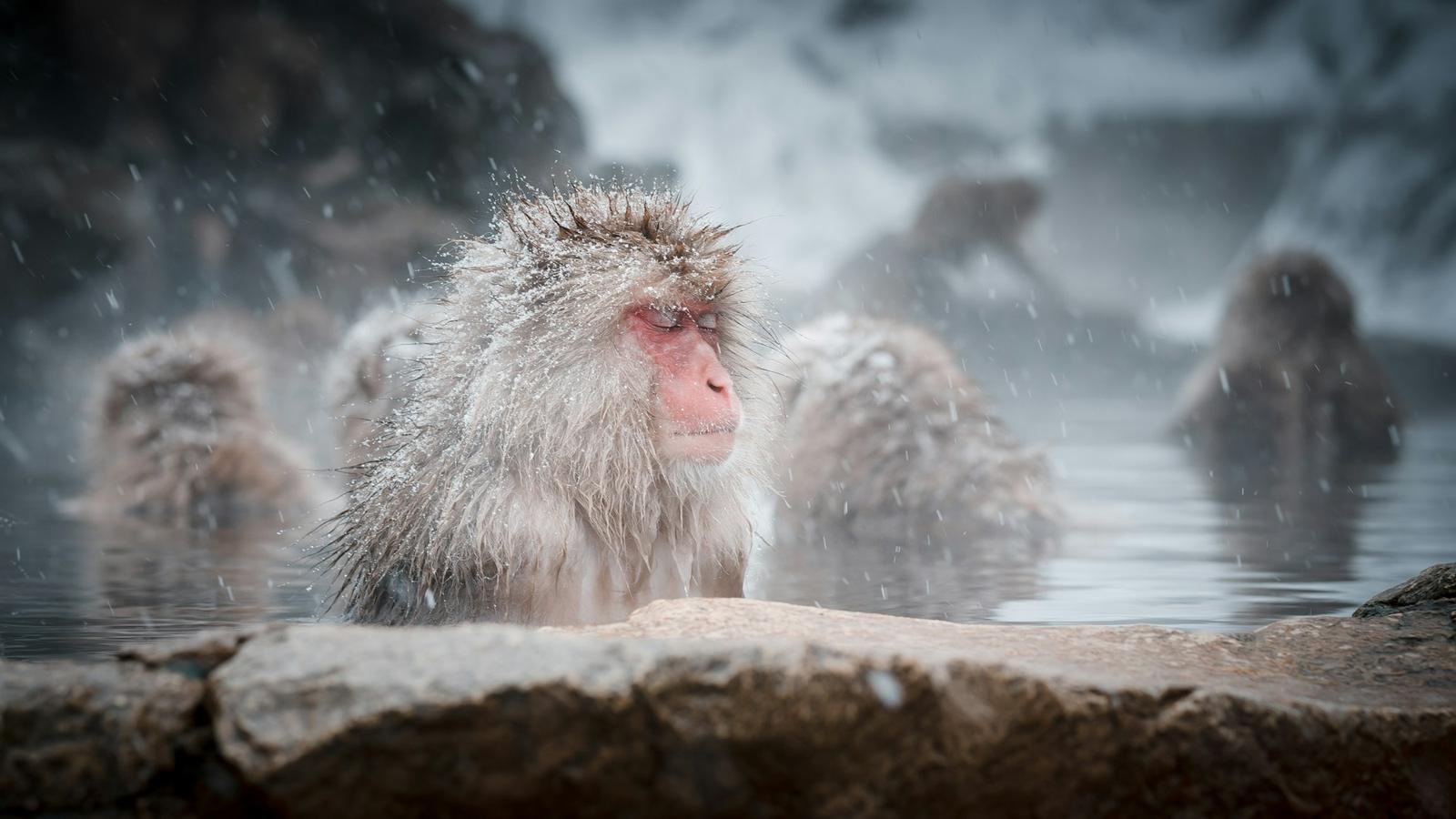
The Japanese macaques of Jigokudani, "Hell's Valley", in Nagano's Yamanouchi area are among the most photographed animals in Japan. The image of a snow-dusted monkey sitting serenely in a steaming outdoor hot spring pool is one of the country's defining travel photographs. The visit itself begins with a walk of about 30 minutes along a forest trail from Kanbayashi Onsen, and by late morning the viewing area can be crowded.
We would suggest an early start from Nagano city, or from one of the nearby onsen towns such as Shibu Onsen or Yudanaka, to reach the park when it opens at 9am. The first hour is usually the quietest, the light is soft, and the macaques go about their morning with fewer people around them. The walk to the pool through snow-covered forest, in relative silence, is part of the experience too.
Shibu Onsen, a short drive from the Jigokudani trailhead, is an old onsen town of stone-paved lanes and nine public bath houses, open to guests staying at its ryokan. A night here before the morning visit puts you close to the trail at opening time and adds a full evening of traditional onsen culture. For the night, we would suggest one of the town's long-established ryokan, chosen for the room and bath you prefer. When a winter journey passes through Nagano, this is the pairing we would suggest: a night in Shibu Onsen, then an early morning at Jigokudani.
NIIGATA AND TOHOKU: SAKE COUNTRY IN WINTER
Japan produces sake in winter. The brewing season, shikomi, runs from October through March, and the active production period from November through February. This is when the country's sake breweries are alive with fermenting mash, the smell of rice and koji, and the specific cold air that the brewers consider essential to the process. Niigata Prefecture, the source of the style known as tanrei karakuchi, the clean, dry sake that became the modern benchmark, has more sake breweries than any other prefecture.
Some breweries accept visitors in the brewing season, by reservation or advance request, and seeing a kura in production is a different experience from the year-round tasting rooms. Niigata's Uonuma region and Yamagata, both at the transition between the Japan Sea coast (heavy snow, high humidity) and the mountains, are good places to look. What a visit includes, whether time on the brewing floor, a tasting of the season's new sake or lunch nearby, depends on each brewery, and STAYGO would request it in advance where a brewery takes visitors.
Breweries set their own rules for visitors in the brewing season, and some close to visitors entirely while they brew, so it is worth asking early.
HOKKAIDO: POWDER SKIING AND ONSEN
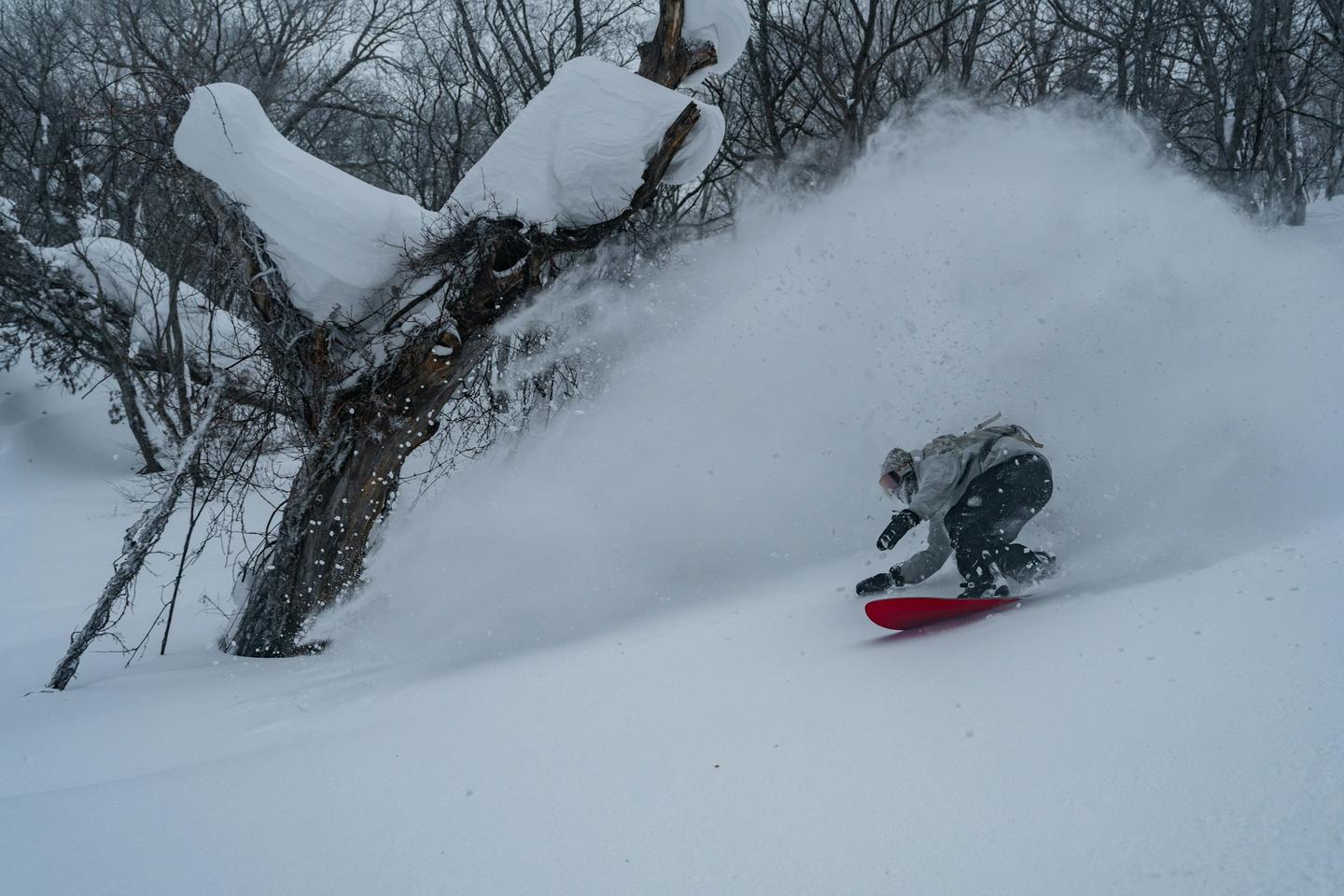
In winter, cold air from the continent picks up moisture over the Sea of Japan and falls on Hokkaido's mountains as light, dry snow, with unusual consistency through the season. Niseko, on the Shiribeshi coast, receives an average of 15 metres of snow per season. The powder is the reason the resort became an international destination, and the onsens that sit within or beside the ski areas are the reason a week here does not feel like a purely athletic exercise.
Niseko has the most developed luxury infrastructure: high-end hotels, private chalets with dedicated staff, and a resort village with a well-established après-ski scene. Furano, further inland, is quieter and less internationally known, and many skiers rate its powder days highly. Hoshino Resorts Tomamu, a separate resort further south in Shimukappu, is another option for a ski stay with its own hotels. A combined skiing and onsen itinerary might include two to three days of skiing, an overnight at a mountain onsen away from the resort crowds, and easy access to Sapporo for the final night, with the city's ramen, crab and soup curry to close a Hokkaido winter trip.
Noboribetsu, south of Sapporo on the Iburi coast, is an onsen town built beside Jigokudani, a volcanic valley of sulphur pools and steam vents. Its best-known inn, the Dai-ichi Takimotokan, is known for a large bathing hall fed by several types of spring water. Two nights at Niseko or Furano for skiing, then a single night at Noboribetsu before flying out of New Chitose, adds a night of onsen to the end of the ski days.
KENROKU-EN AND THE SNOW GARDENS
Kanazawa's Kenroku-en is one of Japan's best-known winter gardens. From November 1, the park's pine trees are fitted with yukitsuri, conical rope supports, each radiating from a central bamboo pole to the outer branches, protecting the trees from the weight of snowfall. The work is done by hand by the garden's gardeners and landscapers, beginning with the Karasaki pine and finishing around mid-December, and the supports usually stay in place until mid-March. Under snow, it is the garden many travelers know from photographs.
In winter the garden opens at 8am, and from November to February it also opens free of charge from 6:00 to 7:45 through the Hasuike and Zuijinzaka entrances. Those early hours, and winter weekday mornings in general, are usually the quietest. Combined with a night at Beniya Mukayu, a contemporary ryokan in Yamashiro Onsen about an hour south, a winter stop in Kanazawa makes a full single-night detour from the rail network.
KYOTO IN SNOW
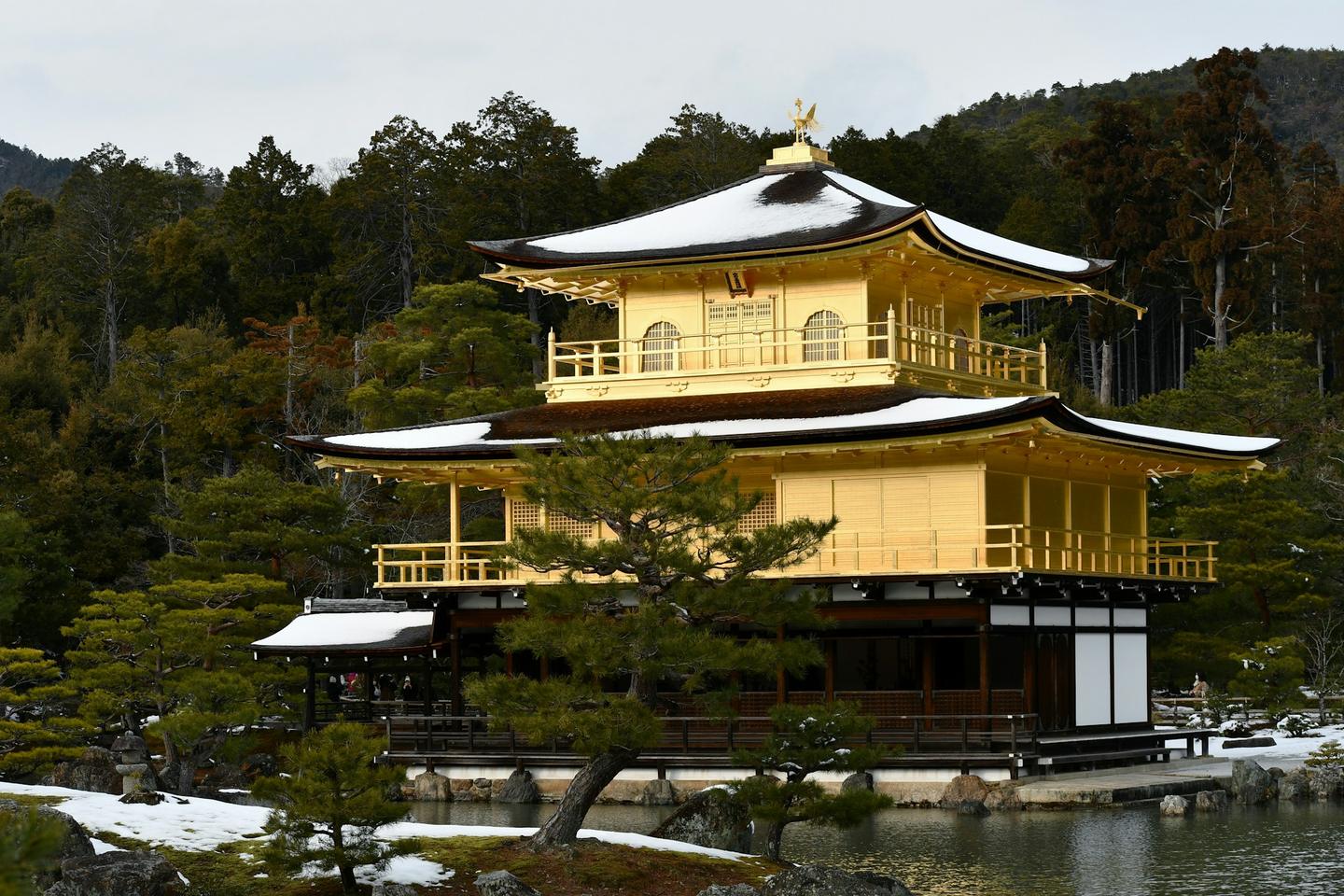
Kyoto's snowfall is concentrated in January and February. It does not snow reliably or heavily, but when it does, the city changes completely. Kinkaku-ji, the Golden Pavilion, reflected in a snow-covered garden with no autumn foliage crowds. Ginkaku-ji, the Silver Pavilion, its raked sand garden unmarked by footprints in the early morning. The bamboo grove at Arashiyama under a white sky, largely empty. They depend on the weather, and on those mornings Kyoto is as beautiful as it gets.
Because the snow is not guaranteed, STAYGO builds winter Kyoto itineraries with contingency days. Two nights in Kyoto in late January or early February improve the chance of one snow morning, and if it does not snow, the lighter crowds and the winter light still make the temples more atmospheric than in peak season. One way to sequence it is to hold Kyoto for days three and four, after Nagano's snow monkeys and before the Nozomi south.
HEATING IN LUXURY RYOKANS: WHAT TO EXPECT
Winter ryokan culture treats warmth as part of the experience. Well-run winter ryokans layer multiple heating systems: yukadan (underfloor radiant heating) throughout the building, a kotatsu in the main sitting area, the heated low table with a thick blanket that is one of the great domestic comforts of Japanese winter, and in some traditional properties an irori (sunken hearth) in a shared common room where guests gather after the baths. The standard air conditioning unit is also present in every room, but at these properties it is an afterthought.
The private rotenburo, the outdoor hot spring bath, usually on a private terrace or garden, is the central experience. Soaking outdoors in below-zero air, steam rising off the water, snowflakes landing on bare shoulders, is one of those experiences that sounds uncomfortable in description and is in practice among the most pleasurable things a traveler can do in Japan. The quality of the water varies by location; the classic winter onsen towns, Shibu, Yamanaka, Gero, Kinosaki, have mineral-rich waters with distinct character. If you have a preference for a type of water, we can suggest the onsen town that suits it.
WHAT TO WEAR AND PACK
Japan's winter infrastructure is designed for cold. Heated train carriages, heated department store floors, the ubiquitous convenience store with hot drinks at the counter. The country functions in winter in a way that makes the cold manageable at all times except when outdoors. The critical investment is footwear: waterproof boots with a grip sole for icy pavements, essential in any city north of Tokyo. Sapporo and Kanazawa are both serious snow cities. Kyoto is less so but can ice over unexpectedly.
The other consideration is layering for the ryokan sequence, arriving at a property, changing into the provided yukata for dinner, then into outdoor wear for a night walk, then back. A mid-layer fleece and a proper down outer shell are the practical requirements. The ryokan provides tabi socks and additional yukata layers on request. Gloves and a hat are non-negotiable for Hokkaido and Nagano; optional but sensible for Kyoto and Tokyo in January.
| Experience | When to go | Note |
|---|---|---|
| Snow monkeys, Jigokudani | Dec–Mar | Arrive at 9am opening |
| Kenroku-en yukitsuri | Nov–mid-Mar | Weekday morning for quiet |
| Niseko / Furano powder skiing | Jan–Feb (peak) | Book accommodation early |
| Sake kura visit, Niigata | Nov–Feb | Some breweries only; ask in advance |
| Kyoto temples in snow | Jan–Feb | Weather-dependent, build contingency |
| Rotenburo onsen experience | Dec–Feb (peak) | All major onsen towns |
SOURCES AND HOW WE CHECKED
The opening times, dates and figures in this article come from desk research. We read the pages below on October 5, 2026, and did not contact the park, the garden or the associations. On that date we corrected the yukitsuri dates to match the prefecture's page, and removed three figures we could not trace to a source: the number of Niigata breweries, the age of the Kenroku-en pines, and the number of snow days in Kyoto. On November 3, 2026, we checked the yukitsuri schedule against the Kanazawa Castle and Kenroku-en Management Office's release, Kenroku-en's winter hours against its official visitor guide, and the location of Hoshino Resorts Tomamu on Hokkaido's official tourism site, and removed a ryokan name we could not confirm and the Aman Niseko, which has not yet opened.
- Jigokudani Yaen-koen, hours and fees (Japanese): open 9:00 to 16:00 from November to March
- Jigokudani Yaen-koen, access (Japanese): about 30 minutes on foot along the trail from Kanbayashi Onsen
- Shibu Onsen, the nine public baths (Japanese): nine public baths, open to guests staying in Shibu Onsen, with a key lent by the inn
- Niigata Sake Brewers Association (Japanese): the most sake breweries of any prefecture
- Niseko United, snowfall: a standard winter brings around 15 metres of snow mid-mountain
- Ishikawa Prefecture's official tourism site, Kenroku-en yukitsuri (Japanese): work starts on November 1 and the supports can be seen until mid-March
- Japan Meteorological Agency, climate normals for Kyoto, 1991 to 2020 (Japanese): snow days are concentrated in January and February
- Kanazawa Castle and Kenroku-en Management Office, Kenroku-en yukitsuri (October 27, 2025, Japanese): work starts on November 1 with the Karasaki pine and finishes around mid-December
- Kenroku-en, visitor information (Japanese): 8:00 to 17:00 from October 16 to the end of February; free early opening 6:00 to 7:45 from November to February
- Hokkaido official tourism site, Hoshino Resorts Tomamu (Japanese): located in Shimukappu, Yufutsu District
QUESTIONS, ANSWERED
When should I visit Japan in winter?
December through February is Japan's winter season. January is usually the peak for powder snow in Hokkaido (Niseko, Furano) and one of the likeliest months for snow on Kyoto's temples. The snow monkeys at Jigokudani are usually seen in the hot spring from December through March. February is also a good month for powder in Hokkaido, and cultural sites are generally quiet.
How do you plan an early morning visit to the Jigokudani snow monkeys?
Jigokudani Yaen-koen in Nagano opens at 9am in winter, and the trail from Kanbayashi Onsen takes about 30 minutes on foot. The first hour is usually the quietest. STAYGO can arrange a car from Nagano city or a nearby ryokan in the early morning, so that you reach the trailhead in time for opening.
Is Niseko or Furano better for luxury powder skiing in Japan?
Niseko has the most developed luxury infrastructure, with high-end hotels and chalets and a well-established après-ski scene, largely shaped by Australian and international visitors. Furano is quieter, many skiers rate its powder just as highly, and the Furano Prince Hotel sits at the foot of the slopes. Hoshino Resorts Tomamu, a separate resort further south in Shimukappu, is another option. For first-time Hokkaido visitors, Niseko is the more complete package. For those who prioritise uncrowded slopes and a more Japanese character, Furano is a good choice.
What heating systems do luxury ryokans use in winter?
Well-run winter ryokans combine several heating systems: underfloor heating (yukadan) throughout the building, a kotatsu (heated low table with a blanket) in the main sitting area, and in some traditional properties an irori (sunken hearth) in a common room. Most rooms also have air conditioning. The private rotenburo (outdoor hot spring bath) is a central part of the winter ryokan experience. Soaking outdoors in near-freezing air is one of the defining sensory experiences of a Japan winter trip.
PLAN YOUR JAPAN WINTER ITINERARY
STAYGO designs winter itineraries around powder skiing, the snow monkeys, sake country and ryokans chosen for the cold months.
Start planningWe reply within 24 hours, in writing
Some of the restaurants and bars we arrange seat guests only by introduction or membership. We ask on your behalf; the table and the evening are the house's decision. We do not publish their names.