The standard Japan itinerary, Tokyo, Kyoto, Osaka, possibly Hiroshima or Hakone, covers only a small part of the country. The rest exists for the traveler willing to detour, and Tohoku makes a strong case for the detour: the six prefectures that occupy the northern half of Honshu, 90 minutes from Tokyo by Shinkansen, and far less visited by international travelers than the cities to the south.

Where it is

The six prefectures of northern Honshu: Sendai and Matsushima on the Pacific side of Miyagi, Ginzan Onsen and Haguro-san across the mountains in Yamagata.
- Tokyo Station to Sendai, by Shinkansen, about 1 hr 30 min
- Sendai to Ginzan Onsen, by car, about 2 hr
Times come from the official pages of the operators, local authorities and venues. Map based on Natural Earth and OpenStreetMap (© OpenStreetMap contributors).
Japanese travelers know Tohoku well. The region's festivals, the Nebuta lantern floats of Aomori, Sendai's Tanabata, the Kanto pole-balancing in Akita, draw enormous domestic crowds in August. International visitors have not followed in the same numbers. The temples at Yamadera are visited by a fraction of the people who queue for Fushimi Inari. Ginzan Onsen is the exception: so many day visitors now come in winter that the village has had to limit them.
Key points
- Tohoku, the six prefectures of northern Honshu, is 90 minutes from Tokyo by Shinkansen and far less visited by international travelers.
- Ginzan Onsen's ryokan have few rooms and fill early for winter, so those dates are worth requesting well ahead. The village is at its most striking after dark in winter.
- In Sendai, eat gyutan at the specialist restaurants near Sendai Station. In Matsushima, see the islands by boat early in the morning; the oyster huts cook over charcoal from October through March.
- The 2,446 stone steps up Haguro-san take about an hour to an hour and a half, through old cedar forest.
GINZAN ONSEN: A VILLAGE LIT BY LANTERNS
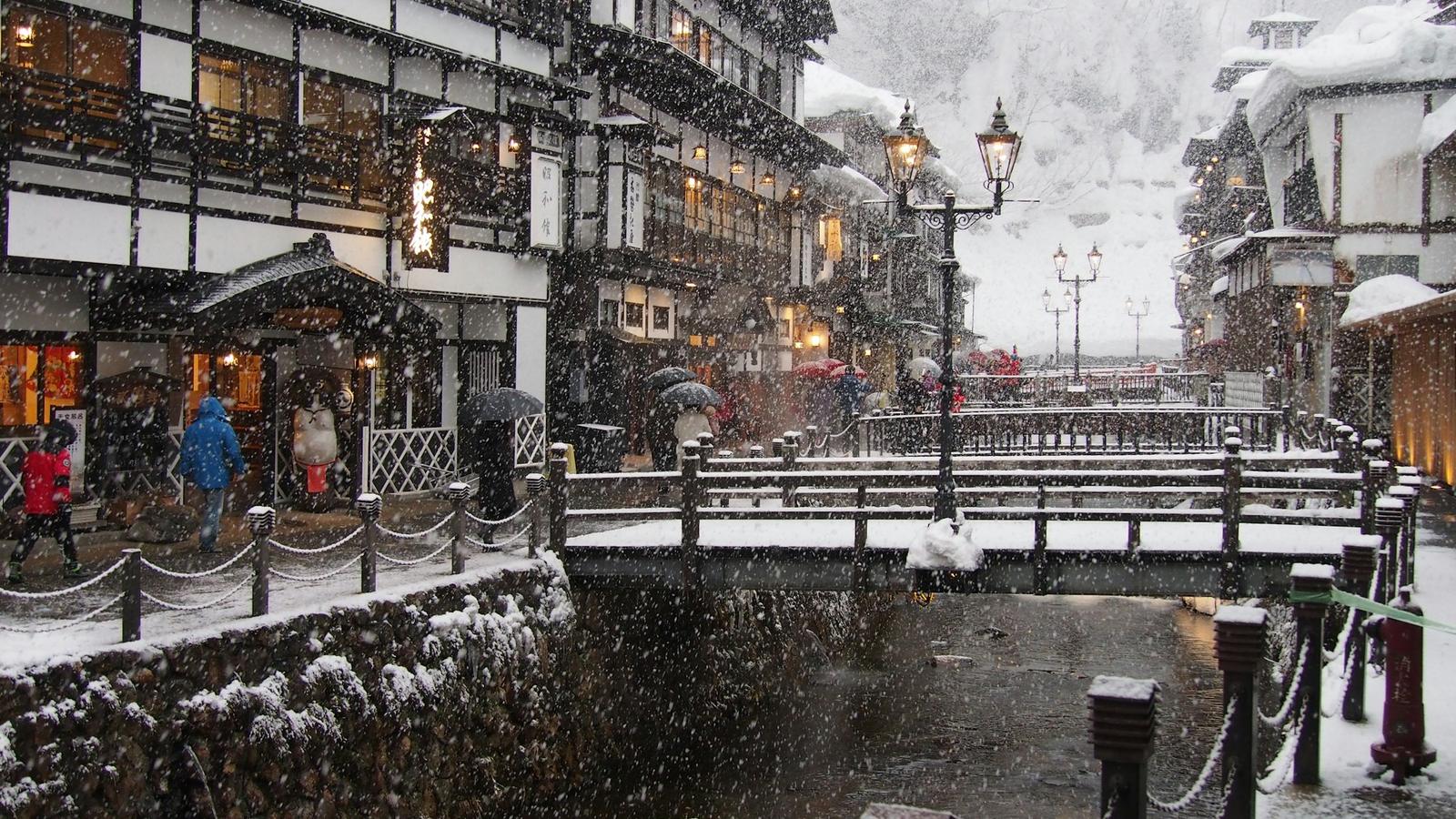
Ginzan Onsen sits in a narrow river gorge in Yamagata Prefecture, a row of wooden Taisho-era ryokan on each bank of a small river, with the sound of the hot spring water running underneath. In winter, paper lanterns light the snow-covered buildings after dark, and the scene recalls a woodblock print.
The village has 13 ryokan on the Ginzan Onsen tourist office's list, most with few rooms: Fujiya has 8 rooms, Notoya 15, and the main and annex buildings of Kosekiya 14 each. Winter dates fill early, particularly rooms with private baths overlooking the river, so they are worth requesting well ahead. A night here is shaped by the absence of cars, the small scale of the village and the lantern light on snow.
In winter, the village is at its most striking after nightfall. The village's access page gives about 40 minutes by express train from Yamagata to Oishida, 15 minutes by bus to Obanazawa and about 40 minutes more to Ginzan; by car from Sendai it is about two hours. The road enters the valley, and the lantern-lit village comes into view below the snow line. For guests who prefer not to take the local bus, we arrange a private car from Yamagata or Sendai.
Winter now has its own rules. From December 19, 2026 to March 7, 2027, cars do not drive into the village. They park at the Taisho Roman-kan, and visitors ride a shuttle that leaves every 20 minutes from 9:00, with the last bus up at 18:00 and the last down at 19:30. The village asks people not to walk the road from the Taisho Roman-kan, because the footpath cannot be used in snow. Tickets are for a set time and cost ¥700 to ¥1,500 return; those for December 19 to 31 went on sale on November 1, 2026, and those for January go on sale on December 1. The page sets no separate rule for staying guests, so we confirm the arrival with the inn when we arrange the stay.
The rules follow a crowding problem. The village receives around 330,000 visitors a year, Time Out reported, and in the winter of 2024 to 2025 it began limiting day visitors: from January 7, entry after 17:00 required a ticket bought in advance, only 100 day visitors were let in between 17:00 and 20:00, and, as CNN reported, people without a booking at a local inn were not allowed in after 20:00. Staying the night is the way to see the lanterns without the crowd.
SENDAI AND THE GYUTAN CULTURE
Sendai is Tohoku's largest city, a well-organized base for the region. Its signature dish is gyutan, grilled beef tongue, served in thin slices with barley rice and oxtail soup at the specialist restaurants near Sendai Station.
Gyutan in Sendai is a serious dining culture with a known beginning. Aji Tasuke traces it to 1948, when its founder, Keishiro Sano, opened a grilled beef tongue specialist in the centre of the city, and it still calls itself the original. Kisuke and Rikyu are two of the other well-known names. The tongue is salted and aged, the slicing is precise, and the char from the grill is specific. A gyutan dinner fits easily into a first evening in Sendai.
Sendai is about 90 minutes from Tokyo by shinkansen, close enough for gyutan on the evening you arrive.
MATSUSHIMA AND THE TEMPLE COAST
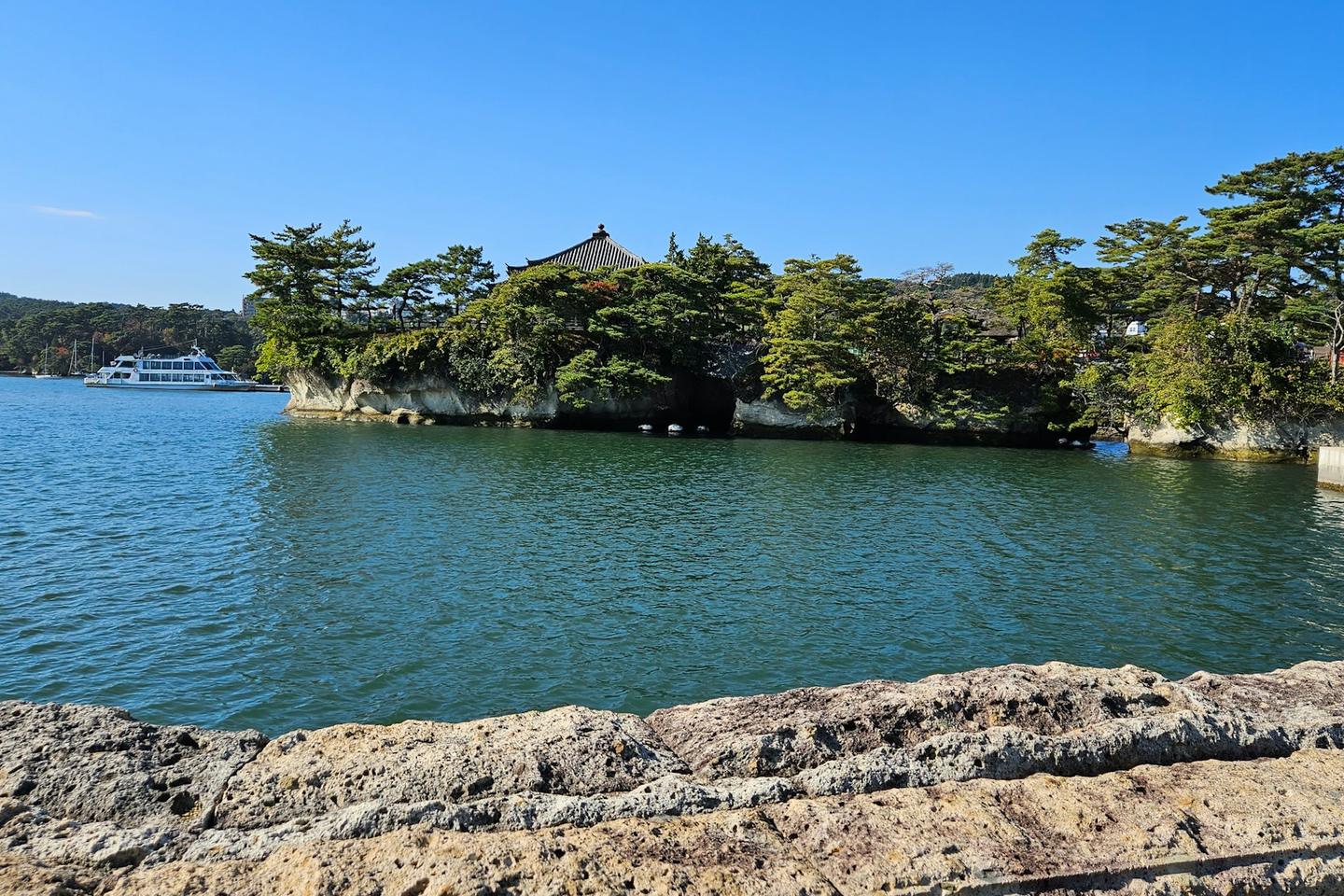
Matsushima, 'pine islands', is a bay of a little over 260 small islands, considered since the Edo period one of Japan's three most scenic views. The islands are best seen by boat in the early morning, before the day-trip crowds arrive from Sendai: Marubun Matsushima Kisen's cruises take about 50 minutes, with the first sailing at 9:00 and the last at 15:00. Zuiganji, the Zen temple on the shore, began as the Tendai temple Enpuku-ji, founded by Ennin in 828. Date Masamune's rebuilding was completed in 1609, and its main hall and kuri are National Treasures. It opens at 8:30, costs ¥1,000, and in November closes at 16:00.
Matsushima oysters grow in the cold, nutrient-rich bay. The oyster huts along the coast cook them simply over charcoal from October through March. In season, they make a simple lunch after the boat and the temple.
DEWA SANZAN: THE MOUNTAIN PILGRIMAGE
The three mountains of Dewa, Haguro, Gas-san, and Yudono, form the sacred center of Shugendo, Japan's syncretic mountain ascetic tradition. The Haguro-san pilgrimage, 2,446 stone steps through old cedar forest to the summit shrine, is open to every visitor. We can arrange a guide for the climb and, subject to availability, a night at a shukubo on the mountain, where the shojin ryori served to pilgrims is a reason to stay.
Gassan's summit shrine is open only from July 1 to September 15, and Yudono-san's from June 1 to November 3, according to the Dewa Sanzan Shrine. At Yudono-san, the innermost of the three, visitors are asked not to describe to others what they encounter there, and not to photograph it.
The stone staircase up Haguro-san, 2,446 steps over about 1.7 km, passes through tall cedar forest. The shrine gives about an hour to an hour and a half to the summit, with some steep sections, and warns that the steps are slippery in rain and snow. The cedar is so dense the light changes quality within the first ten minutes. The forest floor is in permanent shade, covered in moss, and the sound of the mountain settles around the walker. About ten to fifteen minutes in stands the five-storey pagoda, 29 metres tall, rebuilt in 1369 and a National Treasure since 1966. At the summit is the Sanjin Gosaiden, where the deities of all three mountains are enshrined together. For an overnight stay, we can arrange a guide and a room at a shukubo, subject to availability.
A 7-DAY TOHOKU ITINERARY
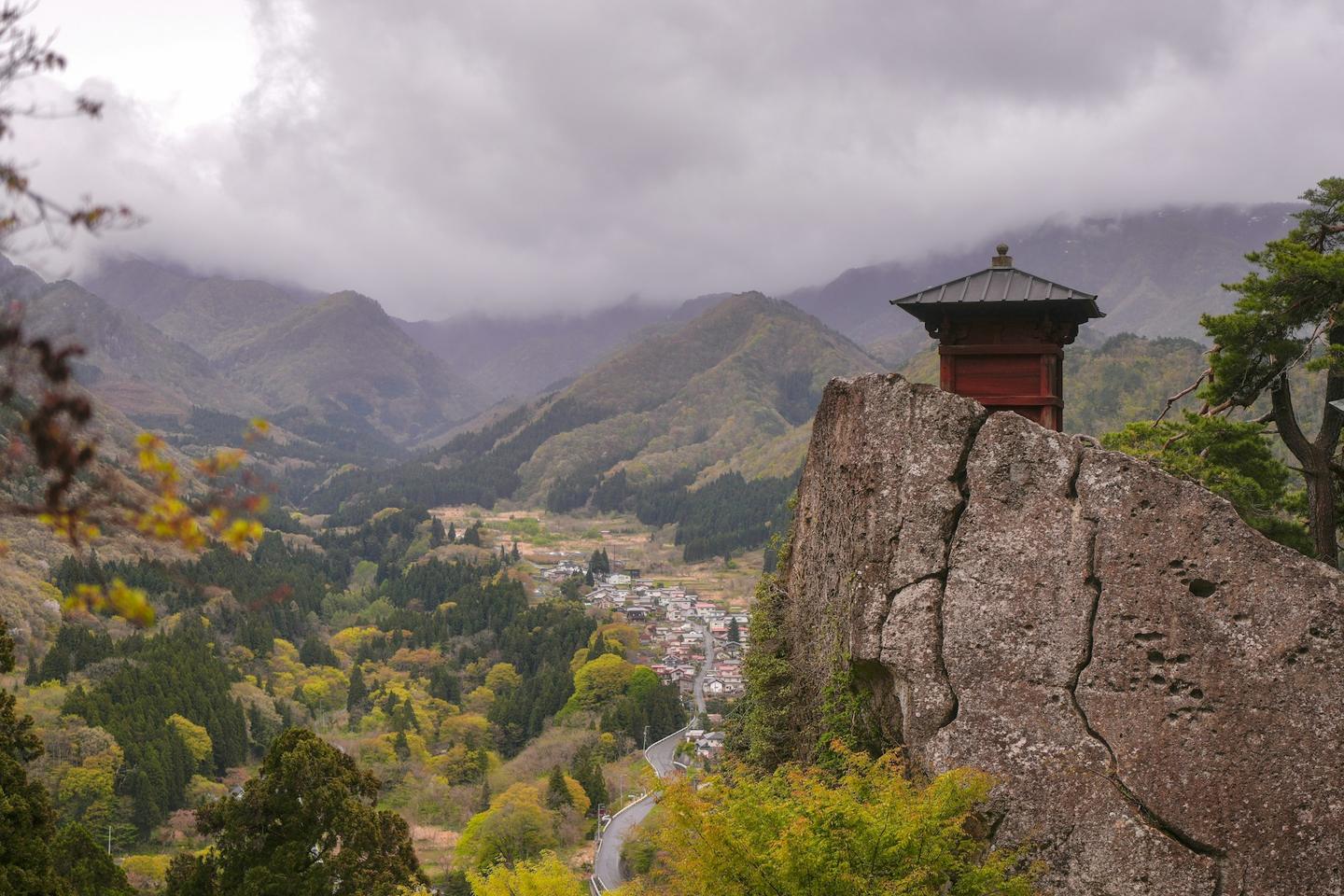
Day 1–2, Sendai: Arrive by shinkansen from Tokyo (90 min). Gyutan dinner on arrival. Matsushima morning with oysters and Zuiganji. Afternoon at Yamadera cliff temple.
Day 3–4, Ginzan Onsen: Private car transfer (via Yamagata, approx. 2 hrs). Two nights give both the evening and the morning of the village. Arrive after dark on Day 3 if you can.
Day 5–6, Dewa Sanzan: Transfer to Tsuruoka. Private guided ascent of Haguro-san. Overnight shukubo. Day 6: Yudono-san, sake brewery in Shonai region.
Day 7, Return: Tsuruoka to Sendai by car, shinkansen to Tokyo. Or continue north to Aomori if Nebuta Festival timing aligns.
Iwate lies on the way north. Its capital, Morioka, was second on The New York Times' list of 52 Places to Go in 2023, after London, as Time Out reported at the time, and it is a stop on the Tohoku Shinkansen between Sendai and Aomori.
SOURCES AND HOW WE CHECKED
We first wrote this guide on June 18, 2026 and read every page below on October 28, 2026. We did not contact the inns, the shrine, the temple or the restaurants. Winter traffic rules, opening seasons, hours and fees change, so we check them again for your dates when we arrange the trip. The travel times by shinkansen and the restaurant and sake notes come from our own planning.
- Ginzan Onsen, winter 2026 to 2027 traffic rules (Japanese): dates, parking at the Taisho Roman-kan, shuttle times, ticket prices and sale dates, checked again on November 3, 2026
- Ginzan Onsen, inns (Japanese): the 13 ryokan and their rooms
- Ginzan Onsen, access (Japanese): train, bus and car times
- Dewa Sanzan Shrine, access (Japanese): the bus from Tsuruoka, the pagoda, time to the summit, opening seasons of Gassan and Yudono-san
- Dewa Sanzan Shrine, questions and answers (Japanese): pagoda and summit times, steep and slippery steps
- The Dewa Sanzan, Mt. Haguro: 2,446 steps, 1.7 km, the pagoda's dates and National Treasure status, shojin ryori
- The Dewa Sanzan, Mt. Yudono: the rule against describing the site
- Zuiganji, history (Japanese): founding in 828, rebuilding completed in 1609, National Treasures
- Zuiganji, visiting (Japanese): hours by month and admission
- Aji Tasuke, history (Japanese): the 1948 gyutan specialist and its founder
- Marubun Matsushima Kisen (Japanese): cruise courses, about 50 minutes, first and last sailings, a little over 260 islands
- Aomori Nebuta Festival (Japanese): August 2 to 7 every year, the programme by day
- Time Out, Japan’s ‘Spirited Away’ town is set to cap daily tourist numbers (January 15, 2025): about 330,000 visitors a year, the winter limits on day visitors from January 7, 2025
- CNN, Japan’s scenic hot springs town restricting tourists (December 27, 2024, republished by KVIA): tickets after 17:00 from January 7, no entry after 20:00 without a booking at a local inn
- Time Out, This is where to travel in 2023, according to The New York Times (January 12, 2023): Morioka second on the list, after London
QUESTIONS, ANSWERED
How do you get to Tohoku from Tokyo?
The Tohoku Shinkansen connects Tokyo to Sendai in approximately 90 minutes, and to Shin-Aomori in around 3 hours. A Tohoku itinerary usually uses the shinkansen for the main spine, Tokyo to Sendai, Sendai to Yamagata or Akita, and private vehicle for the regional exploration. The JR Pass covers all Tohoku Shinkansen services. By car, Ginzan Onsen is about two hours from Sendai, according to the village's access page.
What is Ginzan Onsen and why is it significant?
Ginzan Onsen is a small hot spring village in Yamagata Prefecture, built along a narrow river gorge with traditional wooden ryokan lining both banks. In winter, the lantern-lit snow scene is one of the defining images of Japanese winter. Many of its inns keep wooden buildings from the Taisho and early Showa periods. For travelers who have already seen Hakone and Kyoto, it offers a different kind of ryokan stay.
When is the best time to visit Tohoku?
Two seasons stand out in Tohoku: cherry blossom (usually in April, later than in Tokyo, with dates that vary by year and place, and smaller crowds) and winter (December to February for snow scenery, Ginzan Onsen lanterns, and Zao ropeway). Summer is also good for the Tanabata festival in Sendai and the Nebuta Festival in Aomori (early August), but these attract large domestic crowds. Autumn foliage in Matsushima and the mountains, usually from late October to mid-November, is another good time.
What food is Tohoku known for?
Sendai's gyutan (beef tongue), served grilled and sliced thin, is the region's most famous dish and is at its best at the specialist restaurants near Sendai Station. Yamagata is a major rice and sake region, and the breweries around Tsuruoka near Dewa Sanzan are worth a visit for junmai daiginjo. Matsushima's oysters are in season from October through March. Wanko soba in Iwate (soba served in rapid succession, competitive-style) is an experience more than a meal.
TOHOKU, PLANNED AROUND YOUR DAYS
We plan Tohoku around your days: private cars between the valleys, a Ginzan Onsen ryokan requested early for winter, a guide for the Haguro-san steps, and the food stops, from gyutan to Matsushima oysters and Shonai sake.
Start planningWe reply within 24 hours, in writing
Some of the restaurants and bars we arrange seat guests only by introduction or membership. We ask on your behalf; the table and the evening are the house's decision. We do not publish their names.