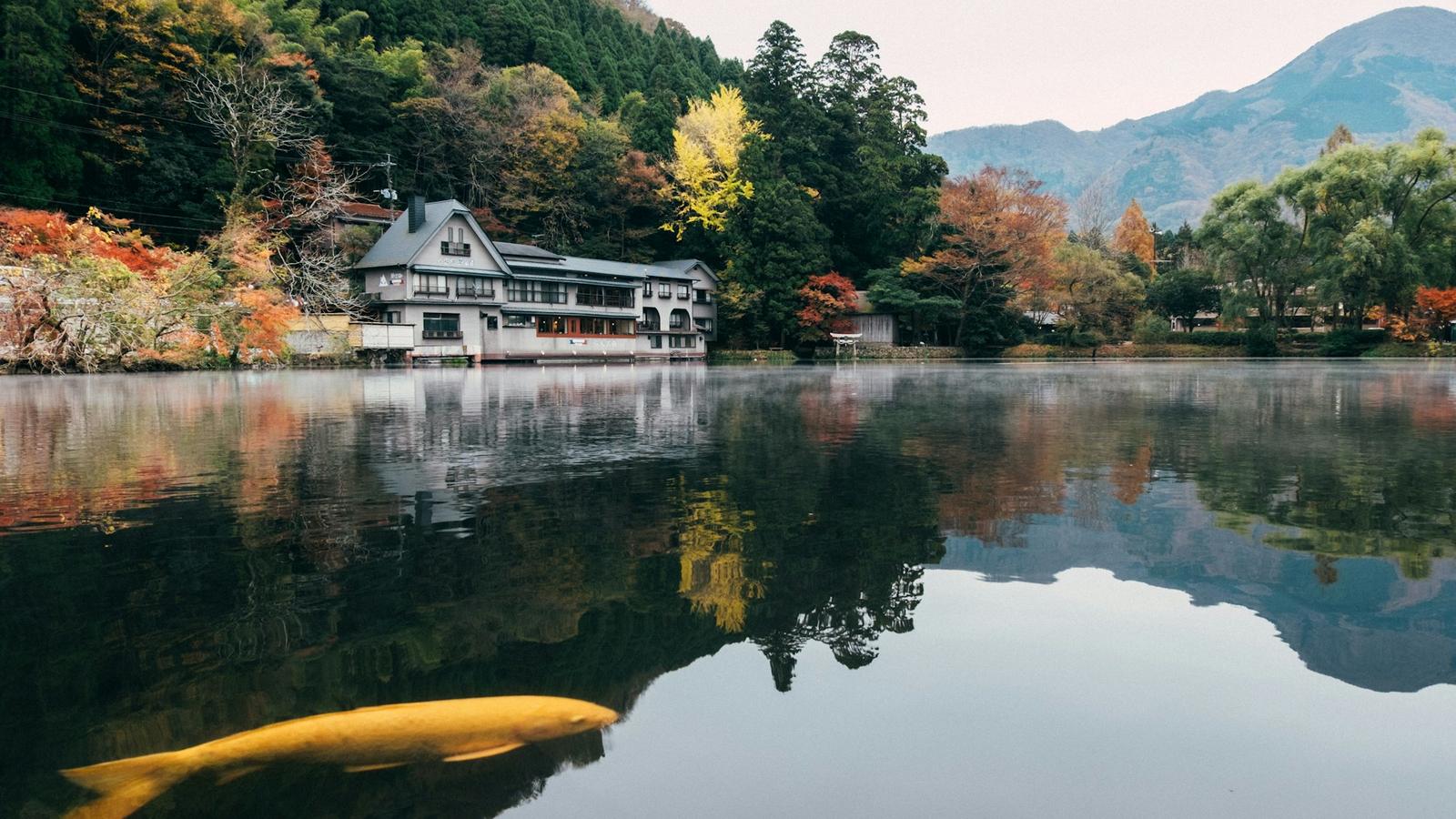
Most Japan itineraries run the same route: Tokyo, Kyoto, possibly Osaka. It is a good route. It is also the route that most travelers take. Kyushu, Japan's southernmost main island, offers a different Japan: different food culture, active volcanic geography, a warmer climate, and highly regarded ryokan in surroundings that feel nothing like the central corridor.

Where it is
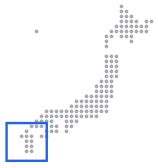
Japan's southernmost main island, a short flight from Tokyo or about two and a half hours from Osaka by shinkansen.
- Fukuoka (Hakata) to Nagasaki, by Shinkansen, about 1 hr 20 min
- Fukuoka (Hakata) to Kumamoto, by Shinkansen, about 32 min
- Fukuoka (Hakata) to Yufuin, by limited express, about 2 hr 15 min
Times come from the railways' official timetables. Map based on Natural Earth.
A 5–7 day Kyushu extension pairs cleanly with a standard Japan itinerary. It can also stand alone. Either way, the island rewards a route planned around its distances, through cities and landscapes that differ from one another.
Key points
- A five-to-seven-day Kyushu extension can run Fukuoka, Nagasaki, Kumamoto and Yufuin, then back to Fukuoka to fly out or take the shinkansen to Osaka.
- From Tokyo, flying to Fukuoka takes about two hours; from Osaka, the shinkansen takes about two and a half.
- Kumamoto Castle's keep was fully restored in 2021, and the city's restoration plan for the whole castle runs until 2052.
- For a quieter ryokan stay, Yufuin suits better than Beppu. Plan its well-known ryokan several months ahead, earlier for autumn and Golden Week.
- The Seven Stars runs one-night and three-night journeys around Kyushu and is allocated by lottery.
WHY KYUSHU
Kyushu is Japan's third-largest island and its most geothermally active. The volcanic landscape, Aso caldera, the Beppu hot spring fields, Sakurajima off Kagoshima, gives the island a character distinct from anywhere else in Japan. The climate is visibly warmer: subtropical in the south, mild through the north. The cuisine is its own tradition: tonkotsu ramen originated here in Fukuoka, Nagasaki has centuries of Chinese and European influence in its food, and the shochu culture is to Kyushu what sake is to the rest of Japan.
Access is straightforward. From Osaka, the Sanyo Shinkansen reaches Fukuoka in approximately 2.5 hours. From Tokyo, flying directly to Fukuoka takes about two hours and almost always the practical choice. The Kyushu Shinkansen then connects the island's major cities efficiently once you arrive.
FUKUOKA
Fukuoka lacks the historical overlay of Kyoto or Nara, and it does not pretend otherwise. It is a contemporary Japanese city operating at full speed, with a food culture better than its international profile suggests.
Hakata district is the traditional commercial and cultural core. Hakata ramen, the city's tonkotsu, rich pork-bone broth with thin noodles, is worth eating at least once at a local counter. Tonkotsu itself is usually traced to Kurume, south of the city, where the Nankin Senryo stall, opened in 1937, is credited with the first ramen made from pork bones alone. The Kawabata shopping arcade keeps an everyday, local character that Kyoto's Nishiki has partly lost. Hakata dolls, a craft tradition, can be found here.
Tenjin is the modern commercial center, department stores, contemporary dining, the city's café culture. Canal City is an architecturally interesting shopping complex built around an interior canal, worth a look even if shopping is not the point.
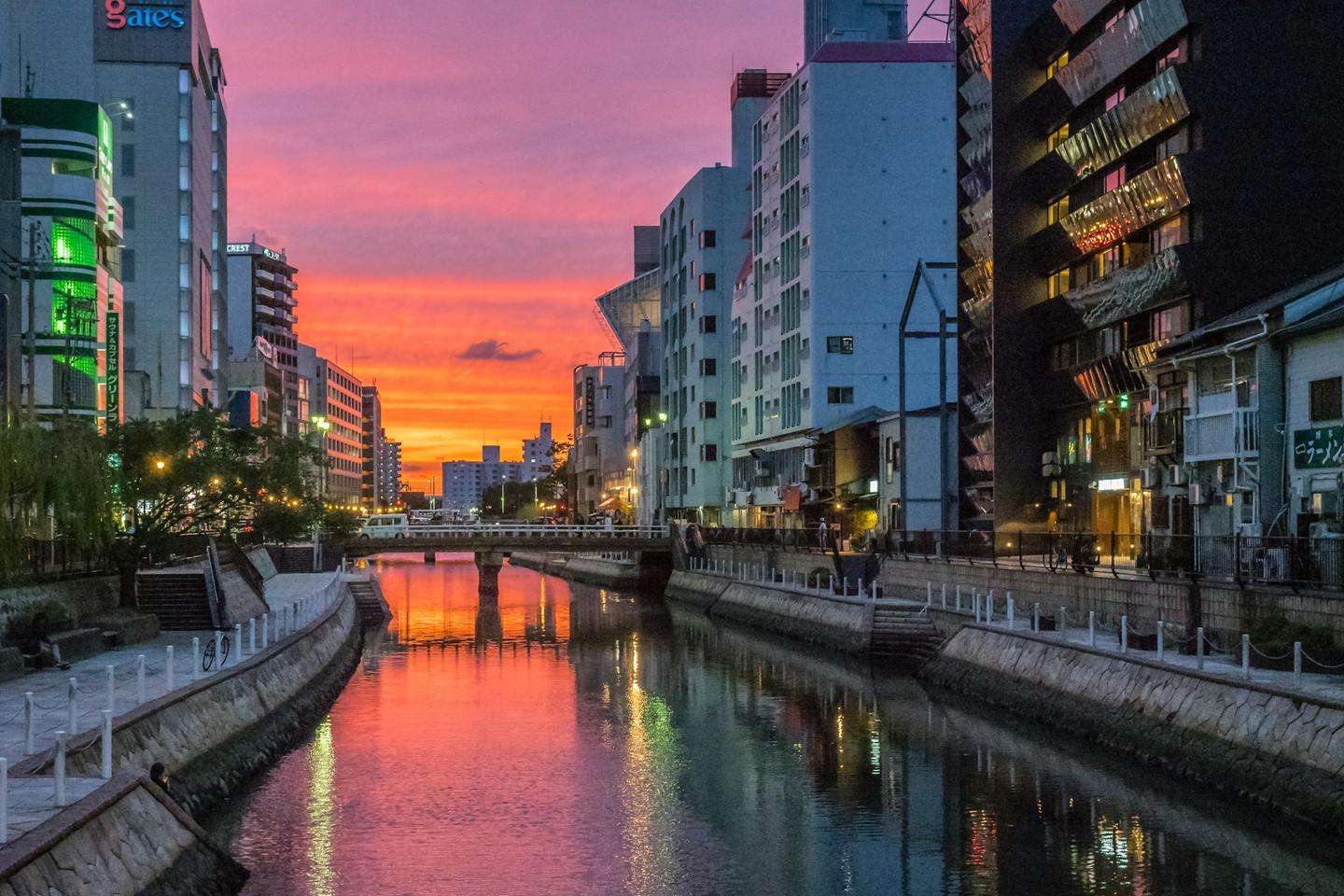
Nakasu is where Fukuoka's food culture reaches its most atmospheric. An island between two rivers, Nakasu is the city's nightlife district and home to the famous yatai, open-air food stalls on the riverbank, operating from dusk. The city has about 100 yatai, in Nakasu, Tenjin and Nagahama, and new stallholders are chosen through open calls run by the city. Eating at a yatai in Nakasu at night, a bowl of ramen or a plate of yakitori, is one of the simplest pleasures of an evening in Fukuoka.
NAGASAKI
Nagasaki carries more European and Chinese influence than most Japanese cities, and the history behind that is specific. For centuries while Japan was closed to outside contact, Nagasaki was the single permitted point of international trade, Dutch merchants on the artificial island of Dejima, Chinese merchants in their own quarter. The architecture and food culture of the city still carry those layers visibly.
A hillside compound of Western-style houses built from the 1860s onward by the merchants of Nagasaki's old foreign settlement. The view over the harbor is excellent. Thomas Glover, a Scottish merchant, built the main house in 1863. It is the oldest surviving wooden Western-style building in Japan, and since 2015 part of a UNESCO World Heritage site. The garden rewards an unhurried hour, with the harbor below.
Hashima Island, nicknamed Gunkanjima (Battleship Island) for its silhouette from the sea, lies about 18.5 km off Nagasaki port. Mitsubishi bought its coal mine in 1890 and worked it until 1974. In 1960 about 5,300 people lived on an island of 0.063 km², in dense concrete apartment blocks that include Building 30, Japan's oldest high-rise reinforced-concrete apartment. It has been uninhabited since the mine closed, its concrete ruins slowly collapsing. The mine is one of the 23 parts of the Sites of Japan's Meiji Industrial Revolution, a UNESCO World Heritage site since 2015. It is an unusual sight: a whole town in concrete, left to weather since the mine closed.
You can land only on a licensed boat tour. On Gunkanjima Concierge's tours a standard seat costs ¥5,500 on weekdays and ¥6,000 at weekends and on holidays, plus a ¥650 landing fee; the boat circles the island first, and on shore a guide walks you between three viewing points. Since April 2020 a Nagasaki City rule allows landing only when the wave gauge off Iojima reads under 0.5 m, and the operator says about 60% of sailings now land. Plan it early in your Nagasaki stay so there is a second chance if the sea is rough.
The Atomic Bomb Memorial and Museum deserves time. Paired with Hiroshima, the two cities offer a complete picture of the bombings. Nagasaki's museum is more intimate in scale, with a particular focus on the survivor testimonies. Nagasaki's Chinatown is worth a meal. Chanpon (noodles with seafood and vegetables) is the local specialty. Shikairo, open since 1899, says its founder Chen Pingshun created the dish for Chinese students and residents of the city, and the restaurant still serves it.
KUMAMOTO
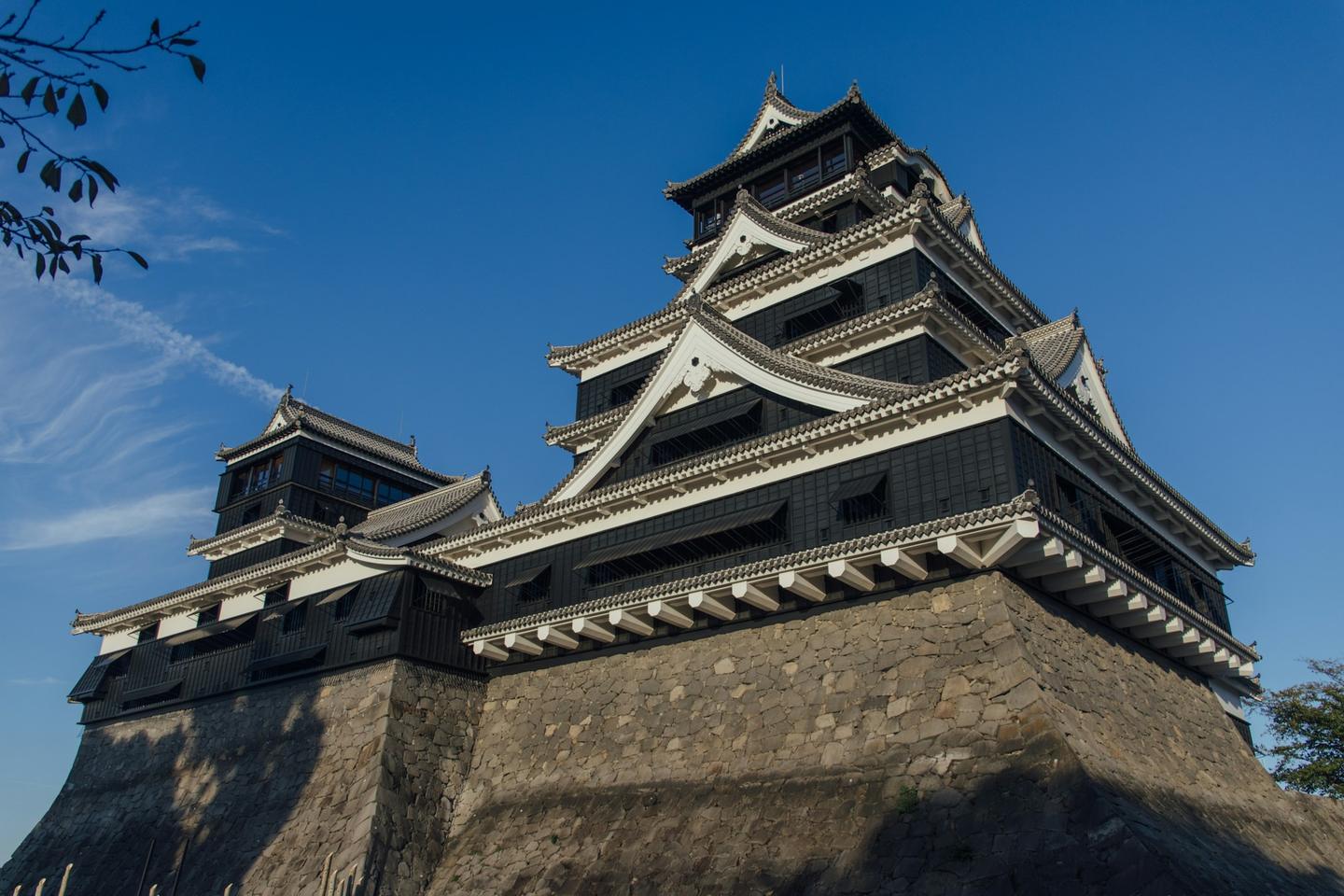
Kumamoto Castle, one of Japan's most celebrated castles, was severely damaged in the 2016 earthquake that struck the city. The reconstruction is ongoing, and the city's restoration plan runs until 2052. The restoration has become part of the visit.
Seeing the walls under repair is a different experience from seeing a finished monument, and the main keep, fully restored in 2021, is open again.
On July 28, 2026 another strong earthquake hit Kumamoto. Stone walls came down in about 40 places and the floors of the keep were left uneven. The castle reopened on August 13 with the route from the raised walkway to the keep open, and the fallen walls can be seen along the way. From September to June it is open 9:00 to 17:00 (last entry 16:00), in July and August until 19:00. Entry is ¥800 for adults, and tickets can be bought online for a set date and time.
From the raised walkway, the restored keep and the walls still under repair are part of the same visit.
Suizenji Jojuen garden is a strolling garden laid out in the early Edo period by Hosokawa Tadatoshi, the first Hosokawa lord of Kumamoto. Its landscape is modeled on the fifty-three stations of the Tokaido road, with a small hill standing for Mount Fuji. It makes a quiet hour after the castle. It is open 8:30 to 17:00 every day; entry is ¥500.
BEPPU AND YUFUIN
Beppu has 2,831 hot spring sources on the city's count for March 2025, and seven of the ten official spring types. The city sits on a field of intense thermal activity, visible in the steam rising from drains and gratings throughout the streets. The "Hells of Beppu", jigoku meguri, are seven thermal springs of dramatically different characters: blood-red iron-rich water, cobalt-blue mineral pools, a grey boiling mud pool that produces a constant slow-motion eruption. They are for looking at, you cannot bathe in them, and the colors are striking; four of them (Umi, Chinoike, Tatsumaki and Shiraike) were designated a national Place of Scenic Beauty in 2009. One ¥2,400 ticket covers all seven and is valid on the day you buy it and the next, and they open 8:00 to 17:00 every day.
Beppu itself is a working hot spring resort town, busy and practical. For a quieter stay, Yufuin suits better. Forty-five minutes inland from Beppu by road, Yufuin is a smaller, quieter hot spring town with a more coherent aesthetic, rice fields, a central lake (Kinrinko), boutique shops, and several highly regarded ryokan.
Yufuin Tamanoyu began in 1953 as a retreat for Zen priests. Its 16 rooms are spread through a 2.5-acre wood, each with a cypress bath filled from the inn's own spring, and the shared baths have open-air pools facing Mount Yufu. Meals are served in its dining rooms. It holds one MICHELIN Key, and its English page lists ¥41,950 to ¥72,750 per person per night with dinner and breakfast. Sansou Murata has 12 detached villas of 63 to 165 m² for two to eight guests, each with its own hiba-wood hot spring bath, and dinner and breakfast are served in the villa, from ¥85,800 per person. Plan several months ahead; autumn and Golden Week need earlier planning.
SEVEN STARS IN KYUSHU
JR Kyushu operates the Seven Stars, which began running in October 2013 as Japan's first cruise train. It runs one-night and three-night journeys around Kyushu, with ten suites on a seven-car train that also carries a lounge car with a bar and live piano. Eight Suites of about 10 m² and two Deluxe Suites of about 17 and 21 m² each have their own shower and toilet. The design, by Eiji Mitooka, uses dark wood, leather and handmade textiles, with each suite different. Dinner on board is formal.
The journeys departing from March to August 2027 are a four-day Takachiho journey (March to June), a four-day Unzen journey (July and August) whose ryokan night is at Ryotei Hanzuiryo, a MICHELIN One-Key hotel, and a two-day Kuju journey (April to August). For two people sharing, prices per person start at ¥1,350,000 for a Suite on the four-day journeys and ¥700,000 on the two-day journey, and reach ¥1,850,000 for Deluxe Suite A on the Unzen journey. The price covers the train, meals, most drinks, the ryokan night and the excursions.
JR Kyushu sells the train only as a tour, online for the dates it runs itself and through travel agencies for some others. Applications open in two windows a year, and when they exceed the rooms a lottery decides. The window for March to August 2027 closed in October 2026, with results from late November, and JR Kyushu expects to open the one for September 2027 to February 2028 in spring 2027. One application covers up to two rooms. You apply in your own name; for Signature and Bespoke clients we help choose the journey and dates, plan the days on either side, and arrange a private car and ryokan route for guests who are not drawn. See the luxury trains article for Japan's other prestige trains.
A 5–7 DAY ROUTING
The routing above runs south from Fukuoka, or reverse it for a different pace. The Kyushu Shinkansen connects Fukuoka, Kumamoto, and the south efficiently. Nagasaki is reached from Hakata by the Relay Kamome limited express and then the Nishi-Kyushu Shinkansen, changing across the platform at Takeo-Onsen (from 1 hour 20 minutes, with 22 trains a day each way). Yufuin is reached by the Yufuin no Mori limited express, a scenic run that is itself a minor pleasure, through forested mountains above the coastal plains. On the March 2026 timetable it leaves Hakata three times a day and takes about 2 hours 15 minutes; every seat is reserved, so seats have to be reserved before boarding (¥6,130 one way for an adult). JR Kyushu publishes the running days from March 2027 around mid-January 2027, and on some days the train is taken off for routine inspection and the limited express Yufu runs instead.
From Hakata, Kumamoto is about 32 minutes by shinkansen and Nagasaki about an hour and twenty, so a week covers more of Kyushu than the map suggests.
SOURCES AND HOW WE CHECKED
We first wrote this page from desk research on October 5, 2026, and read every page below again on October 28, 2026. We did not contact the railway, the castle, the boat operator, the ryokan or the restaurants. Fares, timetables, opening hours and the Seven Stars application windows change, so we check them again close to your dates when we arrange the trip.
- Seven Stars in Kyushu, news and applications: the application window for March to August 2027, the lottery and results from late November, the next window in spring 2027, the restart after the 2026 earthquake
- Seven Stars in Kyushu, spring and summer 2027 journey overview (PDF): the three journeys, prices per person by suite, what the price includes
- Seven Stars in Kyushu, the train and FAQ (Japanese): seven cars, ten suites and their sizes, sale only as a tour, two rooms per application, dress code
- Seven Stars in Kyushu, greeting and JR Kyushu, release on Koji Karaike's book Nanatsuboshi e no Michi (PDF, Japanese): the start in October 2013 as Japan's first cruise train, Eiji Mitooka as the train's designer
- JR Kyushu, Yufuin no Mori (Japanese): the timetable from March 2026, all seats reserved, the fare from Hakata
- JR Kyushu, Nagasaki to Fukuoka by the Nishi-Kyushu Shinkansen (Japanese): 1 hour 20 minutes, 22 trains a day each way, the cross-platform change at Takeo-Onsen
- Kumamoto Castle, visitor information (Japanese): opening hours by season, the ¥800 entry, online tickets
- Kumamoto Nichinichi Shimbun, Kumamoto Castle reopens (Kyodo, August 13, 2026) (Japanese): the July 28, 2026 earthquake, about 40 collapsed walls, the reopening on August 13
- Kumamoto City, Kumamoto Castle restoration plan, summary (PDF, Japanese): the keep fully restored in March 2021, the plan period to fiscal 2052
- Suizenji Jojuen, official site (Japanese): Hosokawa Tadatoshi, the Tokaido and Fuji landscape, hours and entry
- Glover Garden, about the garden (Japanese): Glover House built in 1863, the oldest wooden Western-style building, World Heritage in 2015
- UNESCO World Heritage Centre, Sites of Japan's Meiji Industrial Revolution: the 23 parts, inscription in 2015, the condition of the Hashima mine
- Nagasaki City, notes on the Hashima coal mine site (Japanese): Mitsubishi's purchase in 1890 and work until 1974
- Gunkanjima Concierge, about Gunkanjima and landing record (Japanese): fares and landing fee, the tour steps, the 1960 population, distance, Building 30, the landing rule and rate since 2020
- Shikairo, history (Japanese): the founding in 1899 and the origin of chanpon
- Kyushu Walker, Nankin Senryo Honke (Japanese): the 1937 stall credited with the first all-pork-bone ramen
- Yokanavi (Fukuoka City), yatai (Japanese): about 100 yatai, the three areas, open calls for new stalls
- Beppu City, hot spring data (Japanese): 2,831 sources and seven of the ten spring types
- Beppu Jigoku Association, hours and fees and Places of Scenic Beauty (Japanese): the common ticket, hours, the 2009 Scenic Beauty designation
- Yufuin Tamanoyu, English page and hot springs (Japanese): the Zen retreat of 1953, 16 rooms, rates, room baths and open-air baths
- Sansou Murata, English page and room Raku (Japanese): 12 villas, their sizes, rates, meals in the villa, hiba-wood baths
- MICHELIN Guide, All the Key Hotels in Japan 2026 and Yufuin Tamanoyu: Tamanoyu's One Key and the 2026 list including Ryotei Hanzuiryo
QUESTIONS, ANSWERED
How do you get to Kyushu from Tokyo or Osaka?
From Osaka, the Sanyo Shinkansen reaches Fukuoka (Hakata station) in approximately 2.5 hours. From Tokyo, flying direct to Fukuoka takes about two hours and is the practical choice. The Tokaido-Sanyo-Kyushu Shinkansen from Tokyo runs but takes around 5-6 hours, only worth it if you want the scenic transit experience.
Which ryokan in Yufuin suit a quiet, high-end stay?
Yufuin Tamanoyu and Sansou Murata are two of the town's best-known ryokan. Both have a hot spring bath in every room, seasonal dinners and a quiet, unhurried atmosphere; Tamanoyu holds one MICHELIN Key, and all twelve rooms at Sansou Murata are detached villas. For a quieter stay, Yufuin suits better than Beppu. The town is smaller, calmer, and more aesthetically coherent.
What is the Seven Stars in Kyushu train and how do you apply for it?
The Seven Stars in Kyushu is JR Kyushu's cruise train, running one-night and three-night journeys around Kyushu. It began in 2013 as Japan's first cruise train. JR Kyushu sells it only as a tour, in two application windows a year, and a lottery decides when applications exceed the rooms; the next window, for September 2027 to February 2028, is expected in spring 2027. You apply in your own name. STAYGO helps choose the journey and dates, plans the days around it, and arranges an alternative route for guests who are not drawn.
Is Gunkanjima (Hashima Island) worth visiting?
Gunkanjima, also called Battleship Island or Hashima Island, is an abandoned coal mining island off Nagasaki, now a UNESCO World Heritage site. It is accessible by boat tour from Nagasaki port. The ruins are striking: a densely packed ghost city that housed thousands of workers, now entirely uninhabited. It is one of the more unusual day trips in Japan and pairs well with the Atomic Bomb Museum for a historically textured Nagasaki day.
KYUSHU AROUND YOUR DAYS
We plan Kyushu around your days: ryokan chosen for how you like to stay, help with your own Seven Stars application, and a route between the cities that fits the trains.
Start planningWe reply within 24 hours, in writing
Some of the restaurants and bars we arrange seat guests only by introduction or membership. We ask on your behalf; the table and the evening are the house's decision. We do not publish their names.