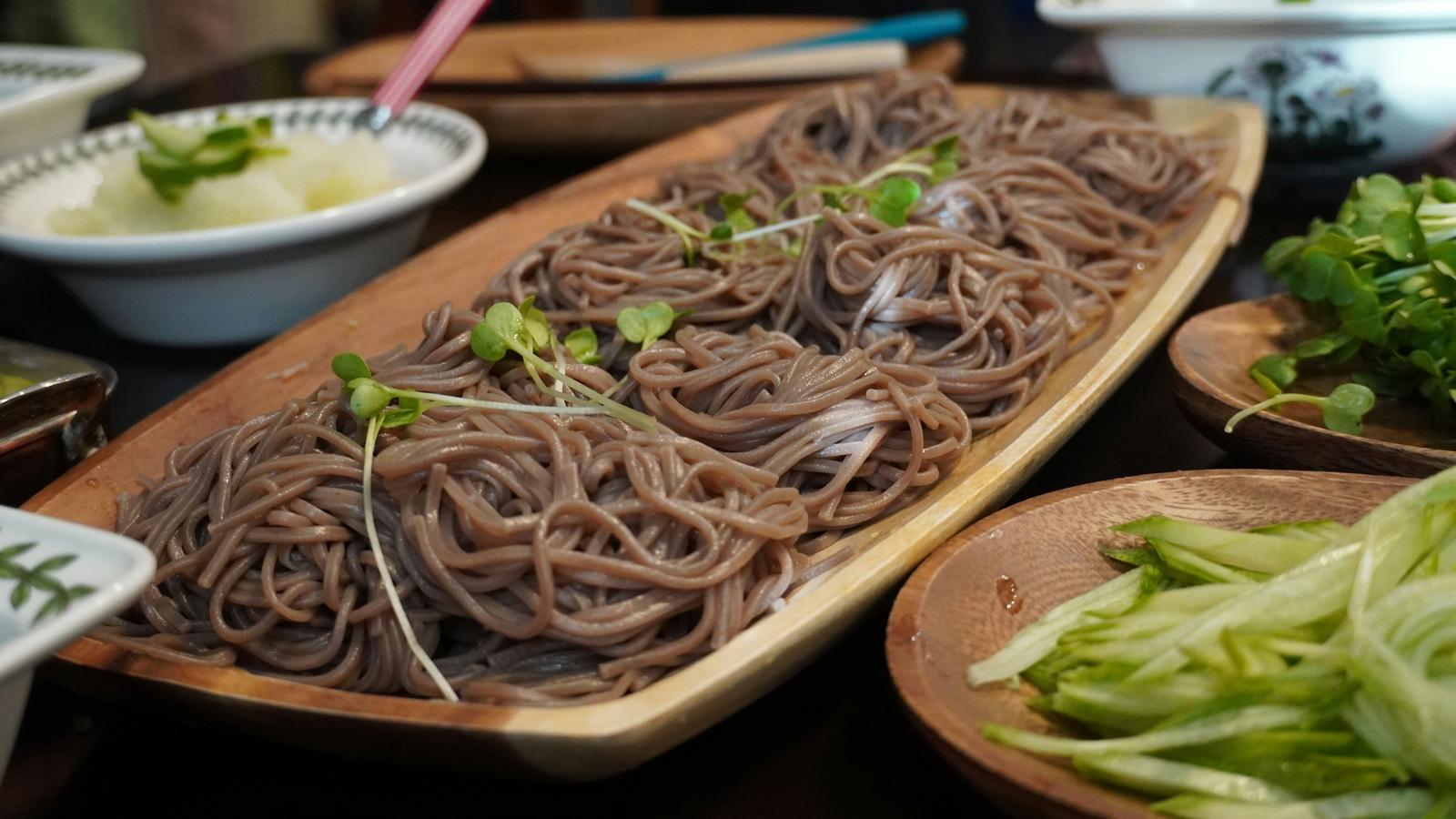
Japan's food allergy labelling law applies to packaged food, so a menu at a kaiseki restaurant or a ryokan dinner carries no legal allergen declaration. Wheat is in most Japanese soy sauce, fish is in most dashi, and both reach dishes that look free of them. Travellers with food allergies, coeliac disease or a gluten-free diet eat well in Japan when each kitchen is told the exact restriction in Japanese, in writing, weeks before the meal, and when they accept that some kitchens will decline.
This guide covers what the law does and does not require, where wheat, fish, shellfish, sesame and buckwheat hide in Japanese cooking, what fine restaurants and ryokan publish about allergies, how to bring adrenaline auto-injectors and other medicines into Japan, and what to do in an emergency. We read every rule and policy quoted here on the official site of the government agency, hotel or ryokan on October 14, 2026. If you are looking for how the reservations themselves work, that is in how to get a table at Japan's hard-to-book restaurants. Nothing here is medical advice; please speak to your own doctor about your diagnosis and what you should carry.
Key points
- Since April 1, 2026, Japan requires allergen labelling of nine items on packaged processed food: shrimp, cashew nuts, crab, walnuts, wheat, buckwheat, egg, milk and peanuts. Twenty more, including sesame, soybeans, salmon, mackerel and pistachio, are recommended only.
- The Consumer Affairs Agency describes restaurants as places where the labelling standard does not apply. It asks them to provide allergen information voluntarily.
- Japan's wheat labelling covers wheat only. The Agency's handbook states that barley and rye fall outside it, which matters for coeliac guests.
- Koikuchi soy sauce, the everyday kind, is brewed from soybeans and roughly equal wheat under the Japanese Agricultural Standard. Tamari uses soybeans with a little wheat or none.
- Policies differ by kitchen. Gora Kadan in Hakone asks for its allergy form three days before arrival and can cook vegetarian and gluten-free; the sushi counter at Hoshinoya Tokyo states it cannot accommodate allergies or dietary restrictions.
- Prescription medicines up to one month's supply, including self-injection kits, can enter Japan for personal use without an import certificate. Dial 119 for an ambulance.
DINE WELL WITH A RESTRICTION →
WHAT THE LABELLING LAW COVERS
Japan's allergen labelling sits under the Food Labelling Act and the Food Labelling Standard, and it is run by the Consumer Affairs Agency. The Agency's own summary says the obligation applies to processed food in containers and packaging. It sorts allergens into two tiers.
The nine mandatory items
Tokutei genzairyo, the specified ingredients. These must be declared on packaged processed food. As of April 2026 there are nine: shrimp (ebi), cashew nuts, crab (kani), walnuts (kurumi), wheat (komugi), buckwheat (soba), egg, milk and peanuts (rakkasei). Walnuts were added in March 2023. Cashew nuts were added on April 1, 2026, and the Agency's notice of that date gives manufacturers a two-year transition period, while asking them to label as soon as they can. A packet bought in the next year or two may therefore contain cashew without saying so.
The twenty recommended items
Items equivalent to the specified ingredients. These are recommended for labelling and are not required: almond, abalone, squid, salmon roe (ikura), orange, kiwi fruit, beef, sesame, salmon, mackerel, soybean, chicken, banana, pistachio, pork, macadamia nut, peach, yam (yamaimo), apple and gelatine. Pistachio joined the list on April 1, 2026, because of its cross-reactivity with cashew. Macadamia was added and matsutake mushroom removed in March 2024. A manufacturer may leave any of these twenty off the label entirely.
What the law does not reach
The Agency's 2026 handbook for food businesses refers to restaurants as places where food is served under conditions in which the labelling standard does not apply, and asks them to show allergen information on menus or websites and to train staff. That is a request. A restaurant in Japan has no legal duty to list allergens on its menu, and the person taking your order may not know what is in the stock or the sauce. The same handbook includes a reported case of a child who reacted to a restaurant curry after staff said it contained no milk; the curry roux contained skimmed milk powder.
Two further details from the handbook are worth knowing. Labelling is triggered when an allergen's protein is present at a few micrograms per gram or more, and vague "may contain" wording is prohibited; a factory may instead state that it also produces products containing a named allergen. And the scope of each item is fixed: the handbook states that barley and rye are not covered by "wheat", and that only true shrimp and crab count, so mantis shrimp and krill fall outside the shrimp item.
The lists follow the evidence. The Agency sets the mandatory items from a national survey of allergists that it runs roughly every three years. In the 2024 round, covering 6,033 immediate-type reactions, hen's egg caused 26.7%, walnut 15.2%, milk 13.4%, wheat 8.1%, peanut 7.0%, salmon roe 5.7% and cashew 4.6%. FoodNavigator, reporting on the change in January 2026, counted 916 walnut cases against 807 for milk, which puts tree nuts together second only to egg. The cashew transition runs to the end of March 2028, as both Kobe City's guidance for food businesses and Meiji's allergy pages state, and Meiji adds that restaurant meals carry no labelling duty at all.
For laboratories, the "few micrograms" rule means 10 µg of allergen protein per gram of food. A 2021 review in the journal Food Safety by Hiroshi Akiyama and Reiko Adachi describes Japan as one of the first countries to make allergen labelling mandatory under national law, and notes that Western systems lean more on precautionary "may contain" statements, which Japan does not allow on the label.
WHERE WHEAT HIDES
For a coeliac guest or a guest with a wheat allergy, the risk usually sits in the seasonings. Wheat is used across Japanese brewing, and the Consumer Affairs Agency notes that it is usually impossible to tell from a finished dish whether wheat was used.
Soy sauce and its relatives
Koikuchi soy sauce. The Japanese Agricultural Standard for soy sauce defines koikuchi, the dark everyday type, as brewed with roughly equal parts soybeans and wheat. Usukuchi, the lighter Kansai style used in Kyoto broths, is defined the same way. The Agency's handbook states plainly that soy sauce is generally made from soybeans and wheat.
Tamari. The standard defines tamari as soybeans alone, or soybeans with a little wheat. A tamari can therefore still contain wheat, and the bottle in a restaurant kitchen is usually not the one a guest sees. When we write to a kitchen we ask which tamari it holds and whether it is wheat-free.
Shiro shoyu. White soy sauce is defined as a little soybean with wheat, so it is mostly wheat. It is used in clear soups and pale simmered dishes precisely because it does not colour them.
Miso mirin and the rest
Miso. The Japanese Agricultural Standard for miso recognises rice miso, barley miso (mugi miso, made with a koji of barley or naked barley) and soybean miso. Barley is outside Japan's wheat labelling, so a coeliac guest needs the kitchen to name the miso it uses.
Mirin. The National Tax Agency describes hon mirin as brewed from glutinous rice, rice koji and shochu or alcohol. Kitchens also use mirin-style seasonings and mirin-type fermented seasonings, and the Consumer Affairs Agency's handbook tells manufacturers to check fermented seasonings for wheat. We ask which one is in the kitchen.
Ponzu, tsuyu and tare. Ponzu is citrus juice with soy sauce. The Agency's labelling example for concentrated noodle broth (tsuyu) lists soy sauce, bonito, mackerel flakes, dried sardines, kelp and a fermented seasoning containing soybeans and wheat. Grilling glazes for eel, yakitori and teriyaki are soy-based.
Batter, starch and gluten. Tempura batter and the coating on karaage are wheat flour. The handbook warns that food starch may be wheat starch, and the soy sauce standard permits wheat gluten in some grades. Fu, the wheat gluten cakes that float in clear soups, are wheat by definition.
A gluten-free kaiseki is possible where the kitchen agrees to it, because rice, fish, vegetables, tofu, kelp and salt are naturally free of wheat. It means the chef rebuilding every sauce, which is why the request has to arrive well before the day.
Wheat allergy and coeliac disease
These are different requests in a Japanese kitchen. The Japanese Society of Food Allergy's dietary guidance states that the wheat allergen in soy sauce disappears during brewing, so a patient with a wheat allergy generally does not need to avoid soy sauce. Coeliac disease concerns gluten itself, and trace amounts can matter. Restaurants draw the same line: Ise Sueyoshi, a kaiseki restaurant in Nishiazabu, Tokyo, offers a flour-free option made with regular soy sauce, for which guests confirm they accept the trace gluten in soy sauce and miso, and a separate strict gluten-free option described below. Ask your doctor which of the two you need before anything is written to a kitchen.
DASHI FISH AND SHELLFISH
Dashi is the stock under almost every Japanese course: soups, simmered dishes, savoury custard (chawanmushi), dipping sauces and many vegetable dishes. The usual base is kelp with dried bonito, and some kitchens add dried sardines or mackerel flakes. The Japanese Agricultural Standard for miso lists bonito flakes, dried sardines and kelp among the flavourings that may be added to miso itself, so a dashi-flavoured miso carries fish too.
For a guest allergic to fish this is the central issue, and it is one the label system says little about. Only salmon, mackerel and salmon roe appear on the recommended list; tuna, bonito, sardine, sea bream and most other fish appear on neither list. Among shellfish, only shrimp and crab are mandatory, with abalone and squid recommended. Clams, scallops, oysters and sea urchin are on neither list. A kombu-only dashi, made from kelp alone, is the standard substitute, and a kitchen that agrees to cook it should make it separately for you.
Shrimp and crab also reach dishes in less obvious ways: dried shrimp in seasonings, shrimp in tempura oil shared with other items, and crab in savoury custards and rice dishes in winter.
The same guidance notes that many patients with a fish allergy do not need to avoid bonito or dried-sardine dashi, and suggests shiitake, kelp or meat stock where they do. Which applies to you is a question for your doctor. We put the answer into the written request, because "no fish, dashi is fine" and "no fish, including dashi" lead a kitchen to two different menus.
SESAME BUCKWHEAT AND NUTS
Sesame. Sesame is on the recommended list only, so packaged dressings and sauces may not declare it. In restaurants it appears as sesame tofu (goma dofu), sesame dressings on greens (goma ae), sesame oil in tempura frying and as a garnish on rice.
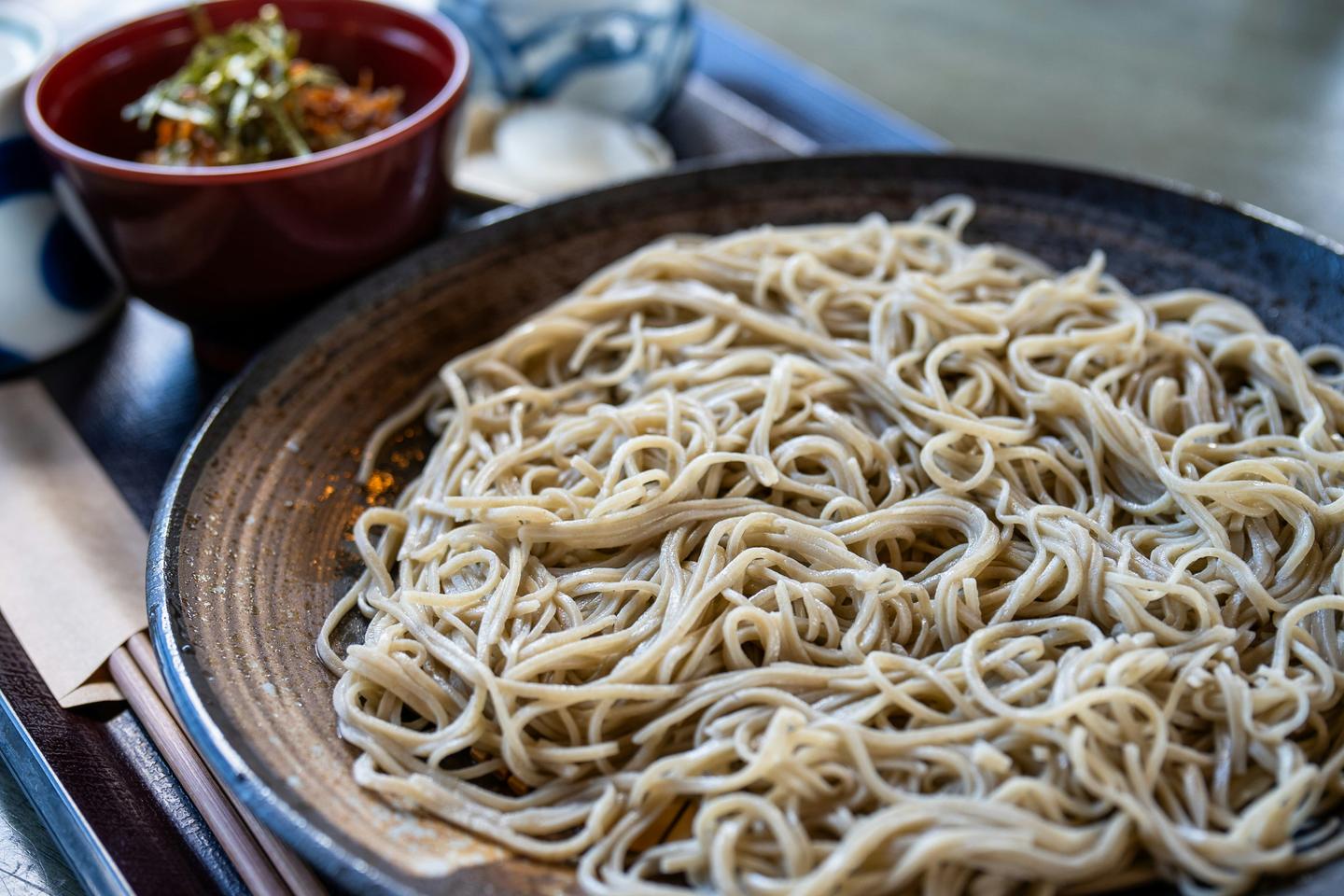
Buckwheat. Soba is mandatory because reactions to it can be severe, and the handbook adds that buckwheat can be present in seasonings. In a kitchen that also cooks noodles, the questions are whether soba and other noodles share boiling water, utensils or work surfaces, and whether buckwheat flour is used for dusting. For a severe buckwheat allergy we ask whether the kitchen cooks soba at all, since some kaiseki menus end with a soba course.
The Japanese Society of Food Allergy explains why shared water matters: the buckwheat allergen dissolves easily in water and is not destroyed by heat, so udon boiled in the same pot as soba can carry it. Its guidance tells patients to avoid eating at restaurants that handle soba, and warns that inhaled buckwheat husk dust can bring on asthma symptoms. A 2025 review in the Asian Pacific Journal of Allergy and Immunology adds buckwheat pillows to the exposures to avoid and warns that buckwheat often hides in foods sold as gluten-free. For a buckwheat allergy we therefore also ask each ryokan what its pillows are filled with. Soba does not solve a coeliac request either: Just One Cookbook notes that only juwari soba is pure buckwheat, and other soba may be blended with wheat flour.
Nuts. Walnuts and cashew nuts are now mandatory on packaged food; almond, macadamia and pistachio are recommended. The handbook notes that pecans can cross-react with walnut and encourages a warning on products containing them. In Japanese cooking walnut can appear in sweet dressings (kurumi ae) and confectionery. Ginkgo nuts, a common autumn ingredient, are on neither list.
CAN A LUXURY RESTAURANT HANDLE A SEVERE ALLERGY
Many can adapt a menu. Far fewer can promise that no trace of an allergen reaches the plate, and the best kitchens say so in writing. The guide on allergen information for restaurants and takeaway food, written by a working group of the food service industry in 2017 and revised in March 2023, explains why. A kitchen that cooks many dishes at once in a limited space cannot absolutely avoid cross-contact, so the guide says every piece of allergen information a restaurant gives should state that risk, and should never claim there is none.
Published policies in Tokyo follow that line. Mokuren at The Prince Park Tower Tokyo says on its booking page that it handles only the eight allergens it lists and cannot completely prevent trace contamination. The Chef's Theatre at mesm Tokyo marks the nine mandatory allergens and any dish with beef, pork or alcohol, and states that it may be unable to serve some items to guests with severe symptoms. Hotel Century Southern Tower in Shinjuku cooks for its restaurant, lounge and banquets in one shared kitchen, says it cannot guarantee a dish that is 100% allergen-free, and reserves the right to decline. A statement like this is useful. It shows exactly where a kitchen's limit sits.
The format of the meal matters as much as the restaurant. At a sushi counter the chef prepares every guest's fish on the same board, and at a tempura counter one pot of oil serves the whole room. A kaiseki kitchen with a few weeks' notice can usually cook a separate course, and a hotel restaurant with a written allergy form gives the clearest record of what was agreed.
For a severe allergy, nuts included, we ask each kitchen to leave the ingredient out entirely, including traces from shared boards, pots and frying oil. Where a kitchen cannot confirm that in writing, we arrange a different table. Please ask your doctor what level of exclusion you need before anything is sent. If your hotel concierge is making the request, what a concierge can and cannot arrange is in can a hotel concierge arrange restaurants outside the hotel.
WHAT FINE RESTAURANTS AND RYOKAN CAN ADAPT
A kaiseki dinner or an omakase counter is designed by one chef around the season and the morning's market. Some adapt fully, some adapt within limits and some decline. Here is what three well-known properties publish.
Gora Kadan in Hakone
The ryokan's FAQ asks guests with dietary restrictions or allergies to complete an allergy information form, linked from the booking confirmation email, by three days before arrival, and to resubmit it by the same deadline if anything changes. It states that vegetarian and gluten-free meals are possible, that all dishes are prepared in a shared kitchen so contamination cannot be ruled out entirely, that halal and certified ingredients are not offered, and that requests on the day cannot be accommodated.
Hoshino Resorts properties
The group's allergy page asks guests to declare food allergies at the time of booking, and states that it will try to remove allergens and that it cannot guarantee their removal. It may decline to serve a meal where a guarantee is required, and in that case accepts guests bringing their own food if told in advance. On the day we checked, the page still listed eight labelled items, which shows how long policy pages can trail a change in the law. At Hoshinoya Tokyo, the sushi counter Otemon states that it cannot accommodate specific allergies or dietary restrictions; both dinners there must be booked by 20:00 the day before. At Hoshinoya Kyoto, the à la carte menu states that individual allergy requests cannot be met.
What this means in practice
- Removing an ingredient you can see on the plate is the simplest request. Changing the stock, the soy sauce or the frying oil for a single guest is a far larger one, and that is where kitchens differ.
- A sushi counter is a hard place for a fish or shellfish allergy and often for coeliac guests, because the soy sauce, the glaze on eel and the sweet omelette are all prepared in advance.
- Tempura is fried in shared oil unless a kitchen tells you otherwise, so we ask.
- A ryokan with a written form and a deadline, such as Gora Kadan's three days, gives a clear record of what was agreed.
- Some kitchens refuse requests made on the day. Gora Kadan states this in its FAQ.
A refusal is useful information. It is better to hear it weeks ahead and book somewhere that can cook for you. Where a kitchen is right for you, the general guidance on behaviour at the table is in Japan etiquette for luxury travellers, and how to choose the right inn is in how to choose a ryokan.
A Tokyo kaiseki restaurant's booking form
Restaurant booking pages are often more specific than hotel policies. Ise Sueyoshi's page on TableCheck, the reservation service, asks guests to name each ingredient they cannot eat and says vegetarian, vegan, flour-free and gluten-free requests must be made at least five days ahead. Its strict gluten-free option uses only gluten-free soy sauce, prepares any fried dish with batter and frying oil free of wheat, and costs JPY 2,000 per person on top of a JPY 26,000 kaiseki course (JPY 30,000 from December 27 to January 3), service and tax included. A written option like this is the clearest record a kitchen can give, and we look for one before we arrange a table.
WHY THE REQUEST GOES IN WRITING IN JAPANESE
A kaiseki chef often orders produce days in advance and plans the menu around it, and a ryokan kitchen sets the evening's courses for every room at once. A request that arrives a few weeks ahead can be planned into the menu. One that arrives at the table usually cannot.
Coeliac disease is rare in Japan, which helps explain why the word "gluten" means little in many kitchens. A 2026 study across 23 Japanese hospitals found biopsy-confirmed coeliac disease in one of 583 adults with irritable bowel syndrome or functional dyspepsia, a group usually screened because it is at higher risk, and the authors describe the frequency as very low nationwide. Just One Cookbook suggests saying "wheat allergy" for that reason; we go further and name every ingredient. For a meal you choose on the day, large chains are the easier option: Nippon.com reports that they almost always publish allergy information online or in the shop.
Writing in Japanese matters because the precise words differ from English habits. "Gluten-free" means little to many kitchens; "no wheat, barley or rye, including soy sauce, miso, fu, tempura batter and wheat starch, and no shared frying oil" is a request a chef can act on. "Fish allergy" can be read as raw fish only, unless it says "including dashi made with bonito or sardines". A written request also travels intact from the reservations desk to the kitchen.
When we arrange a trip we request each table in your name and write to every restaurant and ryokan in Japanese with your exact restriction, the severity, whether trace amounts matter, and the specific seasonings to avoid. We ask them to confirm in writing what they can and cannot do, and we tell you before you travel. A short card like the one below, in your wallet, is still worth having for meals you choose on the day.
| English | Japanese |
|---|---|
| I have coeliac disease. | 私はセリアック病です。 |
| I cannot eat wheat, barley or rye, even in trace amounts. | 小麦・大麦・ライ麦は、少量でも食べられません。 |
| This includes soy sauce, miso, fu, tempura batter and wheat starch. | 醤油、味噌、麩、天ぷらの衣、小麦でん粉も含みます。 |
| Please tell me if a dish is not suitable. | 食べられない料理があれば教えてください。 |
For other allergies the second and third lines change. A fish allergy card should mention dashi (出汁), bonito (かつお節) and dried sardines (煮干し); a sesame card should mention sesame oil (ごま油).
HIDDEN SOURCES BY DISH
This is the list we work through with a kitchen. It is a checklist of questions to ask; the answer depends on each kitchen's recipe.
| Dish | What to ask about | Relevant to |
|---|---|---|
| Clear soup (suimono) | Bonito dashi, white or light soy sauce, fu | Fish, wheat |
| Miso soup | Barley miso, dashi in the miso, clams or shrimp | Barley, fish, shellfish |
| Savoury custard (chawanmushi) | Egg, dashi, shrimp, ginkgo, soy sauce | Egg, fish, shrimp, wheat |
| Sashimi and sushi | Soy sauce, glaze on eel, sweet omelette, rice vinegar blends | Wheat, egg, fish |
| Tempura | Wheat batter, egg in batter, shared oil, sesame oil | Wheat, egg, shrimp, sesame |
| Simmered dishes (nimono) | Dashi, soy sauce, mirin-type seasoning | Fish, wheat |
| Grilled fish and yakitori | Soy-based glaze (tare), saikyo miso marinade | Wheat, soy, barley |
| Dressed greens (goma ae, shira ae) | Sesame paste, tofu, soy sauce, walnut | Sesame, soy, wheat, nuts |
| Shabu-shabu and sukiyaki | Ponzu, sesame sauce, sukiyaki sauce, raw egg dip | Wheat, sesame, egg |
| Noodles | Soba flour, shared boiling water, tsuyu with mackerel flakes | Buckwheat, wheat, fish |
| Rice dishes (takikomi gohan) | Dashi, soy sauce, crab or shellfish in season | Fish, wheat, shellfish |
| Wagashi and dessert | Wheat flour, egg, walnut, sesame, kinako (soybean flour) | Wheat, egg, nuts, sesame, soy |
| Pickles and condiments | Soy sauce pickling, sesame, dried fish | Wheat, sesame, fish |
MEDICATION AND EMERGENCIES
Bringing medicines into Japan
The Ministry of Health, Labour and Welfare allows travellers to bring prescription medicines for personal use up to one month's supply without any special procedure. Injectables are allowed up to one month's supply when they are pre-filled syringes or self-injection kits. The Ministry's Q&A states that medicines brought together with their syringes, such as insulin, for less than one month's supply do not need an import certificate. Over-the-counter medicines are allowed up to two months' supply.
Above those amounts you need a Certificate for Import Confirmation before you travel. The Ministry's online system for it has run since February 1, 2023; the certificate arrives by email and is shown at customs. The application needs a prescription or doctor's note naming the patient, the medicine and the doctor, and a document showing your arrival date, airport, flight number and name. Narcotics and stimulant raw materials follow a separate permission process, and some medicines legal elsewhere are prohibited in Japan. Please check each medicine against the Ministry's pages and ask your doctor what to carry and in what quantity.
If something happens
Dial 119 for an ambulance from any mobile or landline. The Fire and Disaster Management Agency's English guide says to tell the operator first that it is a medical emergency, and to have your passport, a means of payment and your current medication ready. JNTO's guide for visitors notes that you cannot choose the hospital you are taken to, and suggests showing a nearby person the sentence 救急車を呼んでください, which asks them to summon an ambulance, if you cannot speak Japanese. The Japan Visitor Hotline, 050-3816-2787, runs 24 hours a day in English, Chinese and Korean for emergencies and illness.
Two practical points we add to every trip with a serious allergy. We note the nearest hospital to each ryokan, since many are in the mountains or on the coast. And we make sure each kitchen has the written request with the severity stated, so the people serving you know before the first course arrives. The cost of a trip planned this way is set out in what a bespoke Japan trip costs.
SOURCES AND HOW WE CHECKED
We read every source below on October 28, 2026. The agency, hotel and ryokan pages were first read on October 14, 2026 and checked again on October 28; the medical, academic, media, restaurant and Japanese-language sources were added on October 28. We did not contact the restaurants or ryokan. Policies and menus change, and we confirm each kitchen's answer in writing when we arrange each table.
- Consumer Affairs Agency, food allergy labelling: dates walnut, cashew and macadamia were added and matsutake removed
- Consumer Affairs Agency, what allergen labelling is (April 2026): the nine mandatory and twenty recommended items, packaged food scope, no "may contain" wording; the causes of reactions in the 2024 national survey
- Consumer Affairs Agency, notice of April 1, 2026: cashew made mandatory with a two-year transition, pistachio added
- Consumer Affairs Agency, allergen labelling handbook (April 2026): restaurants outside the standard, thresholds, scope of wheat and shrimp, soy sauce and fermented seasonings, the restaurant curry case
- City of Kobe, information for food businesses: cashew transition period to the end of March 2028; restaurants asked to show allergen information voluntarily
- Meiji, what allergen labelling is: two-year cashew transition to the end of March 2028; no labelling duty for restaurant meals
- FoodNavigator, Japan moves to bolster food allergen controls after nut cases spike (January 28, 2026): walnut and milk case numbers, tree nuts second only to egg
- Akiyama and Adachi, Japanese Food Allergy-Labeling System and Comparison with the International Experience (Food Safety, 2021): 10 µg per gram threshold, Japan among the first with mandatory labelling, comparison with Western precautionary labelling
- Japanese Society of Food Allergy, dietary guidance by cause of allergy (2022): soy sauce and wheat allergy, dashi and fish allergy, buckwheat in shared boiling water, husk dust
- Higashiyama et al., Biopsy-Confirmed Serofrequency of Celiac Disease among Patients with Disorders of Gut-Brain Interaction in Japan (Inflammatory Intestinal Diseases, 2026): coeliac disease frequency in Japan (one in 583 patients, 23 hospitals)
- Chen et al., Buckwheat allergy (Asian Pacific Journal of Allergy and Immunology, 2025): buckwheat in foods sold as gluten-free, buckwheat pillows
- Ministry of Agriculture, Forestry and Fisheries, Japanese Agricultural Standard for soy sauce: definitions of koikuchi, usukuchi, tamari and shiro
- Ministry of Agriculture, Forestry and Fisheries, Japanese Agricultural Standard for miso: barley koji, types of miso, fish flavourings
- National Tax Agency, the history of hon mirin: ingredients of mirin and mirin-style seasonings
- Just One Cookbook, Your Essential Gluten-Free Travel Guide to Japan: juwari soba and wheat in other soba, saying "wheat allergy"
- Nippon.com, Happy Eating: The Ups and Downs of a Gluten-Free Diet in Japan (2021): allergy information at large restaurant chains
- Gora Kadan, FAQ: allergy form deadline, vegetarian and gluten-free, shared kitchen, no same-day requests
- Ise Sueyoshi, reservation page on TableCheck: five-day deadline, flour-free and strict gluten-free options, prices
- Hoshino Resorts, food allergy policy: declare at booking, no guarantee, bringing your own food
- Hoshinoya Tokyo, dining: Otemon allergy policy and booking deadline
- Hoshinoya Kyoto, dining: à la carte allergy policy
- Ministry of Health, Labour and Welfare, bringing medicines into Japan: quantity limits
- Ministry of Health, Labour and Welfare, Q&A on importing medicines: self-injection with syringes, application documents
- Ministry of Health, Labour and Welfare, Application for Import Confirmation: online system since February 1, 2023
- Fire and Disaster Management Agency, ambulance guide in English: dialling 119 and what to have ready
- JNTO, guide for when you are feeling ill: hospital choice, the sentence to show
- JNTO, Japan Visitor Hotline: number, hours and languages
- Working group on allergen information in food service, guide on allergen information for restaurants and takeaway (2017, revised March 2023), copy published by the Japan Foodservice Association: cross-contact cannot be absolutely avoided in a shared kitchen, so allergen information should always state the risk (read November 4, 2026)
- Consumer Affairs Agency, food allergy measures for restaurants and takeaway: pamphlets for diners and for businesses, including a page for diners on unintended cross-contact (read November 4, 2026)
- Mokuren, The Prince Park Tower Tokyo, booking page on TableCheck: eight allergens handled, trace contamination cannot be completely prevented, service may be declined (read November 4, 2026)
- Chef's Theatre, mesm Tokyo, booking page on TableCheck: nine mandatory allergens and beef, pork and alcohol marked; some items may not be served to guests with severe symptoms (read November 4, 2026)
- Hotel Century Southern Tower, food allergy and dietary policy: one shared kitchen, no 100% allergen-free guarantee, right to decline (read November 4, 2026)
QUESTIONS GUESTS ASK
Do restaurants in Japan have to list allergens on the menu?
No. Japan's allergen labelling is required on packaged processed food, and the Consumer Affairs Agency describes restaurants as outside the labelling standard. The Agency asks restaurants to provide allergen information voluntarily, so practice varies from kitchen to kitchen.
Is soy sauce in Japan gluten-free?
Usually not. Under the Japanese Agricultural Standard, koikuchi and usukuchi soy sauce are brewed from soybeans and roughly equal wheat, and white soy sauce is mostly wheat. Tamari is soybeans alone or with a little wheat, so a kitchen needs to confirm that its tamari is wheat-free.
Can a ryokan cook gluten-free kaiseki?
Some can. Gora Kadan in Hakone states that it can prepare vegetarian and gluten-free meals if its allergy form is completed three days before arrival, while noting that its kitchen is shared. Other properties decline specific requests, so each one has to be asked in advance.
Can I bring an adrenaline auto-injector into Japan?
The Ministry of Health, Labour and Welfare allows self-injection kits and pre-filled syringes for personal use up to one month's supply without an import certificate. Larger quantities need a Certificate for Import Confirmation, applied for online before you travel. Please confirm the details with your doctor and on the Ministry's pages.
What number do I dial for an ambulance in Japan?
Dial 119 for an ambulance or fire. Tell the operator first that it is a medical emergency, and have your passport, a means of payment and your medication ready. The Japan Visitor Hotline, 050-3816-2787, offers support in English 24 hours a day.
Can a luxury restaurant in Japan guarantee there is no cross-contact?
Rarely in writing. The guide on allergen information for restaurants in Japan says a kitchen cooking many dishes at once cannot absolutely avoid cross-contact and should always state that risk, and hotel restaurants such as Mokuren at The Prince Park Tower Tokyo say the same on their booking pages. What a kitchen can do is cook a separate course with separate tools and oil and confirm it in writing.
Which kinds of restaurant are hardest with a severe food allergy?
Counter formats. At a sushi counter every guest's fish is prepared on the same board, and at a tempura counter one pot of oil serves the room. Kaiseki restaurants and hotel kitchens that take a written allergy form several days ahead are usually the easier choice.
DINE WELL WITH A RESTRICTION
Send us your travel dates and your dietary needs as precisely as you can, including whether trace amounts matter. We will come back with the restaurants and ryokan we would suggest, write to each kitchen in Japanese, and tell you what each one confirms it can cook for you.
Begin planningWe reply within 24 hours, in writing
Some of the restaurants and bars we arrange seat guests only by introduction or membership. We ask on your behalf; the table and the evening are the house's decision. We do not publish their names.