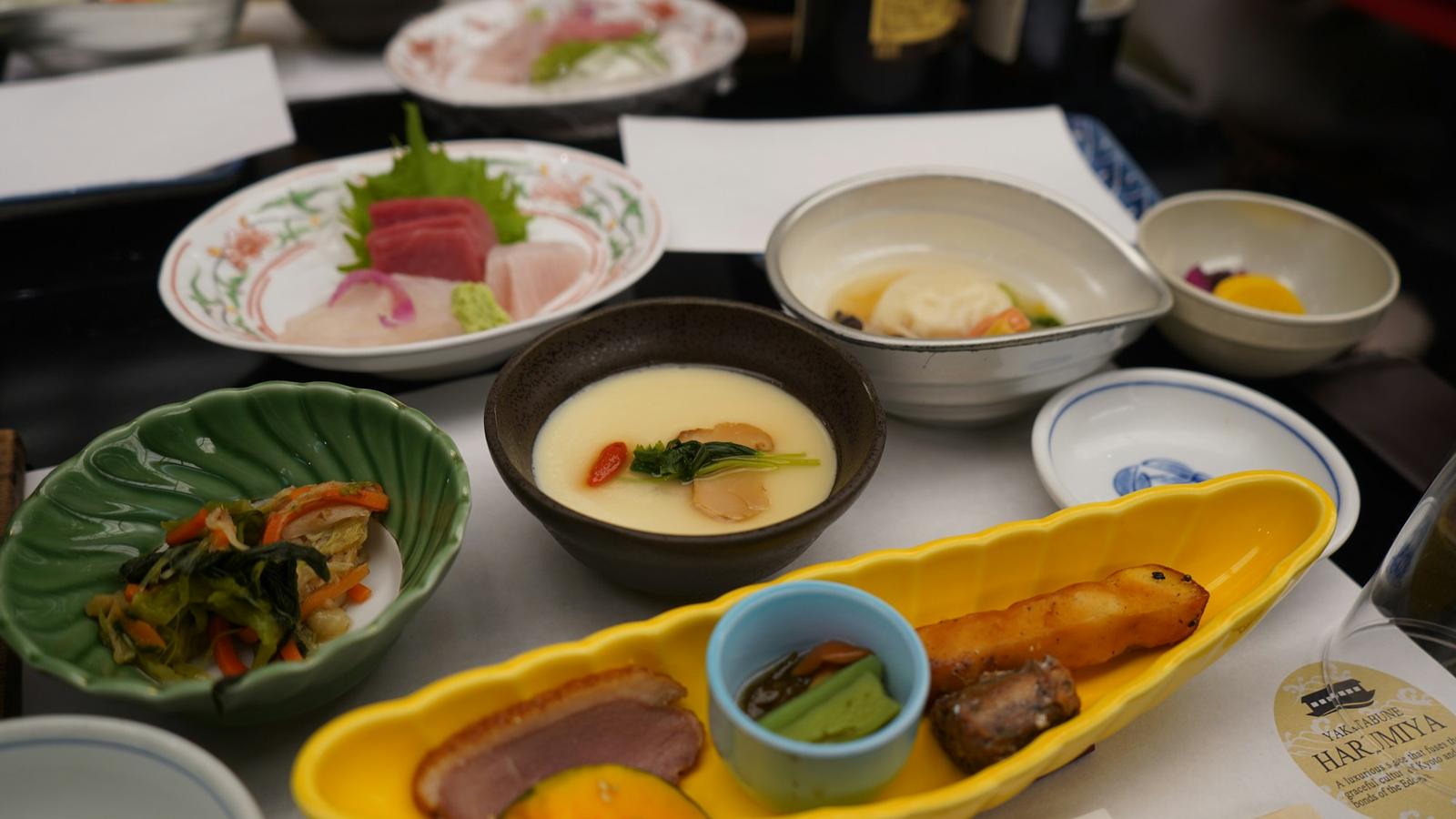
The honest answer to "what does a good trip to Japan cost" is that the trip itself is the smaller half of the question. Two travellers can spend the same amount and come home with completely different fourteen days, because in Japan the cost is driven less by the price of a room than by how the days are arranged around it: how often you move, which nights you spend in a ryokan, how many hours of a private guide you actually use, and whether you are travelling in a week the whole country is also travelling.
This piece sets out the structure of the cost. Rates for hotels, ryokan and restaurants in Japan move with the season and with availability, and any number written down in an article is out of date within a month. What does not move is the shape of the spend, and that is what you can plan against.
Key points
- In Japan, how the days are arranged moves the cost more than the price of a room does: how often you move, which nights you spend in a ryokan, how many hours of a private guide you use, and whether you travel in a week the whole country is also travelling.
- On a trip of ten to fourteen days, the spend usually falls into five parts, largest first: accommodation, dining, private transport and guides, experiences that require arrangement, and the planning fee.
- Three things raise the total the most: travelling in cherry blossom season, Golden Week or the autumn foliage weeks, moving too often, and insisting on the largest room category.
- STAYGO's planning fee is flat. Signature is USD 3,500 for your group and covers a trip of seven to twenty-one days. Hotels, ryokan, restaurants and drivers are arranged by us and settled with each of them at their own rates, usually at the hotel or on the day. The fee covers planning and coordination; cars, train tickets and the rest of the journey are paid for separately.
WHERE THE MONEY ACTUALLY GOES
On a bespoke trip of ten to fourteen days, the spend usually falls into five parts, in descending order of size: accommodation, dining, private transport and guides, experiences that require arrangement, and the planning fee.
Accommodation is the largest and the most elastic. A city hotel suite in Tokyo and a room at a small ryokan in the mountains are not comparable products, even at the same nightly rate. The ryokan rate includes two meals, usually a kaiseki dinner cooked for the number of guests staying that night, and a building that may only have eight rooms. That is why ryokan nights look expensive per night and frequently turn out to be very good value.
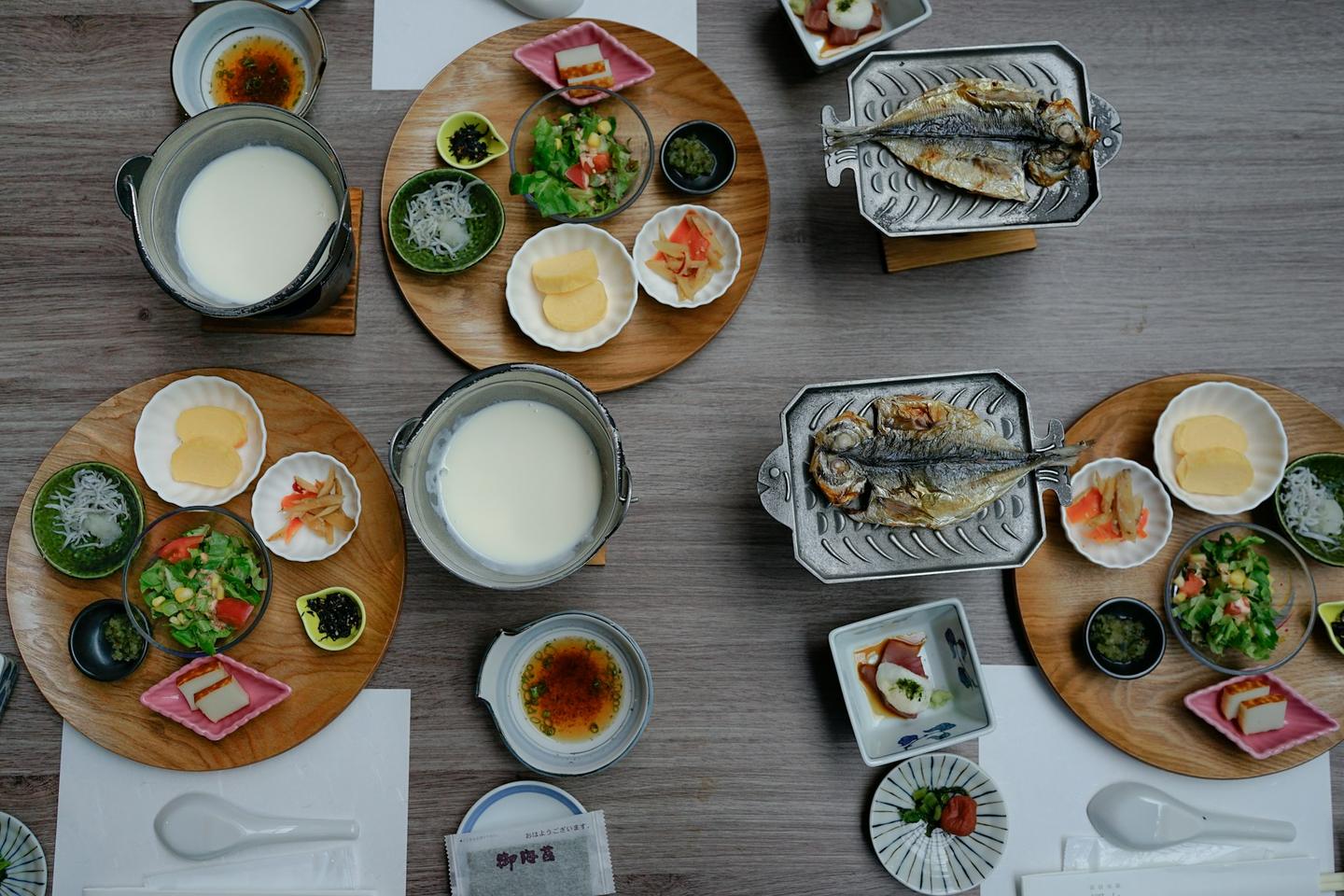
Asaba, a ryokan in Shuzenji on the Izu peninsula, shows the arithmetic: its rate includes dinner and breakfast, both served in your room by a server assigned to you. When you compare a ryokan night with a hotel night, add two meals to the hotel side first.
Dining is where budgets quietly diverge. A counter that seats eight and serves one menu can cost more per person than the room you slept in, and lunch at the same house often costs half the dinner or less. Travellers who eat two significant dinners a week and let the other evenings be simple spend far less, and usually eat better, than travellers who book a notable restaurant every night and arrive at the seventh one unable to taste it.
Published menus show the gap. Kikunoi Honten in Kyoto lists lunch kaiseki from ¥16,500 and a lighter dinner course at ¥22,000, with the full dinner courses from ¥33,000 to ¥110,000, tax included and a 15% service charge added. A service charge is normal at this level and a tip is not: Japan's national tourism organisation says tipping is not common in restaurants, taxis or hotels. Read the cancellation terms when a table is confirmed. Pocket Concierge, a reservation service for Japanese restaurants, charges 50% for cancellations two to three business days ahead, and Sushi Zai, whose bookings run through TableCheck, charges the full price for cancellations within 72 hours.
Transport is smaller than people expect, and guides are larger. The Shinkansen is moderately priced. The luxury expense is a private driver for a day in Kyoto, or a guide who can read a temple's calligraphy and explain what you are looking at.
For scale, Tokyo MK publishes eight hours with a driver in Tokyo, up to 120 km, from ¥74,000 for an Alphard or Mercedes V-Class and from ¥84,000 for a Lexus LM, tax included, with tolls and parking on top. The Japan Federation of Certified Guides prices a licensed guide from ¥30,800 for up to four hours for a group of one to nine, plus ¥2,200 for each extra hour, with admissions and the guide's transport at cost and a meal allowance on top. A private guide may accept a tip given discreetly in an envelope, though none is expected.
What raises the number the most
Three things, in order. Travelling in cherry blossom season, Golden Week, or the autumn foliage weeks, when sought-after properties raise their rates and the merely good ones charge as much. Moving too often, because every move costs a night's value in half-days lost. And insisting on the largest room category in a building whose smallest room is already beautiful.
The busiest weeks are published in advance. JR Central runs every Nozomi train as reserved-only during Golden Week (April 24 to May 6 in 2026), Obon (August 7 to 16 in 2026) and the New Year (December 25, 2026 to January 5, 2027), and adds ¥400 to a reserved seat in its peak season and ¥200 in its busy season. The Golden Week and Obon periods for 2027 had not been announced in mid-November 2026. Reserved-seat charges on Nozomi and Mizuho trains also rise for tickets bought from July 1, 2027. Those are the weeks Japan itself travels, so plan the expensive nights around them.
WHAT STAYGO CHARGES, AND WHY IT IS SEPARATE
STAYGO's planning fee is flat and quoted before any work begins. Signature is USD 3,500 for your group and covers a trip of seven to twenty-one days. For anything outside that, Bespoke is priced after a first conversation. The fee is the same whether the plan takes ten hours or forty, so the hours spent getting the plan right never appear on your bill.
Hotels, ryokan, restaurants and drivers are arranged by us and settled with each of them at their own rates, usually added to your hotel room or paid on the day. Our planning fee is presented separately from the costs of your journey: you see each provider's rate, and you see ours. We do not hold payment for hotels, restaurants or transport, and we add nothing to their rates. Private cars and train tickets are costs of the journey rather than part of the Signature fee, and tickets are issued through our travel partner. A 25% deposit secures the planning slot and the remainder is due 60 days before departure; payment is handled through Stripe. For journeys departing within 60 days, the full fee is due when you confirm.
The practical consequence is that you can raise or lower the trip's cost without renegotiating anything with us. Dropping one ryokan night or adding two guide days changes the cost of the journey. It does not change our fee. The reasoning behind the flat fee is set out here.
TAXES ADDED TO THE ROOM
Since March 1, 2026, Kyoto's accommodation tax is set per person per night by the room charge, excluding meals and consumption tax: ¥1,000 from ¥20,000, ¥4,000 from ¥50,000 and ¥10,000 from ¥100,000. Nikkei Asia noted that the top rate is ten times the old maximum. Two people in a room of ¥220,000 a night pay ¥20,000 in tax on top.
Tokyo charges ¥100 or ¥200 per person per night today, ¥200 on rooms of ¥15,000 or more per person, and from April 1, 2027 it moves to 3% of the room charge, with stays under ¥13,000 exempt. On the way home, the international tourist tax has been ¥3,000 per departure since July 1, 2026. It is usually collected with the airline ticket, and children under two are exempt.
THREE SHAPES OF THE SAME BUDGET
It helps to think of the budget as a shape. The same budget, arranged three ways, produces three different trips.
Fewer places, better rooms. Tokyo and Kyoto only, four and five nights, with one ryokan in between. Fewer transfers, more depth, and the money concentrated in three buildings you will remember. For a first visit this is usually the shape we would suggest, because fewer moves leave more time in each place.
More ground, lighter nights. Tokyo, Kanazawa, Kyoto, and a night on the Seto Inland Sea, with very good rooms rather than the most celebrated ones, and the saving spent on private guides and experiences. This suits a second visit, or travellers who are genuinely energised by movement.
One centrepiece. A conventional itinerary built around a single larger expense: a night at a ryokan with a private open-air bath fed from its own source, a sleeper train leg, or a kaiseki dinner in a room that seats six. It suits a trip with one occasion at its heart, such as an anniversary.
If you are weighing seven days against fourteen, the trade-offs are set out in Japan in 7 days vs 14 days, and the ryokan tiers that drive so much of the accommodation line are explained in how to choose a ryokan.
SOURCES AND HOW WE CHECKED
We first wrote this page on September 14, 2026, and read every page below on October 28, 2026. We did not contact the restaurants, the ryokan, the car company or the guide federation. Menus, rates and taxes change, so we check them again for your dates when we arrange the trip.
- Kikunoi Honten, restaurant (Japanese): lunch and dinner course prices, tax and the 15% service charge
- Asaba, dining: dinner and breakfast included in the rate and served in the room
- Pocket Concierge, dining etiquette in Japan: service charges, cancellation fees and arriving early
- Sushi Zai, reservation page on TableCheck: the 100% fee for cancellations within 72 hours
- Japan National Tourism Organization, tipping in Japan: tipping in restaurants, taxis and hotels, and for private guides
- Tokyo MK, private hire rates: rates by hours and vehicle class as of May 21, 2026, tolls and parking
- Japan Federation of Certified Guides, services and fees: the basic fee, extra hours and allowances
- JR Central, reserved-only Nozomi periods (Japanese): Golden Week, Obon and New Year dates for fiscal 2026
- JR Central, seasonal reserved-seat charges (Japanese): the ¥400 and ¥200 supplements
- Kyoto City, accommodation tax (Japanese): rates from March 1, 2026 and what counts as the room charge
- Nikkei Asia, Kyoto hikes hotel tax on March 1, February 28, 2026: the top rate at ten times the previous maximum
- Tokyo Metropolitan Government, accommodation tax (Japanese): current rates and the 3% rate from April 1, 2027
- Japan Tourism Agency, international tourist tax (PDF): ¥3,000 from July 1, 2026, the transitional rule and children under two
QUESTIONS WE ARE ASKED BEFORE ANYONE TALKS ABOUT MONEY
Is Japan more expensive than Europe at the same standard?
At the top end, often not, though much depends on the exchange rate when you travel. What differs is where the money buys something unusual. The equivalent spend buys a more distinctive room in Japan than in most of Europe, and a more expensive dinner.
Does a concierge make the trip cost more?
The planning fee is a cost of its own, separate from the trip. What it changes is how the rest of the budget is spent: rooms chosen for how you travel, tables requested in Japanese where a restaurant does not take online bookings, and the weeks you did not spend researching. Whether that is worth USD 3,500 is a fair question to ask before you enquire.
Can it be done for less?
Yes, and for a lot of trips it should be. If the plan is two cities, one ryokan, and no private guiding, the research is manageable on your own. We are useful when the trip has constraints that are hard to satisfy from outside Japan.
A NUMBER BEFORE YOU COMMIT
Tell us the dates, the number of travellers, and roughly how you like to travel. We will tell you what the trip is likely to cost and what our fee would be, before any work begins.
Begin planningWe reply within 24 hours, in writing
Some of the restaurants and bars we arrange seat guests only by introduction or membership. We ask on your behalf; the table and the evening are the house's decision. We do not publish their names.