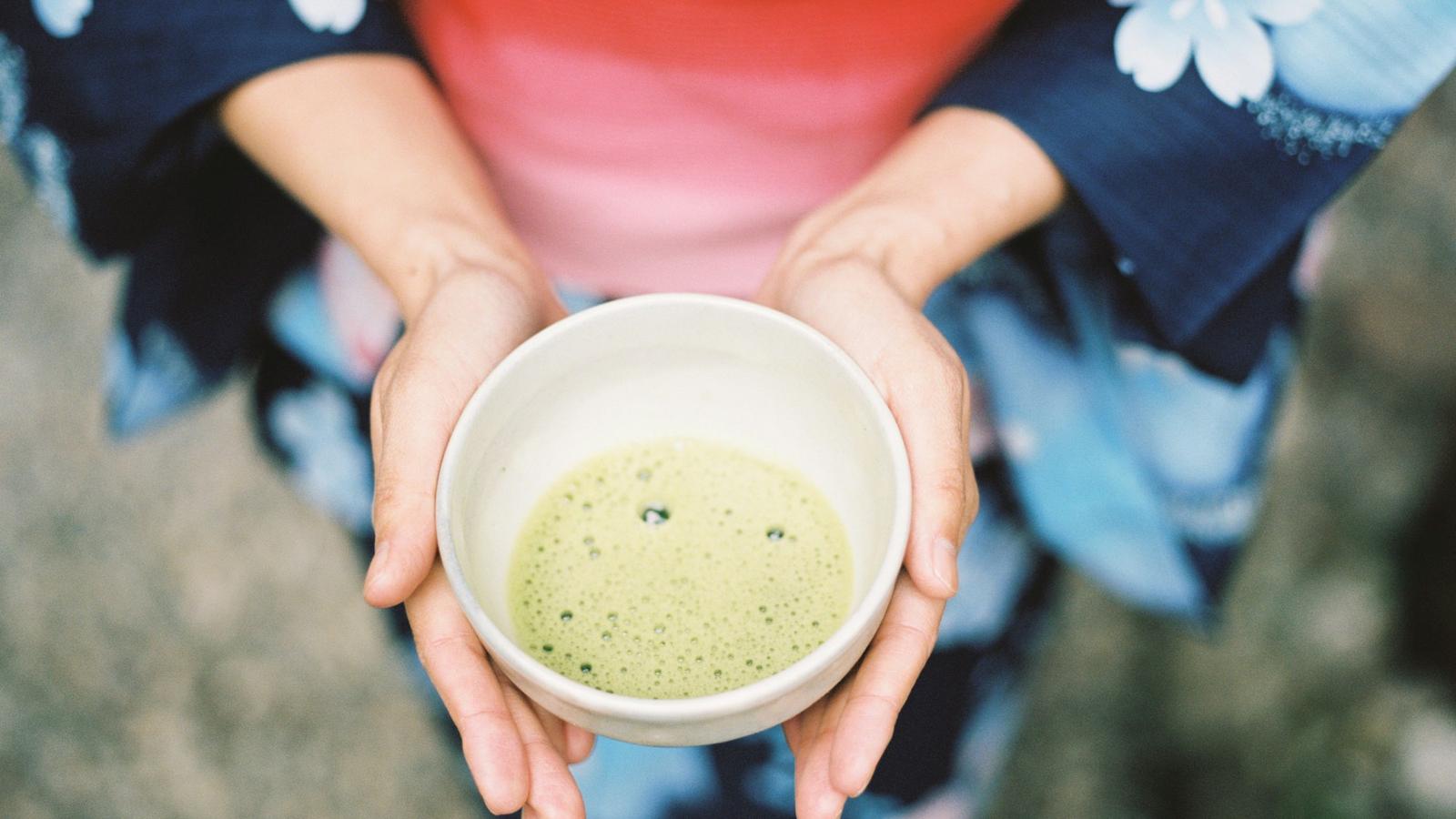
Omotenashi became internationally familiar in September 2013, when the broadcaster Christel Takigawa, presenting Tokyo's bid for the 2020 Olympic Games to the IOC Session, spelled the word out syllable by syllable, with a gesture, as the Japanese word for hospitality. Tokyo won, and o-mo-te-na-shi became one of Japan's buzzwords of the year. Travel writing has repeated the word ever since, usually as shorthand for "Japanese people are very polite," which is not what the word means.
This article describes what omotenashi looks like in practice: what a guest actually experiences, and which parts of Japanese travel are built around it.
Key points
- Omotenashi describes care offered without expectation of reward, and above all care that anticipates what a guest needs before they express it.
- The ryokan, with its nakai, is where it is practiced most completely; high-level kaiseki and omakase restaurants are the dining equivalent.
- It is largely non-verbal, so guests who speak no Japanese still experience it.
CARE THAT ARRIVES BEFORE THE REQUEST
Omotenashi (おもてなし) describes care that is offered without expectation of reward. More distinctively, it is care that anticipates what a guest needs before they have expressed it. The host reads the situation and responds to what the guest has left unsaid.
This anticipatory quality is the core of the concept. A server who refills your water glass before it is empty is performing service. A server who notices, before you have finished the meal, that you have been sitting in a draft and quietly adjusts the air conditioning without asking, and without drawing attention to the adjustment, is doing something closer to omotenashi.
The difference is the elimination of the request. In transactional hospitality, the guest identifies a need, communicates it, and the service is performed. In omotenashi, the need is identified by the host and addressed before it becomes a request. The guest is not required to manage their own experience.
In practice, the clearest sign of omotenashi is how little you are asked to decide.
THE RYOKAN AND THE NAKAI
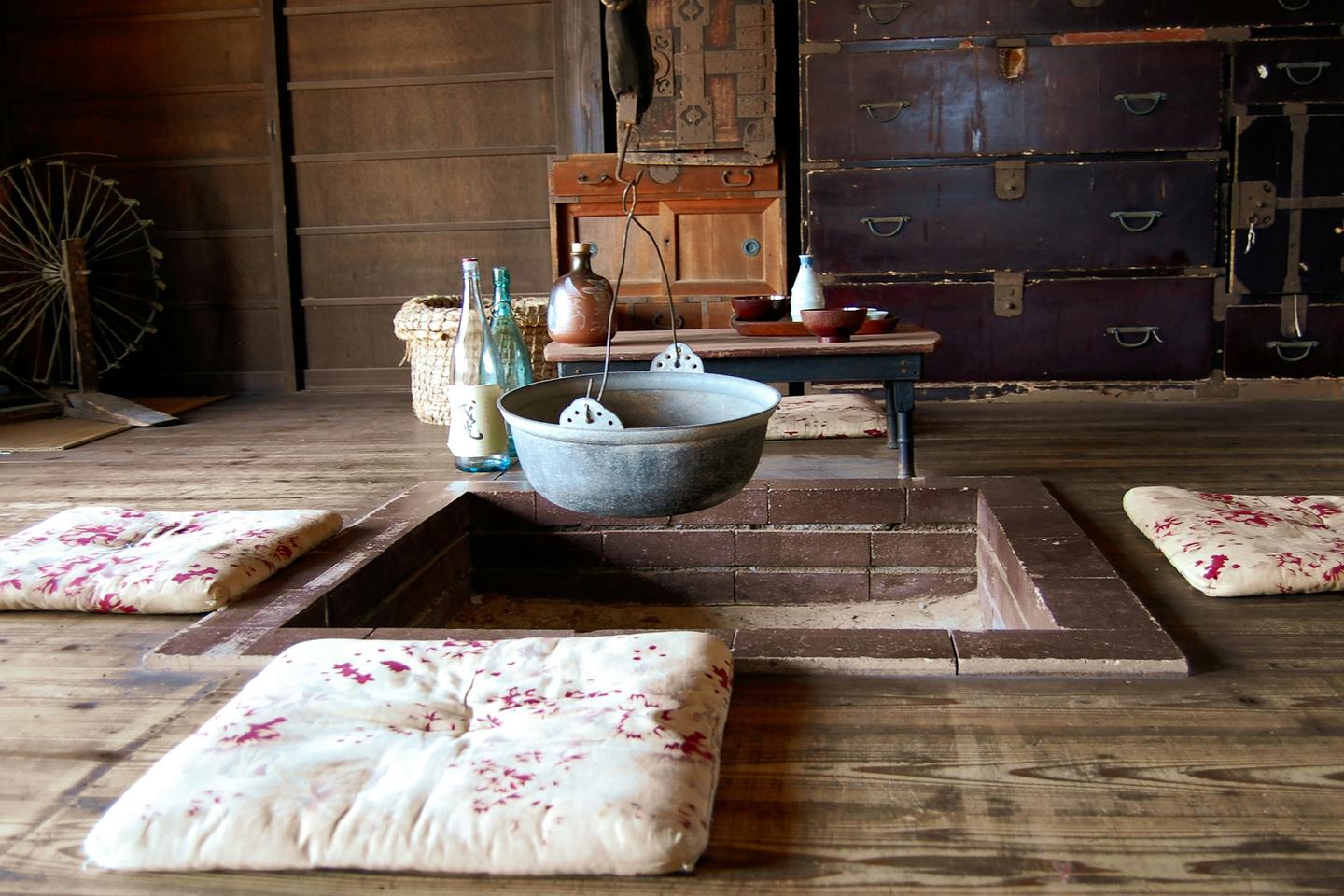
The traditional ryokan is where omotenashi is practiced most completely. The nakai, the room attendant assigned to a specific guest or room, manages the stay from arrival through departure without the guest needing to ask for anything.
The word itself has a history. Nakai once named the women who served in the inner rooms of the shogun's palace and of great houses. From the early modern period it came to mean the women who look after guests at inns and restaurants, and in the teahouses of the Kansai region a nakai often directed the whole evening, from calling the geiko to managing the room.
You arrive and are shown to your room: a seasonal arrangement of flowers, a scroll chosen for the time of year, the temperature already adjusted. While you are at the onsen, the futon is laid out. When you return from dinner, the room is reset. Dinner, bath, sleep, breakfast: each transition is timed to your rhythm. Much of what you might have asked for is already in hand, because the nakai has been paying attention.
This requires observation. The pace the guest sets, what they eat and leave, how long they spend in different parts of the room: the nakai reads all of it and constructs a picture of what serves them.
Three ryokan are often named for this kind of attention: Beniya Mukayu in Yamashiro Onsen, a member of Relais & Châteaux; Gora Kadan in Hakone, built on the site of a former villa of the Kan'in imperial family; and Asaba in Shuzenji, which began in 1484 as lodgings at the gate of a newly founded temple, brought a Noh stage from Tokyo in the late Meiji era, and has staged seasonal Noh, kyogen and dance there for about forty years.
One famous name is missing for now. Kagaya, in Wakura Onsen on the Noto Peninsula, says on its website that it has suspended operations. Wakura was hit by the January 2024 Noto earthquake, and in September 2026 the town's ryokan cooperative reported that 11 of its 19 member inns had reopened to guests.
IN THE DINING ROOM: KAISEKI AND OMAKASE
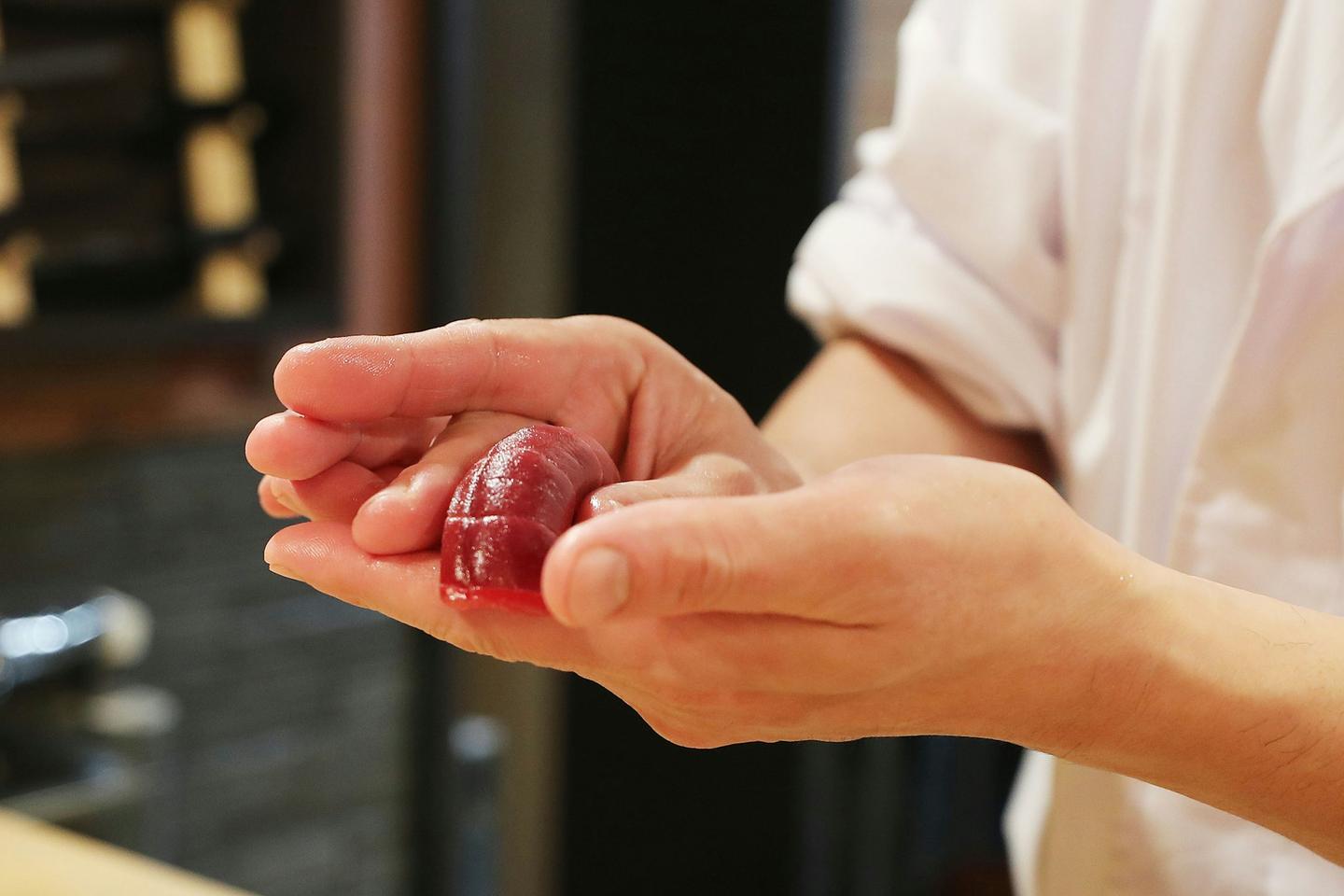
The high-end restaurant is the other context in which omotenashi is most deliberately practiced. In a kaiseki meal the chef determines everything: what is served, in what order, at what temperature, with what presentation. The guest is removed from the role of decision-maker and placed entirely in the care of the kitchen.
The word kaiseki carries its origin. In Zen monasteries, where monks were not to eat after midday, a warmed stone (onjaku) held inside the robe eased hunger, and the light meal that did the same work took the name "stone in the bosom". In the tea ceremony it became the simple meal served before the tea, most often one soup and three dishes, and the tea kaiseki is the ancestor of the long seasonal course served in ryotei today.
The guest's only role is to receive what is offered and to be present. That takes close, unbroken attention. The meal carries decades of accumulated technique, a working knowledge of what is in season and where it came from, and the chef's judgment of what is worth eating right now.
The service in a kaiseki room is managed as carefully as the cooking: how dishes are placed and removed, how much is explained and how much is left alone, how the room reads when a guest wants more time and when they are ready for the next course.
WHAT HAPPENS IF YOU DO NOT SPEAK JAPANESE
You do not need Japanese to notice it, because omotenashi is largely non-verbal, expressed through action, environment, and attention.
A nakai who shares no language with a guest still reads the situation: the pace at which they eat, the way they hold their cup, what they look at and return to, the small physical signals of comfort or discomfort. The response is a quiet adjustment, and it asks for no acknowledgement.
This is also why experiences built on omotenashi can be easier for foreign visitors than experiences that depend on verbal fluency. The tea ceremony, the kaiseki meal, the ryokan stay: none of them ask you to navigate. Someone else has already done it.
WHY THE CARE STAYS OUT OF SIGHT
You may still be greeted by name, or told what the chef has chosen for the evening. Most of the work, though, is done without comment.
Japanese omotenashi tends to be invisible when it is working well. The effort stays out of sight and the result is plain: the guest's glass is full, the room is at the right temperature, the next course appears at the right moment. None of it is pointed out, because pointing it out would spoil it.
For the guest, the effect is ease: there is little to ask for and little to decide.
One practical consequence is that the care is never priced as a tip. Japan's national tourism organization notes that tipping is not common in restaurants, hotels or taxis, though a gratuity from the heart, kokorozuke, is given in some situations, discreetly and in an envelope. Pocket Concierge, a booking service for fine dining, adds that a service charge is usually already on the bill, and that ordering another drink or dish is the usual way to thank a chef.
SOURCES AND HOW WE CHECKED
We first wrote this page in June 2026, revised it on October 5, 2026, and on October 28, 2026 read every page below and added them as its sources. We did not contact the ryokan, restaurants or services named here. Opening status and booking terms change, so we check them again when we arrange your stay.
- Kotobank, omotenashi (Kyodo News glossary, updated April 2, 2014) (Japanese): Christel Takigawa's presentation at the IOC Session, the gesture, the word becoming a buzzword of the year
- Kotobank, nakai 仲居 (Daijisen, Heibonsha World Encyclopedia, Nipponica) (Japanese): the history of the word and the nakai's role in Kansai teahouses
- Kotobank, kaiseki 懐石 (Daijisen, Nipponica) (Japanese): the warmed stone, the Zen origin of the word, the tea meal of one soup and three dishes
- Beniya Mukayu, official site: the inn in Yamashiro Onsen and its Relais & Châteaux membership
- Gora Kadan, official site (Japanese): the site of the former Kan'in imperial villa, the kaiseki dining
- Asaba, official site (Japanese): the founding in 1484, the Noh stage Gekkeiden moved from Tokyo, the seasonal performances
- Kagaya, official site (Japanese): the notice that the inn has suspended operations
- Wakura Onsen Tourism Association, Wakura Onsen Ryokan Cooperative and JR West, news release, September 16, 2026 (PDF) (Japanese): 11 of the cooperative's 19 member inns reopened after the 2024 earthquake
- Kikunoi Honten, Kyoto, restaurant page (Japanese): a working ryotei: rooms, seasonal kaiseki, booking hours
- Japan National Tourism Organization, Tipping in Japan: tipping not common, kokorozuke, the envelope
- Pocket Concierge, Dining Etiquette in Japan: service charge on the bill, thanking a chef by ordering more, omakase
- Tabelog, Japanese Culture and Etiquette Guide: quiet rooms, no perfume, asking before photographs
QUESTIONS, ANSWERED
What does omotenashi mean?
Omotenashi (おもてなし) is a Japanese concept of hospitality. It describes care that is offered without expectation of reward and, most distinctively, care that anticipates what a guest needs before they express it. Omotenashi involves reading the situation and responding to what is left unsaid as much as to what is said. The term has no precise English equivalent; it is sometimes translated as 'wholehearted hospitality' or 'selfless service.'
Where in Japan can you experience omotenashi?
The traditional ryokan is the clearest setting for omotenashi. A dedicated nakai (room attendant) manages the guest experience from arrival through departure: preparing the room in stages, timing meals around the guest's rhythm, and attending to details the guest has not requested but clearly needs. High-level kaiseki and omakase restaurants are the dining equivalent: the chef and service team manage the entire experience without requiring the guest to make decisions.
Is omotenashi only found in traditional Japanese settings?
No. The spirit of omotenashi runs through ordinary Japanese service too: the precision of convenience store staff, the attentiveness of department store sales assistants. Its most concentrated and deliberate expression, however, is found in traditional settings: the ryokan, the kaiseki restaurant, the tea house. These are settings where the guest is the sole focus and the room has been prepared in advance.
How does omotenashi feel to a guest?
Mostly, it feels like ease. A greeting by name or a word about the menu may still happen, but the larger part of the care, the timing, the temperature of the room, the order of the meal, is handled without comment. The guest's needs are met before they arise, there is little to ask for, and there is no performance of effort.
Do I need to speak Japanese to experience true omotenashi?
No. Omotenashi is largely non-verbal. It is expressed through action, environment, and attentiveness. In a traditional ryokan or high-level restaurant, the staff read the guest's situation through observation: pacing, body language, what has been touched or left untouched. The language barrier changes the texture of some interactions but does not prevent the core experience of being genuinely attended to.
PLAN A RYOKAN STAY
STAYGO arranges ryokan stays, kaiseki dinners and cultural experiences, each chosen for how you like to travel.
Begin planningWe reply within 24 hours, in writing
Some of the restaurants and bars we arrange seat guests only by introduction or membership. We ask on your behalf; the table and the evening are the house's decision. We do not publish their names.