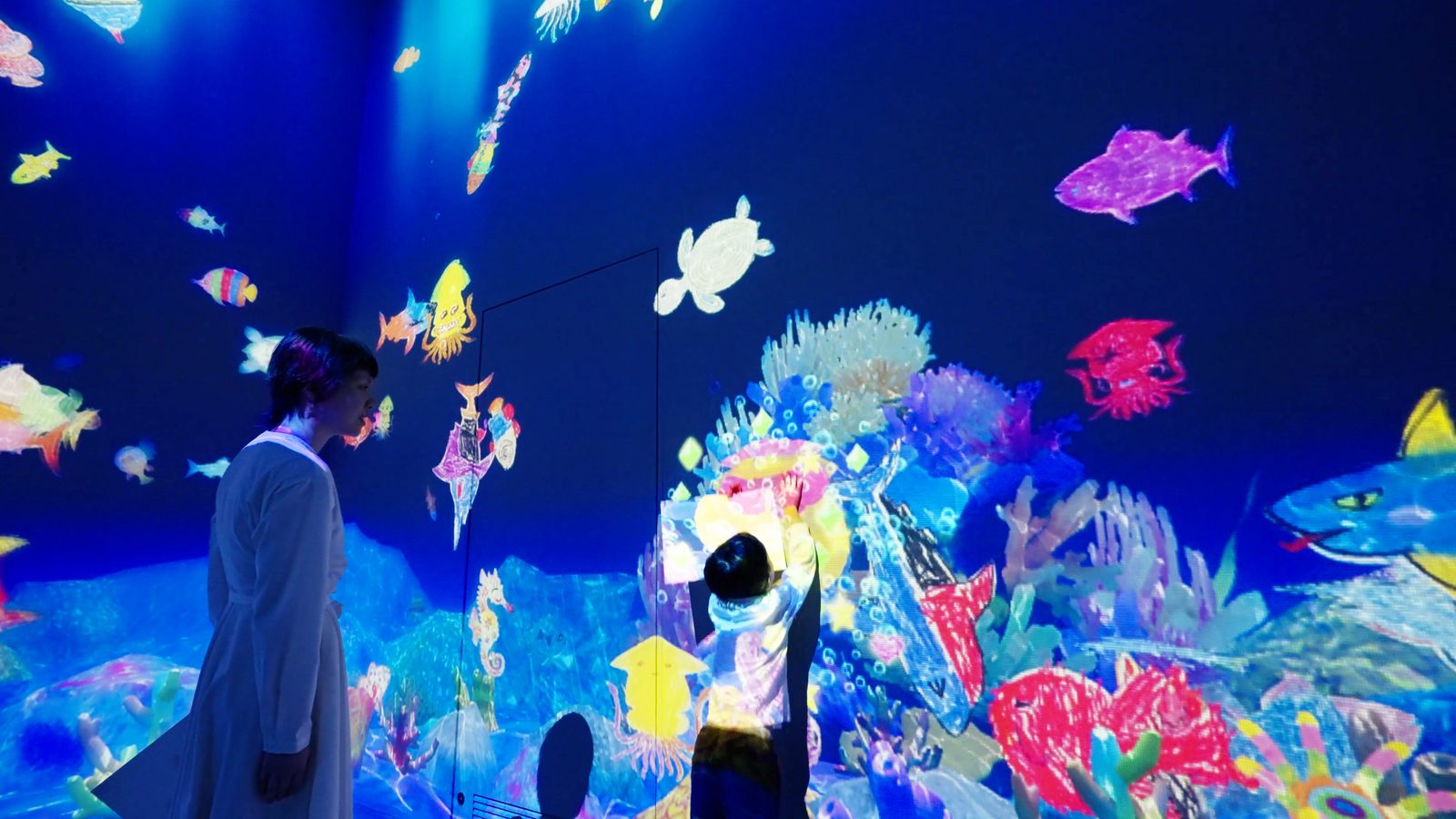
In a teamLab artwork space, a four-year-old runs ahead to see what the next one holds. Her grandfather follows at his own speed, stops where the light is moving most slowly, and watches the room change around her. Both are having the visit they came for. teamLab is one of the few places in Tokyo where three generations can share the same hour and each enjoy it at their own pace, provided the visit is planned around the youngest and the oldest.
This article is about doing teamLab with children and grandparents: which museum suits which ages, pushchairs and wheelchairs, light and sound, and the timing that keeps everyone happy. We read teamLab's official pages, FAQs and ticket store help for teamLab Borderless: MORI Building DIGITAL ART MUSEUM, teamLab Planets TOKYO and teamLab Biovortex Kyoto, Azabudai Hills' visitor information, Tokyo's market pages and Japanese family press on November 14, 2026, and contacted none of them; the sources are listed at the end.
Key points
- Pushchairs do not go into any of the three museums. At Borderless and Biovortex Kyoto they go to the luggage room; at Planets they are parked outside the building, and front baby carriers are allowed.
- Planets asks for one adult for every three children under 13; Borderless asks for one adult for every five children of primary school age and below.
- All three have low light, with strong or flashing light in places. Borderless and Kyoto also warn of loud sounds and scent, and Kyoto asks visitors who have difficulty walking, or who are sensitive to flashing light, to weigh this before entering.
- Wheelchairs can enter Borderless and Kyoto by lift, with limits on numbers and some works out of reach. At Planets visitors move to the museum's own chair.
- Azabudai Hills, around Borderless, lends wheelchairs and pushchairs and has a baby lounge with private nursing rooms.
CHOOSING BY THE YOUNGEST AND THE OLDEST
For children from about four to twelve, teamLab Planets in Toyosu is usually the stronger choice. Since January 2025 it has had the Athletics Forest, where children climb, balance and slide inside the works, and the barefoot water rooms, which most children love. teamLab's FAQ answers the question directly: is Planets suitable for children? Yes. The Japanese family magazine HugKum, visiting with children in February 2025, spent about two hours in the new areas alone.
For toddlers, babies and grandparents, Borderless at Azabudai Hills is gentler. Shoes stay on, there is no water, and Sketch Ocean lets a child colour a fish on paper and watch it swim into the artwork space. Borderless has no minimum age, and children three and under enter free at all three museums. In Kyoto, Biovortex has its own Athletics Forest, where heels, sandals and clogs are not allowed and sneakers can be rented. For the full comparison, see teamLab Borderless or Planets?
PUSHCHAIRS AND BABIES
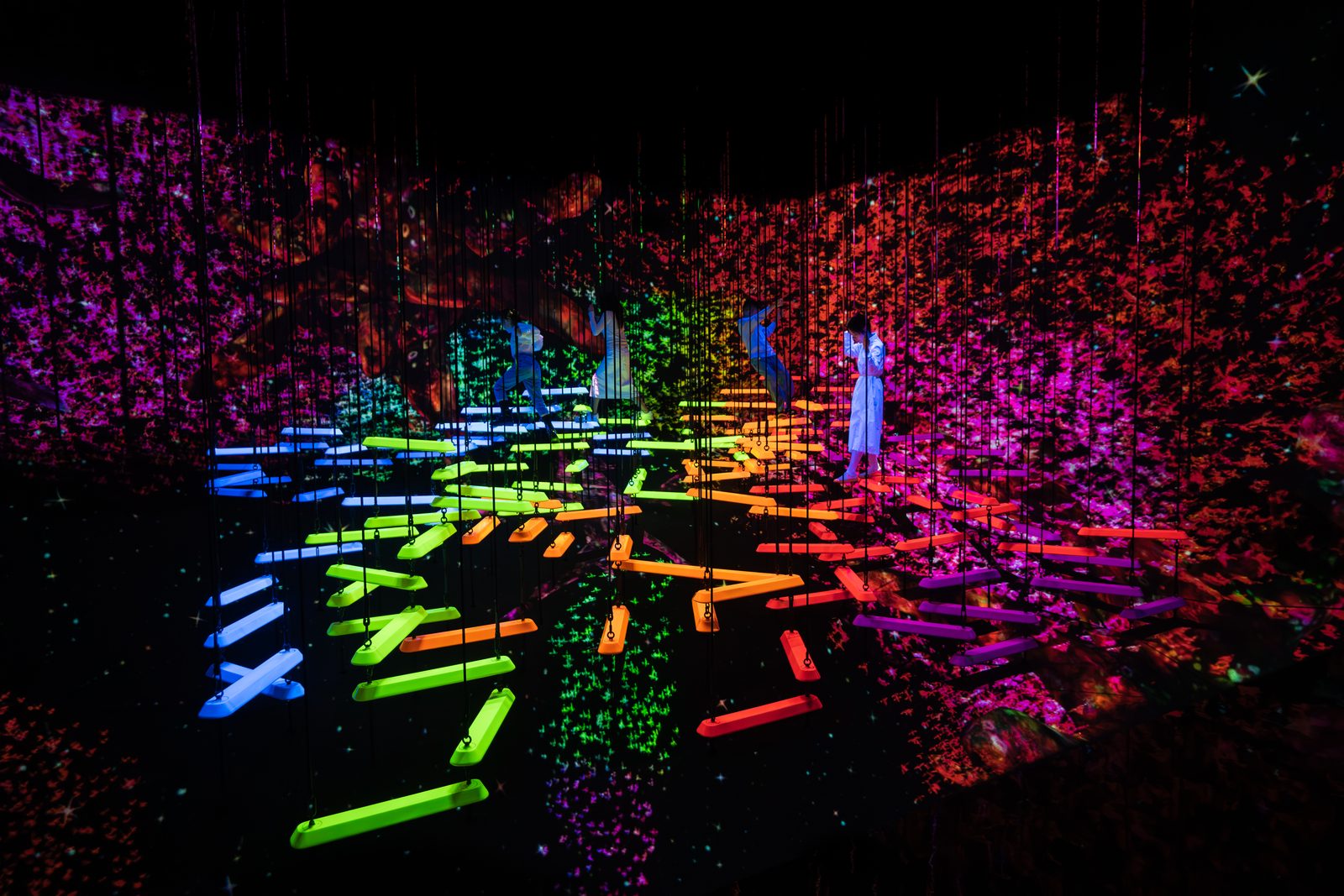
None of the three museums allows pushchairs inside. At Borderless they are left in the luggage room, and child harnesses are not allowed for safety. Planets parks them outside the building, where they can be locked with a wire, and allows babies in front carriers. In the artwork, Drawing on the Water Surface Created by the Dance of Koi and People - Infinity, at Planets, children with an inseam under 40 cm take part only if an adult carries them. Planets has nappy-changing tables in the toilets and a first-aid room for breastfeeding or resting.
Borderless has no nursing room inside, but Azabudai Hills around it is well equipped. Its baby lounge on the fourth floor of Tower Plaza, open from 9:00 to 21:00, has private rooms for nursing, a changing area, a play space and a microwave, and the development lends pushchairs for children from newborn to under 22 kg, from 10:00 to 20:00. Planets asks for at least one adult over 18 for every three children under 13, counting those who enter free; Borderless asks for one for every five children of primary school age or younger.
GRANDPARENTS AND WHEELCHAIRS
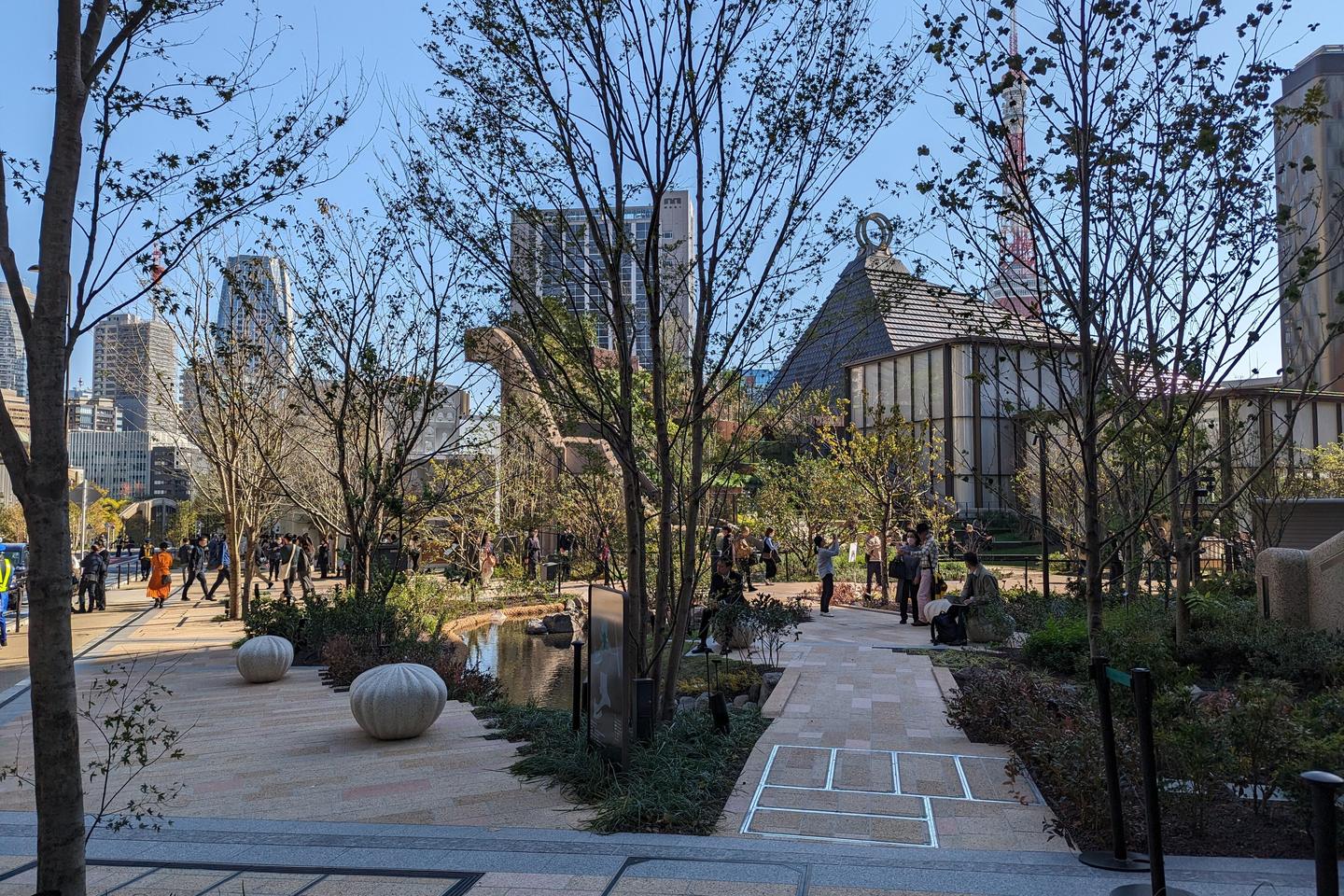
Neither Tokyo museum has a senior price; tickets are by age band and for visitors with a disability certificate, with one companion admitted at the same rate. What matters more is the floor. The artwork spaces have low light, with uneven footing in places and low ceilings at Borderless, so comfortable flat shoes and a steady pace are worth more than any ticket. Borderless allows canes, has two rest areas and toilets throughout, and Azabudai Hills lends manual and electric wheelchairs; a manual chair can be reserved by phone until 19:00 the day before and collected at Garden Plaza A, B1, by the Kamiyacho Exit 5 side.
Wheelchairs enter Borderless and Biovortex Kyoto by lift. Both museums say some works cannot be experienced in a wheelchair and that the number of wheelchairs admitted at one time is limited, so there may be a wait. Kyoto adds that some works are reached only by stairs and that it does not lend wheelchairs. At Planets, visitors in wheelchairs transfer to the museum's own chair on entry, staff explain the route according to each visitor's needs, two water works can be seen in a special water wheelchair, one cannot be entered, and seven, including those in the Athletics Forest, are watched from a viewing area.
LIGHT AND SOUND IN THE ARTWORK SPACES
teamLab is open about this. Planets says it has an area of strong, stimulating light and a dark area, and asks anyone who has had cramps or lost consciousness from light to take care. Borderless says its works may produce flashing lights, loud sounds and aromas. Biovortex Kyoto asks visitors who are pregnant, who have difficulty walking independently, who are carrying children, or who are sensitive to light or flashing light, to consider the conditions carefully before deciding, and notes that staff may restrict some works. All three keep pregnant visitors out of some areas for safety.
For most children and most grandparents none of this is a problem. For a child who is overwhelmed by noise or crowds, or a grandparent with poor night vision, we talk it through before choosing, plan the visit for the quieter hours and keep the group small enough that one adult can step out with one person at any time. There is no re-entry, so the person who leaves early should know where to meet.
TIMING THAT SUITS EVERYONE
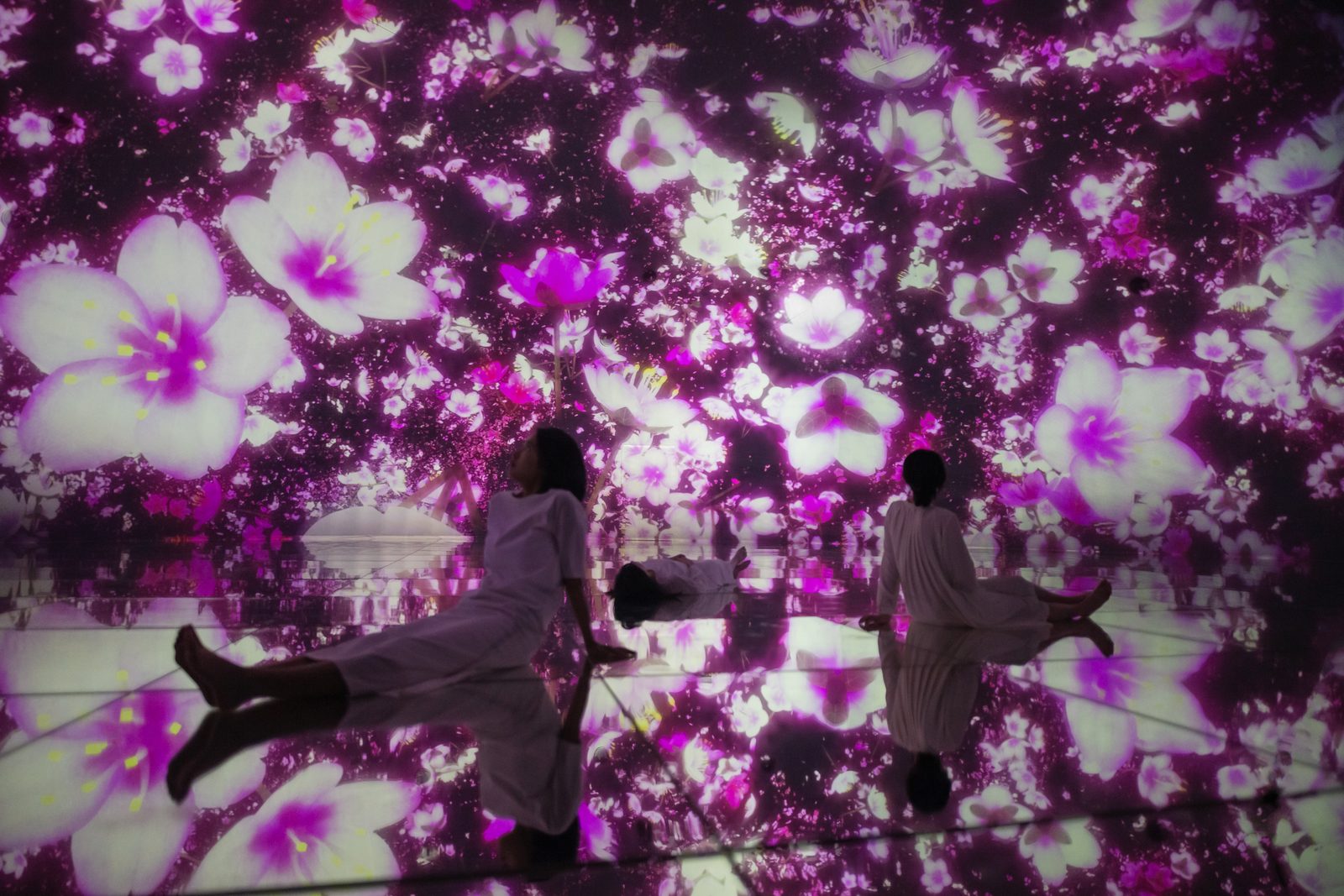
With small children the morning is usually right, even though the prices at Borderless show it is the busiest part of the day. Planets opens at 8:00, Borderless at 8:30 and Biovortex Kyoto at 9:00. With a family, the hour that works is often decided at breakfast, which is the strongest case for the Flexible Pass, with the date fixed and the hour left open: ¥12,000 at Borderless, the same for adults and children, and ¥12,000 in Kyoto. teamLab gives about two hours for Planets, an hour and a half to two hours for Borderless, and about two and a half hours on average in Kyoto. With children and grandparents we plan the shorter end, and a meal straight after.
Planets pairs naturally with Toyosu. Toyosu Senkyaku Banrai, beside the market, has a kids area and a free foot-bath garden on its eighth floor, where grandparents can rest their feet while children look out over the water. The early tuna auction viewing is by free advance lottery and counts every person from babies upwards; the applicant must be of junior high school age or above, and photo identification is needed on the morning. For the pace of a whole journey with three generations, see Japan with Three Generations.
SOURCES AND HOW WE CHECKED
We read these pages on November 14, 2026, and contacted none of these organisations. Rules and facilities are as published that day.
- teamLab Planets TOKYO, official page: one adult for every three children under 13; strollers; front baby carriers; nappy tables and first-aid room; 40 cm inseam rule; detour routes; strong light and dark areas; wheelchair transfer; pregnancy
- teamLab Planets, official ticket store help: accessible toilets; staff explain routes; works by wheelchair access; stroller parking outside the building with a wire lock
- teamLab Planets, official FAQ: suitable for children; Athletics Forest works; athletic shoes; about two hours
- teamLab Borderless, official page: one adult for every five children; low light, uneven footing, low ceilings; no child harness; flashing lights, loud sounds and aromas; wheelchairs by lift with limits; canes; strollers in the luggage room; disability rate with one companion
- teamLab Borderless, official FAQ: two rest areas; no nursing room; no minimum age; restrooms throughout; about two hours, average an hour and a half
- teamLab Biovortex Kyoto, official page: visitors asked to consider conditions; footwear in the Athletics Forest and sneaker rental; stairs; wheelchair limits; Flexible Pass ¥12,000
- teamLab Biovortex Kyoto, official FAQ: no strollers; no wheelchair rental; average about 2.5 hours
- Azabudai Hills, information (Japanese): baby lounge on Tower Plaza 4F, 9:00 to 21:00; pushchair loans newborn to under 22 kg, 10:00 to 20:00; manual and electric wheelchair loans; multi-purpose toilets
- HugKum, Shogakukan (Japanese, February 6, 2025): about two hours as a family in the new areas of Planets
- CGWORLD (Japanese, February 10, 2025): new areas at Planets opened January 22, 2025, including the Athletics Forest
- Toyosu Senkyaku Banrai, official (Japanese): kids area; free foot-bath garden on the eighth floor
- Tokyo Metropolitan Central Wholesale Market, tuna auction viewing lottery, December 2026 (Japanese, PDF): all ages counted from babies; applicant junior high school age or above; photo identification
QUESTIONS TRAVELLERS ASK
Can we take a pushchair into teamLab?
No. At Borderless and Biovortex Kyoto pushchairs go to the luggage room, and at Planets they are parked outside the building. Planets allows babies in front carriers.
Is there a senior discount?
No. Tickets are by age band, with a reduced rate for visitors with a disability certificate and one companion.
Can a grandparent in a wheelchair go?
Yes, with limits. Borderless and Kyoto take wheelchairs by lift, with some works out of reach and a limit on numbers at one time. At Planets visitors transfer to the museum's chair, and some works are watched from a viewing area.
Is teamLab suitable for a child sensitive to noise or flashing light?
teamLab warns of strong and flashing light, low light in some areas, loud sounds and scent. Many sensitive children manage well with a short visit and an adult free to leave with them, but we discuss it with you before choosing.
What age is best?
There is no minimum age at Borderless, and children three and under enter free. For the climbing and water works at Planets, about four to twelve is the age that gets the most from them.
ASK US ABOUT A FAMILY DAY
Tell us the ages of everyone travelling, and anything about walking, light or noise that matters. We will choose the museum, the hour and the ticket, and set the rest of the day around the youngest and the oldest.
Begin planningWe reply within 24 hours, in writing
Some of the restaurants and bars we arrange seat guests only by introduction or membership. We ask on your behalf; the table and the evening are the house's decision. We do not publish their names.