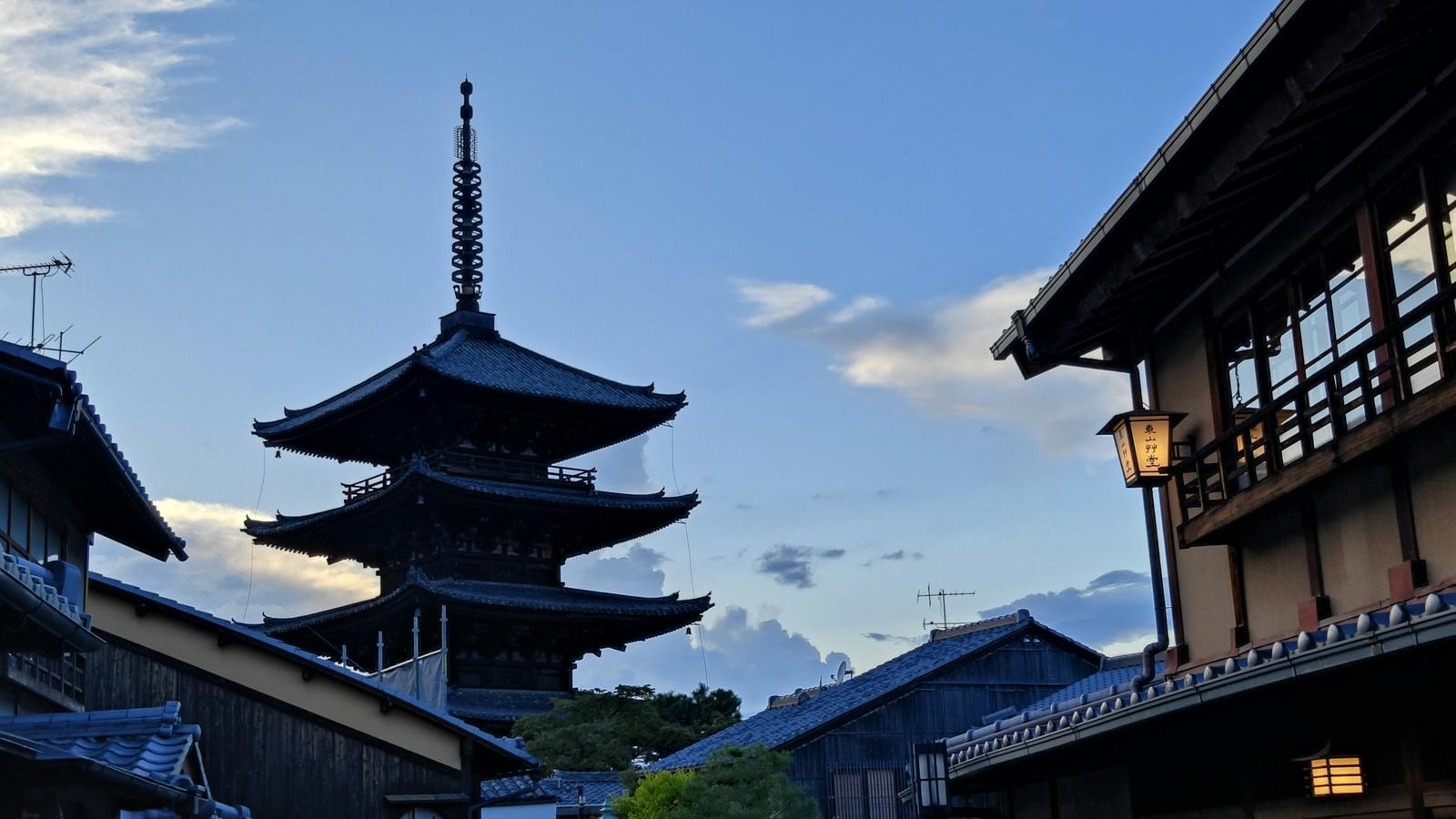
On Saturday afternoons at Dusit Thani Kyoto, a maiko dances in the Tea Salon on the lobby level and then prepares matcha for the guests, served with sweets that draw on both Thai and Kyoto flavours. One floor down, on the garden level, Ayatana cooks Thai food with coconut milk pressed fresh each day. A Thai hotel company in a Kyoto temple town is the whole idea of the place, and it is why the hotel stands where a city primary school once stood, a short walk from Nishi Hongwanji.
This article is for travellers weighing it against the other hotels in The Best Luxury Hotels in Japan 2027 and our guide to luxury hotels in Kyoto. It covers the rooms, the tables, the pool and spa rules that matter for families, and where the hotel sits in a journey. We read the hotel's own pages, Dusit's press release, Kyoto City's records, the MICHELIN Guide and Forbes Travel Guide pages, and Kyoto press in November 2026, and contacted none of them; the sources are listed at the end.
Key points
- Opened on September 1, 2023, with 147 rooms, about 850 metres from Kyoto Station, on the site of the former Shokuryu Elementary School in the temple town of Nishi Hongwanji.
- All entry rooms are 40 sqm. The Premier Garden Rooms have a small garden of their own at the back of the room, and the suites run from 80 to 173 sqm.
- One MICHELIN Key, and 2026 Forbes Travel Guide Four-Star ratings for both the hotel and Devarana Wellness.
- Ayatana, the Thai restaurant, serves dinner Thursday to Sunday and does not admit children under 13. Kati, the all-day restaurant, is the family table.
- The indoor pool is for guests 130 cm and taller, and children under 12 may swim only from 7:00 to 10:00. The gym and spa treatments are for guests aged 16 and over.
ASK US ABOUT DUSIT THANI KYOTO →
WHERE IT IS AND WHAT THAT GIVES YOU
Dusit Thani Kyoto is on Nishinotoin-dori in Shimogyo-ku, in the quiet grid of streets between Nishi Hongwanji and Higashi Hongwanji. In February 2019 Kyoto City chose the developer for the site of the former Shokuryu Elementary School, and the plan it picked was a Thai luxury hotel, praised by the selection committee for joining the hospitality of Japan and Thailand. Kyoto's official tourism site notes that Nishi Hongwanji holds the oldest Noh stage in Japan.
Dusit's release puts the hotel 850 metres from Kyoto Station. That makes it one of the easiest luxury hotels in the city to reach after the Shinkansen, while the street outside stays residential. Forbes Travel Guide describes four levels above a wellness floor, set around a central courtyard lined with the restaurants. Forbes credits the Thai firm PIA with the interiors. We found no announced renovation or closure. The changes since opening have been at the table, which we cover below.
WHICH ROOM TO ASK FOR
The three entry categories are all 40 sqm, with a king bed or two twins: the Deluxe Room, the Premier Room, which looks over the city or the courtyard, and the Premier Garden Room. The difference is the outlook. The hotel's Japanese page describes a small garden at the back of each Premier Garden Room, and Forbes Travel Guide's inspectors suggest the ground floor for the best views, with garden outlooks and a privacy wall. For a couple staying three nights or more, we would ask for a Premier Garden Room: in a city hotel, a patch of green that is yours alone is worth more than a higher floor.
Accessible rooms come in the twin configuration with a step-free bathroom, and the hotel asks guests to contact it for details. Above them are the One Bedroom Suite at 80 sqm, the One Bedroom Corner Suite at 88 sqm on a corner of each floor, the Premier Suite at 108 sqm, also on a corner, with tatami and shoji screens, and the Imperial Suite at 173 sqm with a separate living room. For guests who want a Japanese room inside a contemporary hotel, the Premier Suite is the one we would choose; the tatami gives a place to sit low after a day of temples. We did not find a clear room rate on the official site on November 15, 2026, so we give none.
WHEN TO GO
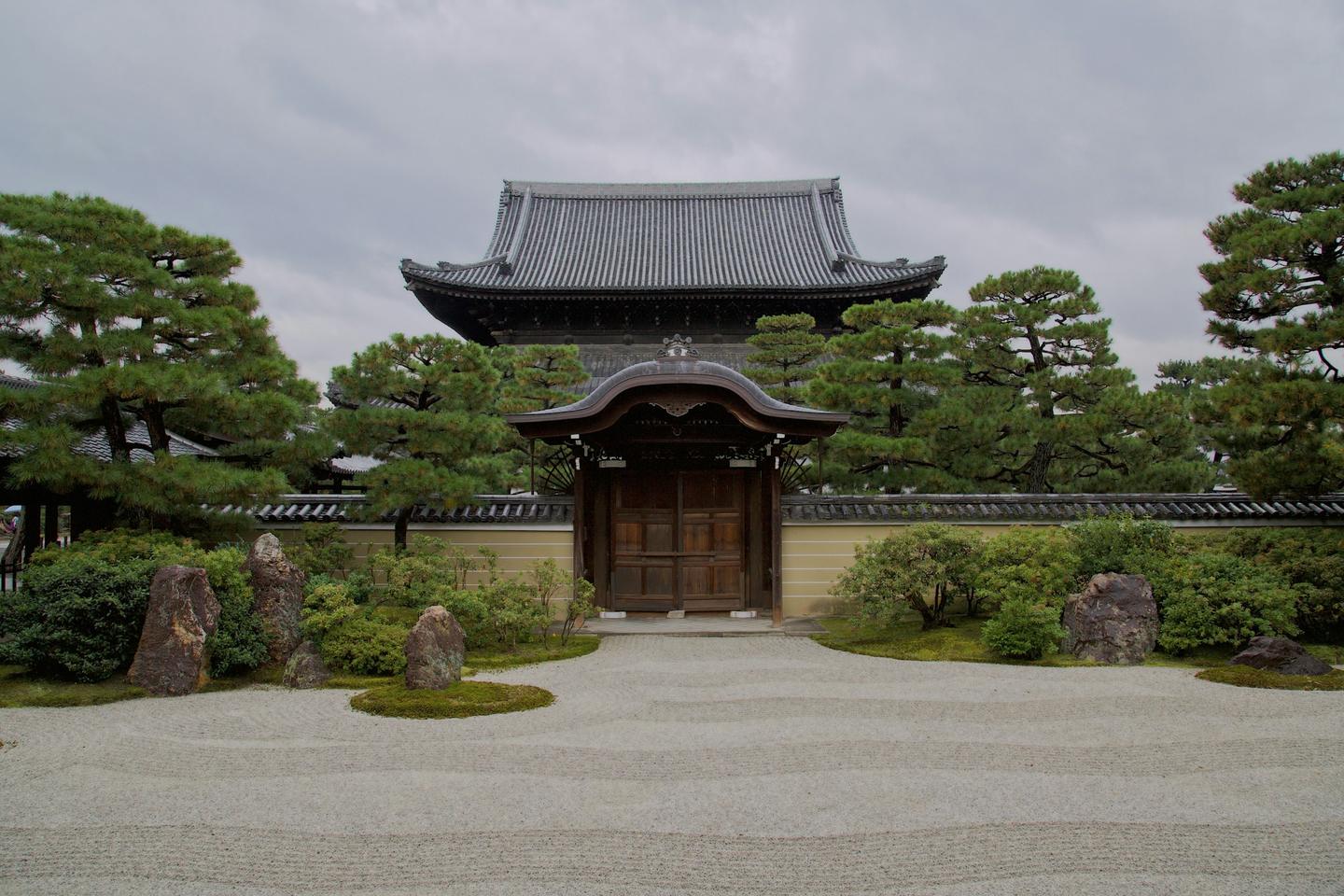
The hotel looks inward, so the season shows in the courtyard and in the kitchen more than in a view. Chef's Table Kōyō plans its menus around the 24 solar terms of the old calendar, and Ayatana changes its courses with the seasons; its autumn course ran from October 1 to November 30, 2026.
Late March to early April and November are Kyoto's busiest weeks, and both rooms and tables are harder to find then. In those weeks we usually suggest leaving early for the places that fill by mid-morning, and coming back to the pool in the afternoon. Winter is quieter and suits the indoor pool and the hydrothermal rooms; the hotel serves a Christmas afternoon tea from December 1 to 25 and a holiday dinner course at Kati from December 26 to January 3. The maiko dance and matcha in the Tea Salon is held every Saturday from 14:30 and 15:30.
THE TABLES WORTH STAYING IN FOR
Ayatana is the table we would plan a stay around. At opening, Dusit named Duangporn "Bo" Songvisava and Dylan Jones of Bo.lan in Bangkok as the chefs behind its Thai dinner; the current page speaks of Kansai produce and coconut milk pressed every day. Dinner runs from 18:00, last orders at 20:00, and the restaurant is closed Monday to Wednesday. In autumn 2026 the courses were ¥10,000 for five and ¥18,000 for nine, tax and service included. Children under 13 are not admitted.
Kōyō has changed since opening, when it was a teppanyaki counter. It is now Chef's Table Kōyō, with an omakase dinner at ¥28,000 including tax and service, closed Wednesday and Thursday, and a sushi counter that follows the spirit and technique of Sushi Ishibashi Masakazu in Ginza, with lunch from ¥9,500 and dinner from ¥18,000, closed Thursday. Children under 6 are not admitted. The MICHELIN Guide notes that the restaurants choose to specialise, Thai at Ayatana and Kyoto's micro-seasons at Kōyō, and that is how we would use them: Thai one night, Japanese the next.
Kati, the all-day restaurant, has an open kitchen facing the courtyard and a Thai dinner course at ¥8,500. Den Kyoto, the bar, opens from 16:00 to 23:00 for guests aged 20 and over. Dusit Gallery in the lobby serves afternoon tea with organic matcha and hojicha from the hotel's own tea garden in Wazuka. In-room dining runs 24 hours.
SPA, POOL AND THE QUIET HOURS
Devarana Wellness is on the garden level, and Forbes Travel Guide notes a design drawn from kyudo, Japanese archery. The hotel lists four oil treatment rooms and one Thai massage room, open from 10:00 to 21:00. The menu leans Thai, led by an Ancient Thai Massage with herbal compresses and tok sen tools at ¥43,000. The spa lists its Hydrothermal Ritual, with sauna, onsen-style baths and a cold plunge pool, as complimentary for all guests. These are onsen-style baths; we found no mention of natural hot spring water, and we would not describe them as an onsen.
The indoor pool is open from 7:00 to 21:00, for guests 130 cm and taller. From 7:00 to 10:00 it is Kids Hour, the only time children under 12 may swim, and the hotel warns that the pool may be livelier then. For adults who want it quiet, the hours after 10:00 are the ones to choose. The gym is open 24 hours for hotel guests. The hotel does not publish the pool's length, so we do not give one.
FAMILIES AND SEVERAL GENERATIONS
The hotel's own policies are generous at the base and strict at the edges. Connecting rooms are available on request. Cots are free while they last, children aged 12 and under stay free when they share an existing bed, and an extra bed costs ¥12,650 a night including tax and service. Breakfast is ¥6,325 for adults, half that for children up to 12, and free for preschool children. A stamp rally for staying children ends with a small elephant in Japanese dress.
The limits matter for planning. A child under 130 cm cannot use the pool at all, Ayatana is closed to under-13s, Kōyō to under-6s, and the spa and gym to under-16s. For a family with young children, we would plan dinners at Kati and take Ayatana as a night for the adults. For three generations, we would ask for two connecting 40 sqm rooms, or the 88 sqm Corner Suite, which the hotel describes as suited to families, with a room beside it for grandparents. For more on pace and age, see Japan With Three Generations.
WHAT IT IS NOT FOR
It is a city hotel without a river or mountain view on any page we read. Guests who want to wake to the Kamo River would be happier at The Ritz-Carlton, Kyoto, and those who want forest and silence at Aman Kyoto. For a ryokan rhythm by the river in Arashiyama, HOSHINOYA Kyoto suits better. Gion and Higashiyama are across the city, so evenings there mean a taxi each way.
Families with toddlers who expect long afternoons in the pool will find the 130 cm rule hard. And guests who want a hotel that feels wholly Japanese may find the Thai side, the Thai kitchen, the Thai massage and the elephants in Japanese dress, more present than they expected. For others, that is the reason to come.
HOW IT FITS A JOURNEY
The station is its strongest card. We usually suggest it for the first nights after arriving by Shinkansen, or the last nights before a train to Osaka or an airport, when a short transfer matters more than a view. Two or three nights here pair well with two nights at Aman Kyoto or HOSHINOYA Kyoto, so the journey moves from the city to the hills.
The hotel's own programme reaches beyond the building: a farm in Ohara, about 40 minutes by car, where staying guests can join the harvest; a tea ceremony with an English-speaking teacher; kimono dressing in the room; and an evening with geiko and maiko at a teahouse in Pontocho. STAYGO arranges what sits around the stay: tables at restaurants across Kyoto, cars and drivers, and guides for the temples nearby. Availability and rates are always set by the hotel and the restaurants.
SOURCES AND HOW WE CHECKED
We read these pages on November 15, 2026, and contacted none of these organisations. Prices are as the hotel showed them on that day.
- Dusit Thani Kyoto, official site: address on Nishinotoin-dori; Saturday maiko dance and matcha from 14:30 and 15:30; in-room kimono dressing, tea ceremony and Pontocho evening
- Dusit Thani Kyoto, official site (Japanese): garden at the back of Premier Garden Rooms; connecting rooms, cots, extra bed and breakfast prices; spa rooms and hours; Dusit Farm in Ohara; Dusit Tea Garden in Wazuka
- Dusit Thani Kyoto, rooms and suites: 40 sqm entry rooms; suites of 80, 88, 108 and 173 sqm; tatami in the Premier Suite; accessible twin rooms
- Ayatana, official page: hours and closing days; no children under 13; autumn courses at ¥10,000 and ¥18,000; Thai Select three stars
- Chef's Table Kōyō, official page: omakase at ¥28,000; sushi counter after Sushi Ishibashi Masakazu; no children under 6
- Dining at Dusit Thani Kyoto: Kati, Den Kyoto and Den Hanare, Dusit Gallery afternoon tea with tea from Wazuka
- Devarana Wellness, official page: treatments and prices; Hydrothermal Ritual with sauna, onsen-style baths and cold plunge
- Dusit Thani Kyoto, facilities: indoor pool hours, 130 cm minimum, Kids Hour; gym and spa for 16 and over
- Dusit International, press release (August 3, 2023): 147 rooms; 850 metres from Kyoto Station; Ayatana by Bo Songvisava and Dylan Jones
- Kyoto City, selection for the former Shokuryu Elementary School site (Japanese, February 20, 2019): Dusit Thani chosen for the site; the committee's reasons
- MICHELIN Guide, Dusit Thani Kyoto: One MICHELIN Key; 147 rooms; the inspectors' note on Ayatana and Kōyō
- Forbes Travel Guide, Dusit Thani Kyoto: 2026 Four-Star; four levels and a wellness floor around a courtyard; interiors by PIA; ground-floor garden rooms
- Forbes Travel Guide, Devarana Wellness: 2026 Four-Star; design drawn from kyudo
- Leaf Kyoto (August 2023): opening on September 1, 2023; Kōyō as a teppanyaki counter at opening
- Kyoto City Tourism Association, Nishi Hongwanji: head temple of Shin Buddhism; the oldest Noh stage in Japan
QUESTIONS TRAVELLERS ASK
How far is Dusit Thani Kyoto from Kyoto Station?
Dusit gives the distance as 850 metres. With light bags it is a walk; with luggage we would take a car for the few minutes it needs. The hotel also offers airport transfers.
Can children eat at Ayatana?
No. Ayatana does not admit children under 13, and Chef's Table Kōyō does not admit children under 6. Kati, the all-day restaurant, is the place for family meals, with a weekend brunch that has a child price.
Can young children use the pool?
Only if they are 130 cm or taller, and children under 12 may swim only during Kids Hour, from 7:00 to 10:00. Guests aged 12 and over may use the pool from 7:00 to 21:00.
Does Dusit Thani Kyoto have an onsen?
The spa's Hydrothermal Ritual includes a sauna, onsen-style baths and a cold plunge pool, listed as complimentary for guests. We found no mention of natural hot spring water, so we would not call it an onsen.
Which room would you ask for?
For a couple, a 40 sqm Premier Garden Room, which has a small garden of its own. For a Japanese room, the 108 sqm Premier Suite with tatami. For a family, the 88 sqm One Bedroom Corner Suite, or two connecting rooms on request.
ASK US ABOUT DUSIT THANI KYOTO
Tell us your dates, who is travelling and how you like to eat. We will tell you which room we would ask for, which nights suit Ayatana and Kōyō, and how this hotel fits with the rest of your journey, with the reasons.
Begin planningWe reply within 24 hours, in writing
Some of the restaurants and bars we arrange seat guests only by introduction or membership. We ask on your behalf; the table and the evening are the house's decision. We do not publish their names.